In This Article
A modelling amp under £300 is a digital guitar combo that uses processing power to imitate several classic amplifiers, speaker cabinets and effects inside one box, for less than £300. It gives beginners and home players a wide tonal palette, bedroom-friendly volume controls and, often, USB recording, without a shelf full of valves.
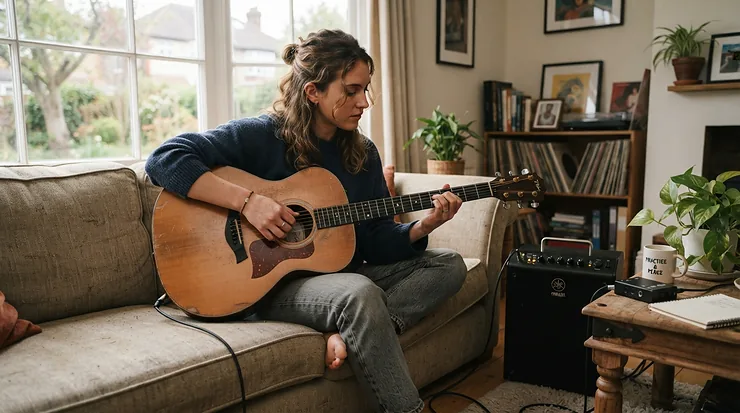
Here’s the slightly absurd truth about 2026. The modelling amp under £300 is no longer the compromise choice. It’s the sensible default. The idea of amplifier modelling is to give players access to many notable amp sounds at a far lower cost and with far more convenience than buying the real thing. That promise has finally caught up with the price tag. Ten years ago, £250 bought you a buzzy plastic box with a “metal” button. Today it buys stereo effects, app control, cabinet simulation and a built-in audio interface.
The catch? Choice paralysis. Every affordable modelling amp claims to be the one, and the spec sheets read like alphabet soup. So this guide does the sorting for you. It compares seven real amps using manufacturer specifications and aggregated reviewer sentiment. It explains what each spec means in practice, and it points out who should walk away. If you’re a beginner weighing up digital amp modelling for beginners, want a budget amp with effects, or need a USB recording amp that doubles as a mini studio, you’ll find your match here.
One honest note: prices move constantly, so every figure below is a range. Check current prices before you buy.
Quick Comparison: Modelling Amp Under £300 at a Glance
Before the deep dive, here’s the whole field on one screen. Think of it as the menu before the meal.
| Amp | Power | Voices / Models | Standout Connectivity | Best For |
|---|---|---|---|---|
| Boss Katana-50 Gen 3 | 50W | 6 amp types + Variation | USB-C, optional Bluetooth | Growing players wanting a long-term platform |
| Positive Grid Spark 40 | 40W | 33 amp models, 43 effects | USB, Bluetooth | Smart practice and backing tracks |
| Line 6 Catalyst CX 60 | 60W | 12 amp models, 24 effects | USB, XLR out, MIDI | Rehearsals and knob-per-function fans |
| Fender Mustang GT40 | 40W | 20 amp models | Wi-Fi, Bluetooth | Fender-flavoured tones and app tweaking |
| Blackstar ID:Core V4 Stereo 40 | 40W | 6 voices | USB-C (4-channel) | Home recording on a budget |
| Yamaha THR10II | 20W | Multiple amp types | USB, Bluetooth | Desktop use and tidy stereo sound |
| Fender Mustang LT25 | 25W | 20 amp models, 25 effects | USB | First amp and entry-level demos |
Looking at the table, the Boss Katana-50 Gen 3 and the Line 6 Catalyst CX 60 are the only two with real rehearsal-room power. The Positive Grid Spark 40 wins on smart features, and the Fender Mustang LT25 is the cheapest way in. If recording is your priority, the Blackstar ID:Core V4 Stereo 40 and Yamaha THR10II deserve a closer look.
💬 Just one click — help others make better buying decisions too!😊
Top 7 Modelling Amps Under £300: Expert Analysis
1. Boss Katana-50 Gen 3 — best long-term platform for growing players
The Katana-50 Gen 3 refuses to be a stepping stone. You can practise on it at 0.5 watts and still take it to a rehearsal at full 50.
It offers six amp types (Acoustic, Clean, Pushed, Crunch, Lead, Brown), and a Variation switch effectively doubles the voices. In practice, that’s a dozen usable flavours without menu-diving. The Power Control (standby, 0.5W, half, max) matters more than it sounds, because cranked-amp feel at low volume is exactly what small digital amps usually lose. The USB connection works as a stereo interface, and one review notes a separate dry channel for re-amping later. Bluetooth needs an optional adaptor, which MusicRadar’s Gen 3 review flags as its main criticism. That review also found greater detail and nuance than the earlier generation, plus a new Pushed voice that became a favourite.
Based on the spec comparison, this suits anyone who prefers turning knobs to swiping an app. Sweetwater’s customer reviews average around 4.5/5 from 31 buyers. A minority found the tone unexciting next to tube amps, and one questioned how convincing the Crunch and Brown labels are.
Pros:
- ✅ Genuine power control from 0.5W to 50W
- ✅ Knob-per-function layout with editor software
- ✅ Stereo USB recording, plus a dry channel
Cons:
- ❌ Bluetooth requires a separate paid adaptor
- ❌ Some players find it less “valve-like” than hoped
Price: roughly the mid-to-high £200s at the time of research; check current price. Verdict: the safest all-rounder in this modelling amp under £300 shortlist.
2. Positive Grid Spark 40 — best for app-powered practice
The Spark 40 isn’t really trying to be a traditional amp. It’s a practice companion with a speaker attached, and it does that job brilliantly.
The spec sheet lists 33 amp models, 43 effects, Bluetooth streaming and USB recording, in a 5.2kg box. The real magic is Smart Jam, where the app listens to your playing and builds drums and bass around it. For a beginner, that’s the difference between practising and performing. The community tone library, quoted at 10,000+ presets in reviews, adds the kind of preset tone banks that save hours of knob-twiddling.
Reviewers consistently praise the tones and the recording ability. Sound On Sound liked the USB feed but found the built-in speakers bass-heavy. Positive Grid’s own support page says the USB interface needs drivers on Windows and doesn’t work with iOS or Android devices. Other reviews mention a learning curve for the app and limited physical controls. AmplifierZone cites a 4.7-star Amazon average, so treat this as a widely liked amp, with the usual caveat that averages shift.
Pros:
- ✅ Smart Jam backing tracks for solo practice
- ✅ Huge library of downloadable tones
- ✅ Stereo USB recording plus Bluetooth streaming
Cons:
- ❌ Limited physical controls; app dependence
- ❌ Bass-heavy built-in speaker voicing
Price: around the low-to-mid £200s; check current price. Verdict: best for anyone who practises alone and wants motivation built in.
3. Line 6 Catalyst CX 60 — best for knob-per-function rehearsals
The Catalyst CX 60 brings Helix-derived modelling to a traditional-looking combo. It suits players who dislike menus.
You get 60 watts through a 12-inch speaker, 12 amp models, 24 effects, two channels with a boost, an effects loop, USB audio, an XLR direct out and MIDI. Translated: you can gig with a stompbox in the loop and send a clean signal to a PA. Guitar World’s review of the CX 60 called the sounds stellar and praised the onboard attenuator for practice. The earlier Catalyst 60, reviewed by Guitar.com, offered mute, 0.5W, 15W and full-power settings, which shows the family’s thinking.
Guitar Chalk’s comparison with the Katana suggests the Catalyst leans vintage while the Katana suits modern tones. The Budget Guitarist thought the original model’s gain sounds were rather middle-of-the-road, so high-gain players should audition first.
Pros:
- ✅ 60W and a 12-inch speaker for band rehearsals
- ✅ XLR out and effects loop for flexibility
- ✅ Helix-derived effects with simple controls
Cons:
- ❌ Heavier and bulkier than desktop rivals
- ❌ Gain voicings divide reviewers
Price: roughly £220–£280 depending on retailer; check current price. Verdict: the pick if your “affordable modelling amp” must also cope with a drummer.
4. Fender Mustang GT40 — best for Fender-flavoured tones and Wi-Fi tweaking
The Mustang GT40 was among the first amps with Wi-Fi built in, and that still makes it feel unusually modern.
Its 20 amp models lean towards tweed and blackface Fenders, with some British voicings, and it ships with 100-plus presets. MusicRadar noted the presets are instantly playable rather than showy, and the effects order can be rearranged. In practice, that means you can put a fuzz before the amp and a delay after it, as on a real pedalboard. Fender Tone app control lets you edit from across the room.
The caveat is age. Trusted Reviews found the dial fiddly for typing Wi-Fi passwords, and forum owners advise editing the stock presets rather than trusting them. One long-term owner’s tips suggest firmware updates have since smoothed early criticism. Think of the GT40 as a practice amp with a clever app, not a gigging workhorse.
Pros:
- ✅ Authentic Fender-style clean models
- ✅ Flexible effects placement in the signal chain
- ✅ Wi-Fi updates and downloadable presets
Cons:
- ❌ Fiddly dial for text entry
- ❌ Stock presets often need tweaking
Price: around £200–£250 at the time of research; check current price. Verdict: a strong choice for Fender fans who like tweaking.
5. Blackstar ID:Core V4 Stereo 40 — best value for USB recording
The ID:Core V4 Stereo 40 is the quiet achiever of this modelling amp under £300 list, especially for recording.
Its 40 watts (2 × 20W) run through two 6.5-inch speakers for wide stereo sound. It offers six voices (Clean Warm to OD2), four delays, four modulations and four reverbs. Power reduction down to 1W suits late-night playing. The headline feature is 4-channel USB-C audio, which Blackstar says turns the amp into an interface with low-latency re-amping. The free Architect software adds CabRig Lite cabinet simulation and deeper patch editing.
Guitar World noted that you can store one patch per voice position, a limitation Architect works around. Guitar.com found the software fast on a laptop, though registration by email felt clunky. One Thomann reviewer warned that headphones with a built-in microphone don’t work without a splitter. There’s no Bluetooth on the 40 model.
Pros:
- ✅ 4-channel USB-C recording and re-amping
- ✅ Wide stereo sound at 40W
- ✅ Free CabRig Lite cabinet simulation
Cons:
- ❌ No Bluetooth on this model
- ❌ Patch storage tied to voice positions
Price: around £180–£230; check current price. Verdict: the strongest USB recording amp for the money.
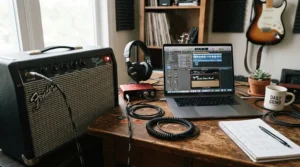
6. Yamaha THR10II — best desktop amp for tidy stereo sound
The THR10II looks like a retro radio and sounds better than its 20 watts suggest. It’s the amp for people who live in flats.
It has a 2 × 3.1-inch stereo speaker system, five user memories, Bluetooth and a class-compliant USB port. That last point means no drivers on Mac or iOS, and Cubase AI and Cubasis LE are bundled. Equipboard’s summary of owner feedback says the THR range is better regarded for sound quality than for app polish compared with the Spark.
The caution is Windows. Early forum threads report no dedicated ASIO driver for the second generation, with some owners relying on ASIO4ALL. Yamaha’s newer drivers may have changed this, so check before buying if you’re on Windows. And 20 watts means bedroom, not band.
Pros:
- ✅ Compact, well-built, living-room friendly
- ✅ Bundled Cubase AI and Cubasis LE software
- ✅ Class-compliant USB for Mac and iOS
Cons:
- ❌ Only 20W; not for rehearsals
- ❌ Windows driver reports are mixed
Price: near the top of the budget, roughly £250–£320 depending on retailer; check current price. Verdict: worth it if you value looks, recording and quiet.
7. Fender Mustang LT25 — best entry-level amp for first-time buyers
The Mustang LT25 is the cheapest ticket into this shortlist, and it earns its place through simplicity.
It offers 25 watts through an 8-inch speaker, 20 amp models, 25 effects and 30 factory presets with 60 slots. Everything is edited at the front panel, which MusicRadar describes as fuss-free, and there’s a Fender Tone desktop app. USB doubles as a recording interface and firmware port. Reviewers call it a home practice and recording amp rather than a rehearsal amp. Reports differ on whether the USB output is stereo, so check the manual if that matters. AmplifierZone notes there’s no smartphone app.
If you want deeper app-based tone management, the Spark 40 is the alternative. If you want to learn the basics without drowning in options, the LT25 is hard to fault.
Pros:
- ✅ Simple front-panel editing
- ✅ USB recording at a low price
- ✅ Light, compact wooden cabinet
Cons:
- ❌ 25W feels underpowered with a drummer
- ❌ No smartphone app
Price: around £130–£170; check current price. Verdict: superb budget value as a first affordable modelling amp.
Price and Value: Modelling Amp Under £300 Head-to-Head
Here’s how the seven compare on value. Prices are indicative ranges and shift by retailer.
| Amp | Price Range | Review Theme | Best For |
|---|---|---|---|
| Boss Katana-50 Gen 3 | Mid-to-high £200s | Loved for tone and control; Bluetooth extra | All-round use |
| Positive Grid Spark 40 | Low-to-mid £200s | Smart features; app learning curve | Solo practice |
| Line 6 Catalyst CX 60 | £220–£280 | Strong cleans; gain divides opinion | Rehearsals |
| Fender Mustang GT40 | £200–£250 | Great presets once tweaked | Fender fans |
| Blackstar ID:Core V4 Stereo 40 | £180–£230 | Wide stereo, strong USB | Recording |
| Yamaha THR10II | £250–£320 | Sound quality; Windows caveats | Desktop use |
| Fender Mustang LT25 | £130–£170 | Simple and reliable for beginners | First amp |
The Fender Mustang LT25 is the cheapest by some margin, so it leaves budget for a decent lead and headphones. The Boss Katana-50 Gen 3 costs more but goes further, because you’ll outgrow the smaller amps first. If your budget is tight, avoid stretching to the Yamaha THR10II unless you specifically want its desktop form.
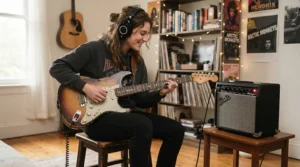
How to Choose a Modelling Amp Under £300
Picking the right modelling amp under £300 comes down to six questions. Answer them honestly and the shortlist narrows fast.
- Where will you play? Bedroom practice needs low wattage (20–40W). Rehearsals need 50W or more with a 12-inch speaker.
- How loud can you be? A power reduction control lets you get amp-like feel at bedroom volume.
- Do you want knobs or an app? Knobs are quicker; apps offer deeper editing. Be honest about which you’ll actually use.
- Will you record? A USB recording amp saves you buying an interface. Check driver support for your computer.
- How many effects do you need? For most players, a decent reverb, delay and modulation are plenty.
- Will you outgrow it? Look for an effects loop, footswitch input and firmware support.
Andertons’ modelling amp guide suggests beginners and casual players can get excellent results at the £100–£300 level, while serious performers may need to spend more. That matches the picture here: this price band is the sweet spot, not the ceiling.
Digital Amp Modelling for Beginners: What to Expect
If you’re new to guitar, digital amp modelling for beginners can feel like being handed a spaceship manual. The good news is you need only three controls to start: gain, volume and tone.
Modelling doesn’t clone one amp. It offers stylised versions of different tone categories, such as glassy cleans, crunchy rock and saturated leads. Guitar World points out that amps like the Katana and Yamaha THR recreate a range of sounds without cloning dozens of specific amps. That’s a subtle but useful distinction: you’re buying a versatile, well-voiced amp, not a museum of vintage gear.
For a first amp, look for simple controls, a headphone jack and a few reliable presets. The Fender Mustang LT25 and Positive Grid Spark 40 suit this stage best. Don’t chase high-gain settings until your fretting hand is ready, and don’t judge an amp by its loudest patch.
✨ Don’t Miss These Exclusive Deals!
🔍 Take your practice sessions to the next level with these carefully selected amps. Click on any highlighted item to check current pricing and availability. These picks will help you build authentic tones you’ll love playing!
Budget Amp With Effects: What the Built-In Effects Really Give You
Every budget amp with effects advertises big numbers: 25 effects, 43 effects, 60 effects. Ignore the counts. What matters is whether the six or seven you’ll use daily are good.
Most players live in reverb, delay, chorus and an overdrive boost. The Katana offers reverb, tap-tempo delay, chorus, tremolo, phaser and flanger from the front panel. The Blackstar ID:Core V4 Stereo 40 gives four delays, four modulations and four reverbs. The Spark 40 goes further with 43 effects, while the Catalyst CX 60 gives two simultaneous effects sections.
The practical lesson: stack fewer effects at lower levels. Fender’s own presets follow that approach, which is why reviewers found them usable. If you own pedals already, the Line 6 Catalyst CX 60 and Boss Katana-50 Gen 3 offer routes to integrate them. The rest of you will be perfectly happy with what’s built in.
Preset Tone Banks: Friend or Time-Waster?
Preset tone banks are the shortcut that can become a trap. Downloading thousands of tones feels productive, but scrolling isn’t playing.
The Positive Grid Spark 40 leads here, with a community library quoted at 10,000+ tones. The Fender Mustang GT40 ships with 100-plus presets and adds artist tones through Fender’s portal. The Blackstar ID:Core V4 Stereo 40 stores six patches on the amp, more through software. The Boss Katana-50 Gen 3 uses Tone Studio to manage a librarian of settings.
Here’s what to weigh. Presets are brilliant for finding a starting point, but they’re recorded on someone else’s guitar, so pickups and playing style change everything. Owners of the GT range advise building your own presets from scratch, and that advice holds elsewhere. Pick five good sounds, name them and stop scrolling.
USB Recording Amp: Turning Your Amp Into a Studio
A USB recording amp saves you buying a separate audio interface, which alone can cost £80–£150. The signal is captured digitally, cabinet simulation included, so no microphone or noisy room is involved.
Not all USB implementations are equal. The Spark 40 captures stereo at 24-bit quality, according to AmplifierZone. The Blackstar ID:Core V4 Stereo 40 offers 4-channel USB-C with re-amping. The Katana-50 Gen 3 offers a dry channel for the same purpose. The Yamaha THR10II is class compliant, with Cubase AI bundled. The Fender Mustang LT25 appears as an audio interface with no extra drivers on most systems, per AmplifierZone.
Check three things before buying: operating system support, whether the output is stereo, and whether you can record dry for re-amping later. A free DAW such as GarageBand (Mac) or Cubase AI (bundled with Yamaha) gets you started.
Amp Simulation Software: Do You Still Need It?
Amp simulation software is the computer-based cousin of your modelling amp. Plug-ins like Guitar Rig apply the same principle: real-time digital processing of your guitar signal inside a recording program, as Wikipedia’s summary of Guitar Rig explains.
So do you need both? Usually not at first. A USB recording amp already includes amp and cabinet simulation. Software becomes useful when you want different tones after recording, since a dry track can be re-processed endlessly. That’s where re-amping features, on the Katana-50 Gen 3 and Blackstar ID:Core V4 Stereo 40, pay off.
If you’re on a tight budget, start with the amp alone. Add amp simulation software later when you outgrow the built-in voices. It’s one of the few upgrades that costs little but changes a lot.
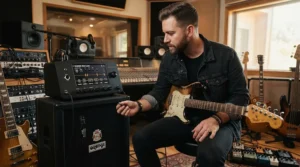
Modelling Amp vs Valve Amp: An Honest Comparison
The old debate has quietened, but it hasn’t vanished. Here’s how the two compare at this price.
| Feature | Modelling Amp Under £300 | Budget Valve Amp |
|---|---|---|
| Tonal variety | Many voices and effects in one box | Usually one core sound |
| Volume control | Power reduction, headphones, stereo | Needs loud volume for full character |
| Recording | Often built-in USB | Requires microphone or extra gear |
| Maintenance | Firmware updates | Valve replacement over time |
| Feel and dynamics | Improving; varies by model | Often more responsive when pushed |
| Best For | Home players and versatility seekers | Players who want one sound |
Reviewers on the Katana Gen 3 sometimes conclude they’re simply “tube amp people,” and that’s a fair outcome for some. The one genuine valve option in this band is the Blackstar HT-1R MkIII, which trades volume and versatility for authentic valve dynamics. For most people, though, a modelling amp under £300 delivers more usable sounds per pound. Choose valves only if you’ll play one style and can tolerate limited flexibility.
Your First 30 Days: A Practical Setup Guide
Buying the amp is the easy part. Here’s a routine that avoids the classic first-month frustrations.
Week 1: Reset and listen. Start with EQ flat. Play each amp voice for a minute each. Note the two you like.
Week 2: Build three presets. A clean, a crunch and a lead. Name them. Resist downloading a hundred more.
Week 3: Record something. Connect via USB and record a simple riff into a free DAW. On Windows, check whether your amp needs a driver, and lower the buffer size if there’s lag. Positive Grid, for instance, notes drivers are required on Windows but not macOS.
Week 4: Update and back up. Install firmware updates and save your presets. Use the amp’s software (Tone Studio, Architect, Fender Tone) to keep a copy.
Common first-month mistakes: cranking gain to compensate for a weak clean tone, ignoring the headphone output, and buying a footswitch before learning the presets.
Real-World Scenarios: Three Players, Three Picks
The student in a shared house. Budget under £200, playing an hour daily, needs headphones and low volume. Based on the specs, the Fender Mustang LT25 or Positive Grid Spark 40 fits. The Spark’s Smart Jam keeps solo sessions motivating, while the LT25 leaves money for a better cable and picks.
The home recorder. Budget around £250, a laptop, and songs to demo. The Blackstar ID:Core V4 Stereo 40 provides USB-C recording and stereo width. Mac users might also weigh the Yamaha THR10II with its bundled Cubase AI.
The weekend band player. Budget just under £300, rehearsing fortnightly with a drummer. Here 20–25W won’t cut it. The Line 6 Catalyst CX 60 or Boss Katana-50 Gen 3 suit, and the choice comes down to tone preference: vintage-leaning or modern.
Volume, Hearing and Safety at Home
A modelling amp under £300 makes quiet practice easy, but that only helps if you use it. Loud music over long periods can damage hearing. NHS inform advises that it’s possible to reduce your risk of noise-induced hearing loss, including by not keeping music too loud.
Use the power reduction on the Boss Katana-50 Gen 3 and Line 6 Catalyst CX 60 whenever possible. The Blackstar ID:Core V4 Stereo 40 drops to 1W. Take breaks, and if you notice ringing after a long session, turn it down. Check the UK mains plug and cable condition on any amp, and look for UKCA or CE marking on power supplies from reputable retailers.
Long-Term Cost and Maintenance
The sticker price isn’t the whole story. Modelling amps rarely need repairs, but small extras add up.
The Boss Katana-50 Gen 3 needs a separate Bluetooth adaptor if you want wireless streaming. Footswitches, whether for the Line 6 Catalyst CX 60 or Fender Mustang GT40, are optional extras. A decent USB cable matters too: the Spark 40 ships with a USB-A cable, so Mac users with USB-C ports may need another, according to one reviewer.
Compared with valves, you avoid retubing costs. Firmware updates are free and keep the amp improving. Resale values for popular models like the Katana tend to hold well, which cushions the true cost of ownership. Budget £30–£60 for accessories in your first year.

FAQ
❓ Is a modelling amp under £300 loud enough for gigging?
❓ Can a USB recording amp replace an audio interface?
❓ Do I need amp simulation software if my amp already models tones?
❓ Which affordable modelling amp is easiest for beginners?
❓ How do preset tone banks work on a budget amp with effects?
Conclusion
There’s no single winner, and that’s the point. The right modelling amp under £300 is the one that matches how you actually play.
Want the safest all-rounder that you won’t outgrow? The Boss Katana-50 Gen 3 is hard to beat. Want a smart practice partner? The Positive Grid Spark 40. Need band-ready power and simple controls? The Line 6 Catalyst CX 60. Fender fans will enjoy the Fender Mustang GT40, recording-focused players should look at the Blackstar ID:Core V4 Stereo 40 or Yamaha THR10II, and the Fender Mustang LT25 remains the friendliest first step.
Before you click, remember three things. Prices change, so check the current figure. Confirm your computer’s USB compatibility if you’ll record. And use that power reduction, because your ears are the one part of your rig you can’t replace.
Recommended for You
- Best Combo Amp Under £200: 7 Top Picks For UK Players (2026)
- Active vs Passive Bass Guitar: 7 Best Picks For UK Players (2026)
- Acoustic Bass Guitar For Beginners: 7 Best Picks (2026)
Disclaimer: This article contains affiliate links. As an Amazon Associate, I earn from qualifying purchases. If you purchase products through these links, we may earn a small commission at no additional cost to you.
✨ Found this helpful? Share it with your friends! 💬🤗
