
In This Article
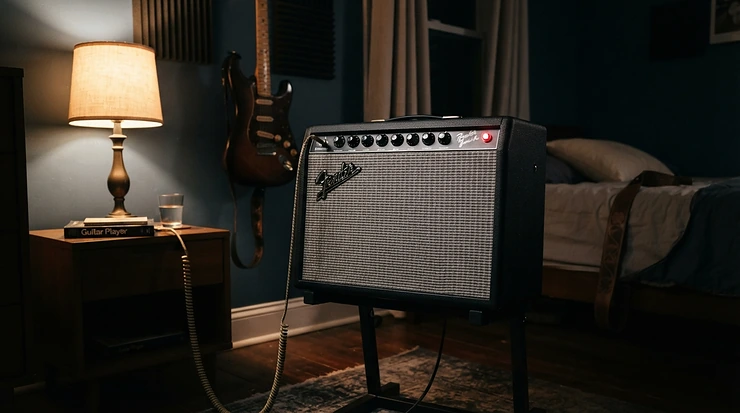
A valve combo amp for blues is a guitar amplifier that uses glass valves (tubes) instead of transistors, with the speaker built into the same cabinet. It is voiced for touch-sensitive clean tones that break up gently when you dig in. In one box, you get dynamics, spring reverb and a dependable pedal platform.

Here’s the thing: digital modellers have never been better, yet the valve combo is still what most players picture when they hear “blues guitar amp”. There’s a reason. A valve amp reacts to your fingers. Pick softly and it stays glassy. Lean in and it growls. Roll the guitar’s volume back and it cleans up again, like a dimmer switch for attitude.
A word on the science, because it’s messier than the marketing. The Wikipedia entry on tube sound makes clear that much of what we credit to valves comes down to circuit design and how the amp clips, not magic glass. That doesn’t make the feel any less real. It just means we should judge each amp on its circuit, valves and speaker rather than on a badge.
This guide is built from manufacturer specifications, UK retailer listings and aggregated reviewer feedback. It makes no claim of hands-on testing. Where review evidence was thin, I’ve said so. Seven real amps, from bedroom-friendly to dream-rig, and every spec translated into what it means when you’re bending a note at 11pm.
Quick Comparison: The Best Valve Combo Amp for Blues at a Glance
| Amp | Power | Speaker | Built-in effects | Price range (check current) | Best For |
|---|---|---|---|---|---|
| Fender Blues Junior IV | 15W | 12″ Celestion A-Type | Spring reverb | £600-£800 | Gigging all-rounder |
| Vox AC15C1 | 15W | 12″ Celestion G12M Greenback | Spring reverb and tremolo | £650-£750 | Chimey blues-rock with effects built in |
| Fender ’65 Deluxe Reverb | 22W | 12″ Jensen C-12K | Tube reverb and tube vibrato (tremolo) | £1,500-£2,200 | The no-compromise studio/stage rig |
| Fender Blues Deluxe Reissue | 40W | 12″ Eminence Special Design | Spring reverb | £1,100-£1,500 | Loud stages needing big clean headroom |
| Bugera V22 Infinium | 22W | 12″ Turbosound | Built-in reverb | £380-£450 | Budget gigging |
| Supro Delta King 12 | 15W | 12″ Supro DK12 | Analogue spring reverb | £450-£600 | Raw, single-ended Class A grit |
| Blackstar HT-5R MkIII | 5W (0.5W mode) | 12″ Blackstar-designed | Digital reverb | £550-£650 | Flats, bedrooms and recording |
The table shows a clear split. The two 15W-and-under amps with the most “finished” feature sets are the Vox AC15C1 (reverb and tremolo) and the Blackstar HT-5R MkIII (low-volume flexibility). The Fender Blues Junior IV is the most obvious everyman pick. If you only want the best clean headroom and stage volume, the Fender Blues Deluxe Reissue simply has more power in reserve. Prices are ranges from UK listings at the time of research and will drift, so always check current price before buying.
💬 Just one click — help others make better buying decisions too!😊
Top 7 Valve Combo Amp for Blues Picks: Expert Analysis
1. Fender Blues Junior IV — the small-box blues benchmark
The Fender Blues Junior IV does one job superbly: warm tube tone for blues from a 15W single-channel combo light enough to carry up the stairs without a chiropractor. It runs three 12AX7 preamp valves and a pair of EL84 power valves into a 12″ Celestion A-Type speaker. In practice, EL84s break up earlier and with more midrange bite than 6V6 or 6L6 designs, so edge-of-breakup arrives at sensible volumes.
The FAT switch adds a mid boost for solos, and the included one-button footswitch toggles it. At roughly 14 kg, it’s far kinder to your back than the 22 kg Vox AC15C1. The catch is obvious on paper: reverb is the only built-in effect, so no tremolo.
Reviewers consistently describe the IV as fuller and more “grown-up” sounding than older revisions, crediting the 12″ speaker. Common gripes are a spring reverb some find rather “springy” (a few reach for a reverb pedal) and no indicator showing whether the FAT switch is engaged.
Pros:
- ✅ Single-channel simplicity with a genuinely useful FAT mid boost
- ✅ Light and gig-friendly at roughly 14 kg
- ✅ Takes overdrive and delay pedals gracefully
Cons:
- ❌ No built-in tremolo
- ❌ Reverb character divides opinion
Expect roughly £600-£800 (listings vary), which makes it strong value as a do-it-all blues guitar amp.
2. Vox AC15C1 — chimey British voice with reverb and tremolo built in
If Fender Blues Junior IV is the friendly neighbour, the Vox AC15C1 is the eccentric uncle with a better record collection. It delivers 15W RMS into a 12″ Celestion G12M Greenback, using three 12AX7 preamp valves and two EL84s. Two channels (Normal and Top Boost) share a master volume and a tone cut control.
That tone cut is the unsung hero. It lets you tame the shimmer so the amp’s chime doesn’t turn icy. Add footswitchable spring reverb and a tremolo with speed and depth controls, and reverb and tremolo are both built in. Few amps here can say that.
On paper, the voicing leans bright and mid-forward, so darker humbucker guitars may suit it better than very bright single-coils. That is an analytical judgement, not a measurement. Reviewers praise the reverb and tremolo, and one retailer commentary points out that buying the Greenback model and upgrading the speaker yourself can cost less than buying the Alnico Blue version.
Pros:
- ✅ Genuine tremolo and spring reverb in one cabinet
- ✅ Tone cut tames harshness
- ✅ Two channels for flexibility
Cons:
- ❌ Heavy at about 22 kg
- ❌ No effects loop
Around £650-£750 at the time of research. A fair price for the only combo in the list offering both effects with such a polished British character.
3. Fender ’65 Deluxe Reverb — the benchmark for reverb and tremolo
The Fender ’65 Deluxe Reverb is the amp half of blues history seems to have recorded through. It delivers 22W into a 12″ Jensen C-12K, with two 6V6 power valves, a 5AR4 rectifier valve, four 12AX7s and two 12AT7s. The reverb and the tremolo (Fender calls it “vibrato”) are both tube-driven, and a two-button footswitch is included.
The valve rectifier matters. It allows a little supply “sag” under hard picking, which many players hear as a soft, breathing compression. That gives you valve amp dynamics that feel almost conversational. The 6V6 pair also breaks up more readily than a 6L6 design.
Controls are two channels of volume and EQ with no master volume listed, so this amp wants to be turned up to sing. Independent review material I could verify was thin, so treat the enthusiasm as reputation rather than a measured consensus. A Blues Deluxe owner’s commentary did note preferring the Deluxe Reverb’s reverb tank.
Pros:
- ✅ Tube-driven reverb and tremolo, the classic combination
- ✅ Valve rectifier adds natural sag and compression
- ✅ Includes a two-button footswitch
Cons:
- ❌ Premium price and about 19 kg
- ❌ No master volume
Think roughly £1,500-£2,200. It’s an investment, but nothing else here ties together vintage-style tone, reverb and tremolo so convincingly.
4. Fender Blues Deluxe Reissue — 40W of clean headroom for loud stages
The Fender Blues Deluxe Reissue is the one to choose when the drummer is a human thunderstorm. It pushes 40W through two 6L6 power valves into a 12″ Eminence Special Design speaker, with three 12AX7 preamp valves. Two channels (normal with a bright switch, and drive) add spring reverb, an effects loop and a two-button footswitch, all dressed in tweed.
The 6L6 stage means firmer low end and substantially more clean headroom than the EL84-based amps here. You can run it clean at gig volume without the amp collapsing into mush. The effects loop is a welcome extra: modulation and delay sit happier there than in front of a driven preamp.
Owner commentary suggests the reverb sounds best at low settings (around 2-3), that the amp wants to be “really loud”, and that a speaker upgrade is a popular tweak. One owner called it warmer than the Hot Rod Deluxe.
Pros:
- ✅ Big clean headroom for loud rooms
- ✅ Effects loop for delay and modulation
- ✅ Two channels with included footswitch
Cons:
- ❌ Overkill at bedroom volumes
- ❌ No built-in tremolo
Expect roughly £1,100-£1,500 (listings vary). A serious stage-ready blues guitar amp at a more reasonable price than the Fender ’65 Deluxe Reverb.
5. Bugera V22 Infinium — gigging valve tone for under £450
The Bugera V22 Infinium is what happens when someone asks, “Could a proper valve combo cost less than a decent pedalboard?” It’s a 22W two-channel amp with three 12AX7 preamp valves, two EL84 power valves and a 12″ Turbosound speaker. Normal and Bright inputs feed a clean/gain/volume section with a three-band EQ, master volume and presence control.
Two features stand out. The triode/pentode switch lets you drop to roughly 13W (per one listing) for lower-volume saturation. And Infinium auto-biasing means you can swap power valves without a technician. That’s a huge relief when valves inevitably age.
Reviewers highlight warm, clear cleans with ample headroom, excellent pedal response and standout value. Several suggest the stock speaker is the first upgrade target, and one German review noted that build detail doesn’t match pricier amps. Another comparison points to a clean voice similar to the Fender Blues Junior IV at lower cost.
Pros:
- ✅ Auto-biasing makes valve swaps simple
- ✅ Triode/pentode switch for quieter saturation
- ✅ Effects loop and footswitch included
Cons:
- ❌ Built-in reverb is digital rather than spring
- ❌ Heavy at roughly 19.4 kg
Roughly £380-£450. The value pick of this guide, though budget-minded players should reserve a little for a speaker swap.

6. Supro Delta King 12 — single-ended Class A grit with analogue spring
The Supro Delta King 12 is the oddball in the best way. It’s a 15W combo with a 12AX7 preamp and a single-ended Class A power section (6L6 according to most listings, though one retailer lists 6V6, so verify before buying). It sends that into a custom Supro DK12 speaker.
Single-ended means one power valve doing all the work, which tends to compress and bloom as soon as you push it. Add a FET-driven boost, Pigtronix FAT high-gain mode, three-band EQ, master volume and analogue spring reverb, and you have a lot of personality for about 13 kg. There’s a line output for recording, though no tremolo.
I couldn’t verify a deep pool of independent reviews, so what follows is spec-based reasoning. The master volume and Class A power stage suggest strong low-volume character. Footswitch (SF2) is a separate purchase.
Pros:
- ✅ Lightweight at roughly 13 kg with a poplar cabinet
- ✅ Analogue spring reverb plus line output
- ✅ Master volume allows early breakup
Cons:
- ❌ No tremolo
- ❌ Footswitch not included
Around £450-£600. A characterful alternative if you want something other than a Fender or a Vox.
7. Blackstar HT-5R MkIII — 0.5W power reduction for flats and flatmates
The Blackstar HT-5R MkIII is the answer for players whose neighbours own thin walls and long memories. It’s a 5W valve combo using an ECC83 preamp valve and a 12BH7 push-pull power valve, with a power reduction switch down to 0.5W. Two footswitchable channels (clean and overdrive) come with a footswitch included, plus ISF tone shaping and CabRig outputs (USB-C and XLR).
The ISF control sweeps continuously between American-style and British-style tone stacks. That’s a flexible approach to vintage-style tone without owning two amps. At 0.5W, the valves still work, so you keep compression and harmonic richness at quiet levels.
One reviewer called it a perfect bedroom amp thanks to the 0.5W option, while noting 5W is loud enough for louder settings. The trade-off is plain: reverb is digital, there’s no tremolo, and its clean voice is more modern than a Fender chime.
Pros:
- ✅ 0.5W mode keeps valve feel at whisper volume
- ✅ USB-C and XLR outputs simplify recording
- ✅ Footswitch included
Cons:
- ❌ Digital reverb, no tremolo
- ❌ 5W is thin without a mic at gigs
Roughly £550-£650 at the time of research. Not cheap for 5W, but cheaper than a flat that lets you play.
How to Choose a Valve Combo Amp for Blues
Before the spec sheets blur, here’s a simple method. Andertons’ valve combo guide notes that blues-oriented valve combos need fewer gizmos than most styles and tend to be great pedal platforms. Use that as your starting point.
- Set your volume reality first. If you play at home, prioritise power reduction or low wattage. If you gig, aim for 15W with a mic or 22-40W without one.
- Decide how much clean headroom you want. 6L6 designs offer more; EL84 and single-ended designs break up sooner.
- Check effects. If you need reverb and tremolo together, your shortlist narrows fast.
- Weigh the weight. Between roughly 13 kg and 22 kg, the difference shows on the stairs.
- Plan for pedals. An effects loop helps with delay and modulation; amps without one still work well with overdrive in front.
- Budget for upkeep. Replacement valves and an occasional speaker swap are normal, not failures.
- Buy UK-spec. Look for 230V UK versions, not imported 120V models.
Warm Tube Tone for Blues: What Your Ears Are Really Hearing
“Warm tube tone for blues” is the phrase everybody uses, so let’s unpick it. Warmth is partly rolled-off highs, partly gentle compression, and partly the harmonics added when valves clip softly. Players often describe these as musical because they blend with the note rather than fight it.
Three things shape it far more than the word “valve”: the speaker, the power valve type, and the output transformer. A Celestion Greenback in the Vox AC15C1 sounds nothing like a Jensen in the Fender ’65 Deluxe Reverb, even though both are 12″ speakers. EL84s give a chimey, mid-focused warmth; 6V6s feel rounder and sweeter; 6L6s are tighter and more powerful.
Here’s a practical test. Plug in, set the amp clean, and strum a rich open chord. If it sounds pleasant and slightly compressed even before any gain, you’re hearing the character that makes warm tube tone for blues so addictive. The Fender Blues Junior IV and Supro Delta King 12 both deliver this at modest volumes, which is precisely why they appear on blues shortlists so often. Be wary of any marketing that promises “warmth” without naming the valves and speaker.
Valve Amp Dynamics: Why Your Picking Hand Becomes the Gain Knob
Valve amp dynamics are the reason blues players are so evangelical. When a valve stage is pushed near its limit, your pick attack decides how much it distorts. Soft notes stay clean. Hard notes snarl. Roll the guitar volume down a touch, and the snarl melts away.
Different designs deliver different flavours of this behaviour. A valve rectifier, as in the Fender ’65 Deluxe Reverb, adds sag, a brief softening of the attack that feels like the amp is breathing with you. A single-ended Class A stage, as in the Supro Delta King 12, compresses early and blooms. A push-pull 40W design like the Fender Blues Deluxe Reissue stays tighter and cleaner for longer, then breaks up more abruptly when you finally push it.
What matters in practice is where the amp’s sweet spot lives relative to your room. A 15W amp like the Vox AC15C1 reaches that zone at gig volume, while a 40W amp may not at home. That’s why the Blackstar HT-5R MkIII‘s 0.5W mode and the Bugera V22 Infinium‘s triode setting matter: they drag the dynamic zone down to civilised volumes.
Reverb and Tremolo: Which Valve Combos Really Have Both?
Reverb and tremolo are the two effects blues players reach for most, and the market is surprisingly patchy. Only two amps in this guide offer both on board.
| Amp | Reverb type | Tremolo | Footswitch |
|---|---|---|---|
| Vox AC15C1 | Spring | Yes (speed and depth) | Check listing (VFS2A included in some) |
| Fender ’65 Deluxe Reverb | Tube-driven spring | Yes (called vibrato) | Two-button included |
| Fender Blues Junior IV | Spring | No | One-button (FAT) included |
| Fender Blues Deluxe Reissue | Spring | No | Two-button included |
| Bugera V22 Infinium | Built-in (digital per listings) | No | Two-way included |
| Supro Delta King 12 | Analogue spring | No | Sold separately |
| Blackstar HT-5R MkIII | Digital | No | Included |
If tremolo matters, the shortlist is just the Vox AC15C1 and the Fender ’65 Deluxe Reverb. Everyone else would need a tremolo pedal, which works fine in front of any of these amps. The Fender Blues Junior IV and Fender Blues Deluxe Reissue are happy pedal platforms, and the Fender Blues Deluxe Reissue adds an effects loop if you’d rather place modulation after the preamp.
Clean Headroom: How Many Watts Does a Blues Player Need?
Clean headroom is how loud an amp gets before it starts to distort. For blues, it’s a balancing act. Too little and you can never play truly clean. Too much and you never reach the sweet crunch at civilised volume.
As a rule of thumb, the Fender Blues Deluxe Reissue (40W, 6L6s) offers the most clean headroom here. The Fender ’65 Deluxe Reverb (22W, 6V6s) sits in the middle: clean at moderate volumes and crunchy when cranked. The 15W EL84 amps, Fender Blues Junior IV and Vox AC15C1, break up sooner, which suits edge-of-breakup blues but may frustrate anyone wanting pristine Strat cleans over a loud drummer.
The Bugera V22 Infinium gives you two options in one: full 22W pentode mode for clean headroom, or a lower-power triode mode for earlier saturation. That adaptability is one reason it appears on so many budget shortlists. The Blackstar HT-5R MkIII has the least headroom of all, but its 0.5W mode means you’ll usually be using it at quieter levels where that’s irrelevant.
Vintage-Style Tone: What Matters and What Is Marketing
Vintage-style tone has become shorthand for “sounds like an old Fender or Vox”. Several features genuinely shape it, and several are decoration.
What matters: the power valve type (EL84 for British chime, 6V6 and 6L6 for American sparkle), the speaker (Greenback, Jensen, Eminence), and the circuit’s simplicity. The Fender ’65 Deluxe Reverb and Vox AC15C1 are reissues of classic circuits, so the vintage-style tone is baked into the design rather than printed on the grille cloth.
What’s largely decoration: tweed covering, chicken-head knobs and nostalgic badges. They make the Fender Blues Deluxe Reissue look gorgeous, but they don’t change a note. Master volume controls, once considered un-vintage, are genuinely useful at modern volumes. The Supro Delta King 12 blends Class A character with a master and FET boost, getting you vintage-style tone with modern usability.
A good rule: judge by valves, speaker and controls, then enjoy the cosmetics as a bonus.
Valve Combo Amp for Blues vs Modelling and Solid-State Amps
| Factor | Valve combo | Modelling amp | Solid-state amp |
|---|---|---|---|
| Touch response | Excellent when pushed | Very good, improving | Fair |
| Weight | Heavier (13-22 kg here) | Light | Light to moderate |
| Maintenance | Valves wear out | Minimal | Minimal |
| Versatility | Fewer sounds, deeper character | Hundreds of presets | Limited |
| Best For | Players chasing feel (e.g., Fender Blues Junior IV) | Players wanting variety | Reliable, budget practice |
Modellers can reproduce a lot of valve behaviour, and they’re unbeatable for variety and quiet practice. What they can’t fully replicate is a real power stage moving a real speaker in your room. The feel of a valve combo amp for blues comes from physical components responding to your hands, which is why many players still prefer them.
For some players, the sensible answer is both: a valve amp for the real thing and a modeller for convenience. If you’re choosing only one, a valve amp like the Bugera V22 Infinium gives you the genuine experience for under £450, while the Blackstar HT-5R MkIII covers the quiet-practice problem a modeller usually solves.
Long-Term Cost and Maintenance for a Valve Combo Amp for Blues
A valve amp’s price tag is only the opening bid. A vacuum tube amplifier relies on components that wear out, so budget for replacement valves, an occasional re-bias on some models, and maybe a speaker change.
| Tier | Amps | Price range | Value verdict | Best For |
|---|---|---|---|---|
| Budget | Bugera V22 Infinium | £380-£450 | Outstanding value, easy valve swaps | Gigging on a budget |
| Mid-range | Fender Blues Junior IV, Vox AC15C1, Supro Delta King 12, Blackstar HT-5R MkIII | £450-£800 | Strong all-rounders | Most players |
| Premium | Fender Blues Deluxe Reissue, Fender ’65 Deluxe Reverb | £1,100-£2,200 | Lifetime amps with resale strength | Pros and serious hobbyists |
Per-year cost is modest for a hobbyist. Preamp valves often last years; power valves commonly need replacing every year or two with regular gigging, though sources vary. The Bugera V22 Infinium‘s auto-biasing lets you replace valves yourself, which saves a tech visit. Premium amps like the Fender ’65 Deluxe Reverb typically hold their resale value better, softening the total cost over time. Buying used is a legitimate way to stretch the budget, provided the valves and speaker are checked.
How to Set Up Your Valve Combo Amp for Blues: The First 30 Days
Setting up a valve amp isn’t hard, but a few habits will protect your investment.
- Never run it without a speaker connected. A valve amp needs a load. Check impedance too: the Vox AC15C1 is 16 ohms, while the Bugera V22 Infinium offers 4, 8 and 16 ohm settings.
- Warm it up. Use the standby switch if there is one and give valves a minute before engaging.
- Start flat. Set bass, middle and treble around noon, volume at about 9 o’clock, then increase gradually until you hear edge-of-breakup.
- Use your guitar’s volume knob. Roll it back for cleans, and forward for grit. That’s the whole valve amp dynamics trick.
- Place pedals sensibly. Overdrive and fuzz go in front; delay and modulation go in the loop if you have one (the Fender Blues Deluxe Reissue and Bugera V22 Infinium do).
- Tilt it back. Raise the cabinet on a chair so the speaker aims at your ears rather than your ankles.
- Let it cool before moving. Valves run hot and are fragile when warm.
Avoid the common first-month mistake of cranking everything. Moderate settings often sound better than maxed ones.
Which Valve Combo Amp for Blues Suits You? Real-World Scenarios
Scenario 1: The flat-dweller. You play 30 minutes most evenings, your walls are thin, and your budget is around £600. The Blackstar HT-5R MkIII and its 0.5W mode are made for this. The Bugera V22 Infinium in triode mode is the cheaper alternative if you can keep volume reasonable.
Scenario 2: The weekend pub gigger. You play two or three gigs a month through a PA, drive a hatchback, and want one amp for everything. The Fender Blues Junior IV is the logical choice: light, simple and pedal-friendly. Add the Vox AC15C1 to the shortlist if you want built-in reverb and tremolo and can handle 22 kg.
Scenario 3: The semi-pro or studio player. You record regularly, gig weekly, and want a long-term amp that holds its value. The Fender ’65 Deluxe Reverb is the classic answer for reverb, tremolo and vintage-style tone. If the band is loud, the Fender Blues Deluxe Reissue gives you the clean headroom to stay audible.
Frequency of use matters too. Weekly gigging justifies a premium amp. Occasional noodling rarely does.
Common Valve Combo Amp for Blues Problems and Fixes
“It sounds harsh and icy.” Roll back the treble and presence, and lower the guitar’s tone knob. On the Vox AC15C1, use the tone cut control. The Fender Blues Junior IV‘s FAT switch can also thicken a thin sound.
“It’s too loud at home.” Use power reduction on the Blackstar HT-5R MkIII, or the triode setting on the Bugera V22 Infinium. Otherwise, consider a power attenuator.
“The reverb sounds boingy.” Some reviewers say the Fender Blues Junior IV‘s spring reverb is springy. Turn it down, or use a reverb pedal.
“It’s quiet in a band.” Mic it up or step up in power. The Fender Blues Deluxe Reissue at 40W has plenty in reserve.
“I get hum and noise.” Check your cables and move away from power supplies and screens. Single-coil guitars are especially prone, and valve amps can emphasise it.
Volume, Neighbours and Hearing: Safety and Regulations for Valve Combos
Valve combos are loud, hot and mains-powered, so a few safety points are worth knowing. First, buy a UK-spec (230V) model with a proper UK plug and look for UKCA or CE marking. Imported 120V amps need a transformer and are a poor idea. Second, valves run hot, so keep ventilation clear and don’t cover the amp.
Third, hearing. Regular exposure to loud music can cause permanent damage. If you play live for work, the Control of Noise at Work Regulations 2005 apply to music and entertainment, and the HSE’s Sound advice guidance on controlling noise in music and entertainment gives practical advice for venues, performers and employers.
Practical habits help everyone: use musicians’ earplugs at rehearsal, take breaks, and don’t chase volume. A 5W amp like the Blackstar HT-5R MkIII or a 15W like the Fender Blues Junior IV can sound enormous without being punishing. If neighbours are involved, a considerate schedule matters as much as decibels.

FAQ
❓ How many watts is enough for a valve combo amp for blues at gigs?
❓ Is a 5W valve amp loud enough for jam nights?
❓ How often do valves need replacing in a blues combo?
❓ Can I use pedals with a valve combo amp for blues?
❓ Should I buy a valve combo amp for blues new or used?
Conclusion
The best valve combo amp for blues is the one that suits your room, your hands and your wallet. The Fender Blues Junior IV is the safest all-rounder. The Vox AC15C1 is the pick if you want reverb and tremolo in one chimey cabinet. The Fender ’65 Deluxe Reverb remains the dream rig, and the Fender Blues Deluxe Reissue gives you the headroom for loud stages. On a budget, the Bugera V22 Infinium is outstanding value, the Supro Delta King 12 offers a different flavour of Class A grit, and the Blackstar HT-5R MkIII rescues the quiet-practice problem.
Whatever you pick, remember what makes the format special: dynamics, feel and the way a good amp turns your touch into tone. Choose with your ears and your volume limits in mind, check current prices before you buy, and give yourself a month to learn the amp’s sweet spot.
Recommended for You
- Valve Vs Solid-State Amp: 7 Ultimate Picks Compared (2026)
- Valve Amp For Home Practice: 7 Best Picks For UK Players (2026)
- Modelling Amp Under £300: 7 Brilliant Buys Ranked (2026)
Disclaimer: This article contains affiliate links. As an Amazon Associate, I earn from qualifying purchases. If you purchase products through these links, we may earn a small commission at no additional cost to you.
✨ Found this helpful? Share it with your friends! 💬🤗
