In This Article
A modelling amp for gigging is a digital guitar amplifier that uses DSP to recreate the preamps, power stages, speakers and effects of classic amps. It adds the stage-ready volume, rugged cabinet, footswitch control and PA connections that live playing demands. One box, dozens of tones, no swapping valves in the dark.
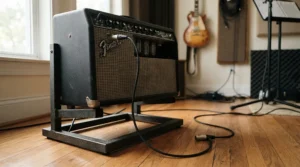
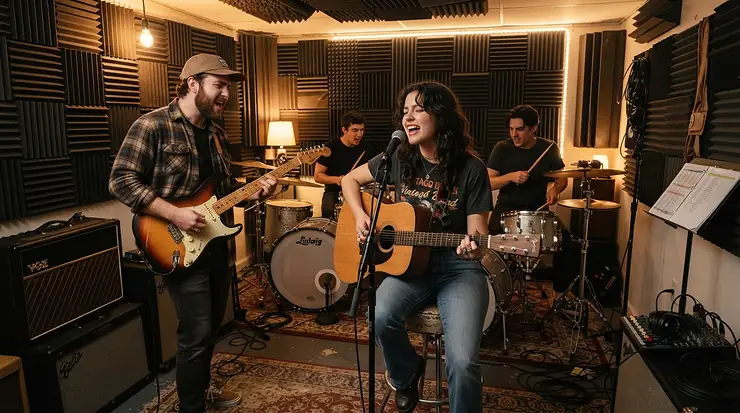
Not long ago, turning up to a pub gig without a valve combo invited raised eyebrows from the bassist. Those days are gone. The guitar amplifier has been through valves, transistors and now silicon, and modern designs model more than preamp tone. They also model power-amp behaviour and speaker response, which is why a gig-ready modelling amp can stand next to a drummer without sounding like a practice toy.
Here’s the catch. “Modelling amp” covers everything from bedroom boxes to stage monsters, and a modelling amp for gigging has to clear tougher hurdles. It needs enough stage volume to compete with the kit. It needs an output the sound engineer can actually use. It needs a tone-switching footswitch you can stomp in the dark, and a cabinet that survives the boot of a hatchback.
This guide compares seven real amps, from the budget Boss Katana-50 EX Gen 3 to the flagship Boss Katana Artist Gen 3, plus two portable amps for gigs that double as mini PAs. One honest note on method: everything here comes from manufacturer specifications, published reviews and aggregated owner feedback. None of it comes from me gigging these amps. Where reviews are thin, I’ll say so.
Quick Comparison: 7 Modelling Amps for Gigging at a Glance
| Amp | Power / Speaker | Line Output | Footswitch | Price Range (indicative) | Best For |
|---|---|---|---|---|---|
| Boss Katana-50 EX Gen 3 | 50 W, 1×12″ | 1/4″ with IR cab sim | GA-FC / GA-FC EX | Around £300-£350 | Small pubs on a budget |
| Boss Katana-100 Gen 3 | 100 W, 1×12″ | 1/4″ | GA-FC / GA-FC EX | Around £400 | All-round working players |
| Boss Katana Artist Gen 3 | 100 W, 1×12″ Waza | XLR + 1/4″, ground lift | GA-FC / GA-FC EX | Mid-to-high £600s | Premium tone, direct to desk |
| Line 6 Catalyst CX 100 | 100 W, 1×12″ | XLR, ground lift | LFS2 (optional) | Mid-£300s to mid-£400s | Knob-led, menu-free players |
| Fender Mustang GTX100 | 100 W, 1×12″ | Stereo XLR | GTX-7 included | Around £350-£450 | Preset-heavy cover bands |
| Positive Grid Spark Live | 150 W, 2×6.5″ | 2x 1/4″ | Spark Control (separate) | Around £450-£550 | Duos and mobile PA use |
| Roland Cube Street EX | 50 W stereo, battery | Stereo link / line out | Optional footswitches | Around £300-£400 | Buskers, acoustic duos |
Looking at the table, the Boss Katana-100 Gen 3 is the sensible all-rounder. The Fender Mustang GTX100 wins on out-of-the-box readiness because its footswitch is in the box. If your sound engineer insists on XLR, the Boss Katana Artist Gen 3, Line 6 Catalyst CX 100 and Fender Mustang GTX100 save you buying a DI box. Budget buyers should note that the Boss Katana-50 EX Gen 3 gives up headroom, not features.
💬 Just one click — help others make better buying decisions too!😊
Top 7 Modelling Amps for Gigging: Expert Analysis
Prices below are indicative UK ranges at the time of research. Prices vary by retailer, so check current price before buying.
1. Boss Katana-50 EX Gen 3 — cheapest ticket to a proper gig-ready modelling amp
The “EX” suffix is the whole story. It adds a line out, Stereo Expand and foot-controller support to the standard 50-watter, and that is what turns a bedroom-friendly combo into a gig tool.
You get 50 watts of Class AB power through an upgraded 12-inch speaker. There are six amp characters (Acoustic, Clean, Pushed, Crunch, Lead, Brown) with a selectable variation each, plus five effect sections. In practice that means 12 usable tones before you touch an app. The Power Control switch (0.5 W, Half, Max) lets you push the power stage for crunch at pub-friendly levels.
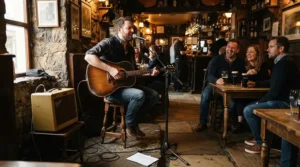
On paper this is a small-room amp, suited to covers, open mics and drummers who respect the word “brushes”. Once the kit gets enthusiastic, 50 watts runs out of headroom, so Power Control is a sound-shaping tool rather than a volume cheat. The line out is a quarter-inch jack, so expect to carry a DI box for XLR-only desks.
I couldn’t find enough independent owner reviews of the EX variant specifically, so treat this as a spec-led verdict. The wider Gen 3 family earns consistently positive coverage for reliability and value.
Pros:
- ✅ Line out with IR cab sim for the desk
- ✅ Power Control gives cranked tone at low volume
- ✅ Foot controller support for tone switching
Cons:
- ❌ Quarter-inch line out, not XLR
- ❌ 50 W runs short beside loud drummers
Price and verdict: around £300-£350, which is strong value as an entry-level gig-ready modelling amp.
2. Boss Katana-100 Gen 3 — the safe default for working players
If a friend asked for one amp recommendation and wouldn’t tell you the budget, this is the safe answer. It is a 100-watt 1×12 with the same six characters and 12 variations as its smaller sibling, plus a bit more headroom.
The headline specs are 100 watts of Class AB power, five simultaneous effect categories and a Stereo Expand function that links a second Katana-family amp for width. There are also jacks for a foot controller and an expression pedal. Weight is roughly 33 lb, just under 15 kg by the manufacturer’s figures, which is manageable for one-person load-ins. That stereo link is handy for wedding and function players who want to fill a bigger room without buying a bigger cab.
Based on the spec comparison, it sits in the sweet spot: loud enough for most stages, light enough to carry up a pub staircase. Retailer listings describe it as a good monitor for a direct-to-PA pedalboard setup, which is a useful second life.
Published reviews lean positive, with GearNews listing it among the safest, most reliable gig-ready choices, and UK retailer feedback is similarly upbeat.
Pros:
- ✅ 12 tones and five effect sections on tap
- ✅ Stereo Expand links a second amp
- ✅ Weight stays under 15 kg
Cons:
- ❌ Quarter-inch line out only
- ❌ Deeper editing needs the Tone Studio app
Price and verdict: around £400, and arguably the best all-round value here.
3. Boss Katana Artist Gen 3 — premium tone with a proper XLR feed
This is the flagship, and the thing that sets it apart is how it talks to the PA. It has an XLR line out with a ground lift, a quarter-inch alternative, and a Line Out switch with four voicings (Custom, Rec, Blend and Live).
Other specs: 100 watts of Class AB power, a custom 12-inch Waza speaker, six characters with variations, a Power Amp In and a footswitch jack for the GA-FC controllers. The XLR means you can hand your sound engineer a balanced signal directly, with no DI box and one fewer thing to forget. The ground lift is the quiet hero when a venue’s wiring hums.
The trade-off is weight. At around 42 lb (roughly 19 kg), it is the heaviest amp in this round-up, and one European retailer reviewer notes it is bigger and heavier than the standard models. Their verdict is that it sounds noticeably better than the cheaper siblings. If your back can take it, that is a fair upgrade for players who record or play larger rooms.
Pros:
- ✅ XLR line out with ground lift
- ✅ Waza speaker reviewers praise
- ✅ Four line-out voicings for different situations
Cons:
- ❌ Heaviest amp in this list
- ❌ Premium price over the standard models
Price and verdict: mid-to-high £600s. It is worth it if the XLR feed and speaker matter to you, and overkill otherwise.
4. Line 6 Catalyst CX 100 — knobs first, menus never
The standout here is philosophy. It behaves like a traditional two-channel amp, with real knobs, while hiding modern tricks behind them.
You get 100 watts through a 1×12 speaker and 12 amp voicings derived from Line 6’s Helix processors. Six banks across two channels give 12 memories. The power attenuator offers half power, 0.5 W and mute. An XLR line output with ground lift carries cab simulation to the desk. There is also an effects loop, a power-amp input, MIDI and a USB-C interface. At 14.5 kg it is mid-weight.
The practical upshot is a fast soundcheck. You can set two channels, add a delay in the loop and walk on stage without scrolling anything. Programme-change messages over MIDI suit players with pedalboards or backing-track rigs.
GearNews describes it as a loud, reliable combo that behaves like a real amp on stage, and the small sample of retailer reviews is glowing. Treat that as encouraging rather than conclusive.
Pros:
- ✅ XLR direct out with ground lift
- ✅ Hands-on knobs, minimal menu diving
- ✅ FX loop and MIDI for bigger rigs
Cons:
- ❌ Footswitch is a separate purchase
- ❌ Fewer instant tones than preset-led rivals
Price and verdict: mid-£300s to mid-£400s, and a great pick for players who hate scrolling.
5. Fender Mustang GTX100 — footswitch included, 200 presets ready
The standout is what’s in the box. The seven-button GTX-7 footswitch ships with the amp, which instantly solves the tone-switching footswitch question that costs other amps another £50-plus.
Specifically, you get 100 watts, a Celestion Special Design speaker, 40 amp models, 200 presets, stereo XLR line outs, a stereo effects loop, Bluetooth, WiFi and a 60-second looper. It weighs around 22 lb (roughly 9.9 kg), making it the lightest 100-watt option here. Stereo XLRs mean a clean feed to the desk, and the Fender Tone app handles preset edits from your phone.
For a covers band that jumps genres, this is the multi-tone amp for live shows in the true sense: pre-built patches for country, rock and pop. Guitar World’s Mustang GTX100 review calls it outstanding value and confirms it is loud enough for performance, not just practice.
Retailer buyers rate it around 4.5 out of 5, with praise for presets and phone editing.
Pros:
- ✅ GTX-7 footswitch included in the box
- ✅ Stereo XLR outs for the PA
- ✅ Lightest 100 W combo here
Cons:
- ❌ Preset-led workflow means pre-gig app tweaking
- ❌ Single 12″ cab limits big-room projection
Price and verdict: around £350-£450, which is superb value when the footswitch is counted.
6. Positive Grid Spark Live — amp, PA and mixer in one 12 kg box
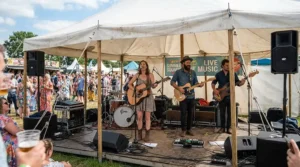
The standout is that it isn’t just an amp. It is a four-channel mixer and PA, so a guitarist-singer duo can run one unit instead of three.
The spec sheet shows 150 watts of Class D power, two 6.5-inch woofers with tweeters, an XLR/quarter-inch combo input, three instrument inputs, two line outs, MIDI, Bluetooth 5.0 and a 2×2 USB interface. An optional 6,000 mAh battery gives up to 8 hours at mid volume. It weighs 12 kg and has a standard stand mount. That is portable amp for gigs territory.
Sound On Sound’s Spark Live review describes it as built to hold its own against drum kits in smaller venues, with the option to feed a house PA in larger ones. Owners add that you’ll want a footswitch for proper live use, and that it is slightly heavy. One database also notes that, despite the manufacturer’s site, the Live has no onboard looper.
Pros:
- ✅ Four-channel mix for vocals and guitar
- ✅ Optional battery up to 8 hours
- ✅ Stand mount and tilt options
Cons:
- ❌ Battery and footswitch sold separately
- ❌ Small drivers move less air than a 12″
Price and verdict: around £450-£550, with the battery costing under £100 more. It is a genuine one-box solution for duos.
7. Roland Cube Street EX — 50 W stereo on eight AA batteries
The standout is freedom from the plug socket. It delivers 50 watts (25+25) in stereo from eight AA batteries, which suits buskers, garden parties and acoustic duos.
There are two 8-inch woofers and two 2-inch tweeters, with two XLR/quarter-inch combo inputs, switchable 50/25/10-watt power modes, and selectable types (A-Guitar, Acoustic Sim, Clean, Crunch, Lead, Mic). Battery life runs roughly 4, 8 and 16 hours on alkaline cells across those modes. At 7.4 kg it is the lightest amp in this list, and Stereo Link joins a second unit for wider coverage.
It is a modelling amp in the simpler sense, with a handful of voicings rather than a deep library. Sound On Sound calls it one of the better battery-powered options, and owners praise its busking and small-venue suitability. They also flag a thin sound from the external-music input and note that two XLR inputs fill up quickly with two singers plus a guitar.
Pros:
- ✅ Genuine battery power for outdoor gigs
- ✅ 7.4 kg makes it easy to carry
- ✅ Stereo Link to add a second unit
Cons:
- ❌ Only two combo inputs
- ❌ Fewer amp types than the bigger combos
Price and verdict: around £300-£400, and a fine busking tool, though not a band-room amp.
How to Choose a Modelling Amp for Gigging
Selecting the right model comes down to six decisions, in this order.
- Match wattage to your drummer, not your ego. A 100 W amp is roughly twice as loud as a 10 W one, not ten times, so 50 W versus 100 W is a modest perceived step. Choose 100 W if the band is loud or you’ll play outdoors.
- Check the output your sound engineer will receive. XLR with a ground lift is the cleanest hand-off. Quarter-inch outputs are fine if you carry a DI box.
- Count your instant tones. A multi-tone amp for live shows should let you recall every sound in your set without an app.
- Weigh the lift. Weights here run from 7.4 kg to roughly 19 kg. Your stairs matter.
- Insist on a tone-switching footswitch. Check whether it’s included, optional or a third-party add-on.
- Budget for extras. Footswitch, DI box, cover and spare cables can add a fifth to the price.
A gig-ready modelling amp that scores well on all six will rarely disappoint.
Stage Volume: How Loud Does a Modelling Amp for Gigging Need to Be?
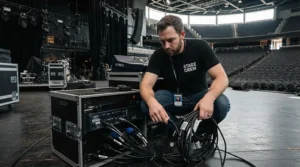
Stage volume is the sound level on the stage itself, separate from what the audience hears at the front. The two get confused constantly. If your amp is the loudest thing on stage, the sound engineer has less control and the singer’s monitor mix gets swamped.
Here’s a useful piece of maths: doubling wattage adds roughly 3 dB, which most listeners barely register. Moving from the Boss Katana-50 EX Gen 3 to the Boss Katana-100 Gen 3 buys headroom more than loudness. Speaker size, cabinet design and aiming the amp at your ears matter more than the number on the badge. A tilted combo or a stand on a stage floor can transform what you hear without raising the overall level.
Power attenuation helps too. The Line 6 Catalyst CX 100 offers half power, 0.5 W and mute, and the Boss amps provide a Power Control switch, so you can get driven-amp feel at lower volume.
There is also a legal angle. Since 2008, the music and entertainment sectors have been covered by the Control of Noise at Work Regulations 2005. The HSE’s Sound Advice guide offers practical guidance for performers, venues and employers, with an emphasis on preventing irreversible hearing damage. If you’re regularly on loud stages, it’s worth reading, and worth buying decent ear protection.
PA-Friendly Output: Getting Your Modelling Amp for Gigging to the Front of House
A PA-friendly output is the difference between “we’ll just mic the cab” and “here’s your signal, thanks”. It gives the engineer a consistent, hum-free feed they can mix, and it lets you keep your own stage volume sensible.
Three details matter. First, connector type. XLR is the language of mixing desks. The Boss Katana Artist Gen 3, Line 6 Catalyst CX 100 and Fender Mustang GTX100 all offer it, while the Boss Katana-100 Gen 3 and Boss Katana-50 EX Gen 3 use quarter-inch jacks and benefit from a DI box. Second, cabinet simulation. A raw preamp signal into a PA sounds fizzy, so look for IR or cab-sim processing on the line out. Third, ground lift. Venue wiring can hum, and a ground-lift switch is a cheap cure.
The Boss Katana Artist Gen 3 goes furthest, with its four-way Line Out switch (Custom, Rec, Blend, Live) for different situations. The Fender Mustang GTX100 provides stereo XLRs, and the Positive Grid Spark Live has two quarter-inch line outs for bigger rooms. Whichever amp you pick, talk to the engineer before soundcheck about what they want to receive.
Tone-Switching Footswitch: Running a Multi-Tone Amp for Live Shows
A tone-switching footswitch is what makes a multi-tone amp for live shows usable. Without one, those dozens of sounds are a studio feature. With one, they’re your solo boost, your clean intro and your big-chorus crunch at the tap of a toe.
The amps here handle it differently. The Boss amps use the GA-FC or GA-FC EX foot controllers, and the EX version offers expansion to double your switches or control two amps. The Line 6 Catalyst CX 100 uses the optional LFS2 footswitch to change channel and toggle effects. The Fender Mustang GTX100 includes its seven-button GTX-7 with bank up/down and looper control, which makes it the best value for tone control out of the box.
Practical advice, based on how these systems work: build your set-list sounds in advance and keep them to three or four per song at most. Name them after the song, not the amp. Test the switching in a dim room, because stage lighting is rarely generous. Finally, carry a spare footswitch cable, because it will be the thing that fails.
Modelling Amp vs Valve Amp for Gigging: An Honest Comparison
| Factor | Modelling Amp | Valve Amp |
|---|---|---|
| Weight | Often lighter, with ranges from 7.4 kg to 19 kg here | Often heavier, due to transformers |
| Consistency | Same tones every night | Varies with valves, temperature, venue |
| Tone switching | Recall dozens of sounds | Limited to channels and pedals |
| Maintenance | No valves to replace | Valves wear and need replacing |
| PA connection | Built-in line outs with cab sim | Usually mic or external load box |
| Best For | Players needing variety and portability (e.g. Line 6 Catalyst CX 100) | Players chasing one specific amp feel |
Modelling wins on repeatability, portability and PA connection, which are the three things that cause the most stress on a gig day. Valve amps keep their advantage for players who want one particular sound and feel. Some UK retailers also note that digital amps tend to sound quieter than valve amps at similar wattage, which is another reason to lean towards 100 W models like the Boss Katana-100 Gen 3 for louder stages.
If your repertoire is varied, or you share one amp across guitar and vocals as with the Positive Grid Spark Live, the maths favours modelling. If you play a single genre with one signature tone, a valve combo may still feel more satisfying.
Portable Amp for Gigs: When Weight and Batteries Beat Wattage
Not every gig has a stage, a car park or a roadie. For acoustic duos, buskers and function players, a portable amp for gigs is about weight, power source and footprint, not raw output.
Ranking by weight, the Roland Cube Street EX is the lightest at 7.4 kg, followed by the Fender Mustang GTX100 at roughly 9.9 kg and the Positive Grid Spark Live at 12 kg. The Line 6 Catalyst CX 100 is 14.5 kg and the Boss Katana-100 Gen 3 just under 15 kg. The Boss Katana Artist Gen 3 is the heaviest at roughly 19 kg.
For truly unplugged gigs, only two options work: the Roland Cube Street EX on eight AA batteries, and the Positive Grid Spark Live with its optional battery. Sound On Sound’s review of the Spark Live suggests it is designed to compete with drums in small venues, which is a good benchmark for how loud a portable PA-style amp needs to be.
Think about the loading routine too. Can you carry the amp, a stand and a bag in one trip? If not, a lighter amp with a stand mount often beats a louder one.
Features That Actually Matter (And Those That Don’t)
Marketing sheets love big numbers. A few of them deserve your attention, and many don’t.
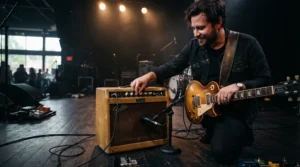
What matters: a line out you can actually use, a footswitch jack that matches your preferred controller, a ground lift, a power attenuator and a weight you can carry. These are the things that decide whether a gig goes smoothly.
What matters less: headline amp-model counts. The Fender Mustang GTX100 offers 40 amp models and 200 presets, while the Line 6 Catalyst CX 100 and Boss amps offer 12 voicings or tones each. Most players settle on three or four sounds per gig, so a smaller library is rarely a handicap. Bluetooth streaming and WiFi are pleasant, and neither will save you from a bad DI feed. Editing apps are great at home, but you shouldn’t need one at the venue.
The takeaway is simple. Pick the amp whose connections suit your stage and PA, then judge tone with your own ears.
Long-Term Cost & Maintenance: What a Gig-Ready Modelling Amp Really Costs
Think in cost per gig, not just sticker price. A £400 amp used for 50 gigs a year over five years is 250 gigs, so about £1.60 per gig before extras. Cheap, if the amp survives.
Maintenance is light. There are no valves to replace, so the usual costs are a cover, spare leads and the occasional firmware or app update. Wipe it down, keep the vents clear and don’t leave it in a cold car overnight.
| Amp | Extra Kit to Budget | Value Verdict | Best For |
|---|---|---|---|
| Boss Katana-50 EX Gen 3 | Foot controller, DI box | Excellent entry value | Small-pub players |
| Boss Katana-100 Gen 3 | Foot controller, DI box | Best all-rounder | Regular gigging |
| Boss Katana Artist Gen 3 | Foot controller | Premium, no DI needed | Pro-level desks |
| Line 6 Catalyst CX 100 | LFS2 footswitch | Strong for knob lovers | Menu-averse players |
| Fender Mustang GTX100 | Very little | Footswitch included | Cover bands |
| Positive Grid Spark Live | Battery (under £100), footswitch | One-box PA value | Duos |
| Roland Cube Street EX | Rechargeable AAs | Cheap and portable | Buskers |
The Fender Mustang GTX100 carries the lowest hidden cost because the footswitch is already in the box. The Boss Katana Artist Gen 3 looks expensive but includes the XLR feed the cheaper Boss models need a DI box for. Remember too that the Positive Grid Spark Live can replace a separate PA for small gigs, which changes the maths considerably.
Setting Up Your Modelling Amp for Gigging: The First 30 Days
A new amp rarely sounds right straight from the box, so treat the first month as a settling-in period.
Week one: build the basics. Update firmware and download the manufacturer’s app. Create three core sounds only: a clean, a crunch and a lead boost. Resist the urge to build 30 patches.
Week two: rehearse loud. Bedroom tones usually vanish in a band mix. Take the amp to rehearsal and adjust the EQ with the drummer playing. Leave a little mid-range, which helps you cut through.
Week three: test the line out. Connect it to a PA, or ask a friendly engineer to check it. Try the ground lift if you hear hum. If your amp has Power Control, test it at a realistic stage level.
Week four: pack-down routine. Build a bag: footswitch, spare cable, DI box, power lead and a printed patch list. Practise setting up in under ten minutes.
Common mistakes include over-editing, forgetting the ground lift, and choosing tones at bedroom volume.
Real-World Scenarios: Matching a Gig-Ready Modelling Amp to Your Gigs
The pub covers band guitarist. Three gigs a month, mixed genres, budget around £400. The Fender Mustang GTX100 gives you 200 presets and a footswitch in the box, while the Boss Katana-100 Gen 3 gives you 12 tones and more knob control. Choose based on whether you prefer presets or panels.
The singer-guitarist duo. Weddings, cafés and small festivals, 40 gigs a year. The Positive Grid Spark Live handles guitar and vocals in one box, with optional battery power for outdoor spots. Add a wireless footswitch for tone changes.
The function-band pro. Larger rooms, house PA, a sound engineer who wants XLR. The Boss Katana Artist Gen 3 or the Line 6 Catalyst CX 100 give you an XLR line out. Pick the Artist for tone and the Catalyst for menu-free operation.
The busker or acoustic soloist. Outdoor pitches, no mains. The Roland Cube Street EX runs on batteries, weighs 7.4 kg and offers two combo inputs for mic and guitar. It is the simplest tool for the job.
The budget starter. Small rooms, open mics, low budget. The Boss Katana-50 EX Gen 3 gives you a gig-ready feature set at the lowest price here.
FAQ: Modelling Amp for Gigging
❓ What is the best modelling amp for gigging on a budget?
❓ Do I need a DI box with a modelling amp for gigging?
❓ Is 50 watts enough for a gig-ready modelling amp?
❓ Which portable amp for gigs runs on batteries?
❓ Can I use a modelling amp as a stage monitor while sending a line out to the PA?
Conclusion
There’s no single winner, but there is a right answer for each kind of player. The Boss Katana-100 Gen 3 is the safest all-rounder. The Fender Mustang GTX100 is the smartest buy if you want a tone-switching footswitch included. The Boss Katana Artist Gen 3 and Line 6 Catalyst CX 100 are the picks when the sound engineer wants XLR. The Positive Grid Spark Live replaces a mini PA for duos, the Roland Cube Street EX frees buskers from the mains, and the Boss Katana-50 EX Gen 3 gets budget players on stage.
Whichever you choose, remember what matters: sensible stage volume, a PA-friendly output, a footswitch you trust and weight you can carry. Get those right and any of these will serve a gigging musician well for years.
Recommended for You
- Solid-State Amp For Beginners: 7 Proven Picks For UK Players (2026)
- Valve Combo Amp For Blues: 7 Best Proven Picks (2026)
- Valve Vs Solid-State Amp: 7 Ultimate Picks Compared (2026)
Disclaimer: This article contains affiliate links. As an Amazon Associate, I earn from qualifying purchases. If you purchase products through these links, we may earn a small commission at no additional cost to you.
✨ Found this helpful? Share it with your friends! 💬🤗
