
In This Article
Stand in any UK guitar shop long enough and you’ll hear the same hushed argument happening at the counter: electro acoustic vs acoustic guitar, which one actually deserves your money? It sounds like a simple question. It isn’t. The electro acoustic vs acoustic guitar debate trips up total beginners and gigging veterans alike, mostly because the marketing blurs the line on purpose — cutaway body here, “stage-ready” sticker there, and suddenly you’re not sure if you’re buying an instrument or a small PA system.

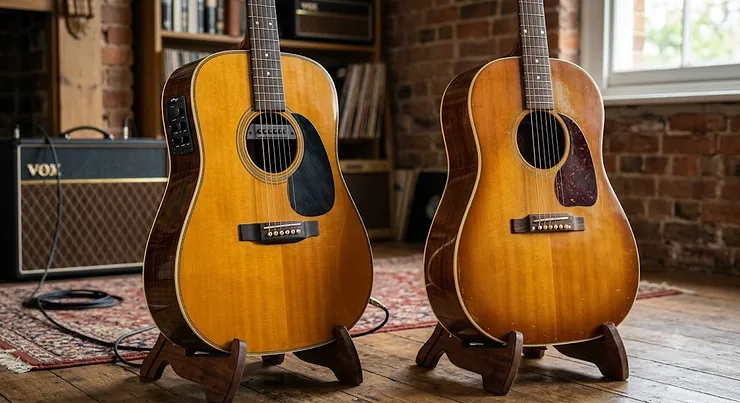
Here’s the short version, because you deserve one before we go deep: an acoustic guitar relies purely on its wooden body to project sound, while an electro acoustic (also called acoustic-electric) has a built-in pickup and preamp so it can plug straight into an amp or PA. Everything else — tone, price, weight, maintenance — flows from that one distinction. Neither is objectively “better.” One is just built for a different job.
This guide digs into seven real, currently available guitars spanning budget beginner models through to premium instruments UK players actually gig with, plus honest, review-sourced analysis of when the electronics earn their keep and when they’re dead weight. No invented testimonials, no fictional “I took this on tour” stories — just genuine specs, aggregated reviewer sentiment, and straight talk about who each guitar suits. Let’s get into it.
Quick Comparison Table
| Guitar | Type | Best For | Price Range |
|---|---|---|---|
| Yamaha F310 | Acoustic | Total beginners, tight budgets | Under £150 |
| Epiphone DR-100 | Acoustic | Warm dreadnought tone on a budget | Under £150 |
| Ibanez PF12MHCE | Electro Acoustic | First-time gigging on a budget | £150-£250 range |
| Tanglewood TW4E | Electro Acoustic | British design, mahogany warmth | £250-£350 range |
| Fender CD-60SCE | Electro Acoustic | Solid-top tone plus stage electronics | £250-£350 range |
| Martin DJr-10E | Electro Acoustic | Compact travel and songwriting | £450-£600 range |
| Taylor Gold Label 710e | Electro Acoustic | Serious gigging players, best overall | £2,000+ range |
Looking at the spread above, the real electro acoustic vs acoustic guitar decision isn’t budget versus premium — it’s whether you’ll ever need to plug in. The Yamaha F310 and Epiphone DR-100 prove you don’t need electronics to get a genuinely playable first guitar, while the Ibanez PF12MHCE shows that stage-readiness doesn’t have to break the bank. At the top end, the Taylor Gold Label 710e demonstrates that when electronics are done properly, they can complement rather than compromise the acoustic voice underneath.
💬 Found a model here that’s caught your eye? Click through to check current pricing and availability before it changes.
What Is Electro Acoustic vs Acoustic Guitar?
An acoustic guitar produces sound entirely through its hollow wooden body, with no electronic components at all. An electro-acoustic guitar — also called an acoustic-electric guitar — is essentially the same instrument fitted with a pickup and onboard preamp, letting you run a cable into an amplifier or PA while the guitar still sounds and plays like a standard acoustic when unplugged.
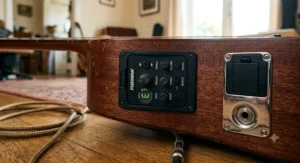
That’s the textbook definition, but here’s what most buyer guides skip: the pickup doesn’t just add volume, it changes the guitar’s physical build too. Electro models almost always ship with a cutaway body for fretboard access, a slightly different bracing pattern to accommodate the under-saddle sensor, and a control panel cut into the side that some players genuinely dislike the look of. You’re not just buying a feature, you’re buying a different instrument. For the full technical history of how this hybrid came about, Wikipedia’s overview of the acoustic-electric guitar traces it back to 1920s big-band guitarists getting drowned out by horn sections — a problem that’s essentially unchanged a century later.
Top 7 Electro Acoustic and Acoustic Guitars: Expert Analysis
Below are seven real, currently sold models spanning both categories, chosen to cover genuine budget, mid-range and premium options so you can see exactly what your money buys at each level.
1. Yamaha F310 — best-selling budget beginner acoustic
The Yamaha F310 has been the default recommendation for first-time UK buyers for years, and the reason isn’t mysterious: it’s cheap, consistent, and doesn’t feel like a toy. Built with a laminated spruce top, meranti back and sides, and a nato neck with rosewood fretboard, it’s a full-size dreadnought that punches well above its price bracket for tuning stability and finish quality.
What most beginner guides won’t tell you is that the F310’s slightly shorter, slimmer neck is doing more work than the spec sheet suggests — it genuinely reduces finger strain for players still building calluses, which matters more than any tonal nuance in your first six months. Reviewers consistently report that the F310 holds its tuning well for a laminate-body budget guitar and that the fretwork is clean enough that fret buzz isn’t a common complaint, though a few note the stock strings are worth upgrading early. It’s a sound pick for anyone who wants to find out if they’ll stick with guitar before spending serious money, and for parents buying a first instrument for a child or teenager.
Pros:
- ✅ Exceptionally reliable tuning stability for the price
- ✅ Slim, comfortable neck suits smaller or newer hands
- ✅ Trusted after-sales support from a major manufacturer
Cons:
- ❌ No onboard electronics — unplugged use only
- ❌ Laminate body limits long-term tonal complexity
At under £150, the Yamaha F310 remains one of the safest first purchases in this whole guide — check current price and stock before buying, as availability shifts regularly.

2. Epiphone DR-100 — warmest full-size dreadnought on a budget
Where the Yamaha F310 leans bright, the Epiphone DR-100 leans warm. This is a full-size dreadnought with a laminate spruce top and mahogany back and sides, wearing Epiphone’s SlimTaper neck profile borrowed from its electric guitar lineup — a genuinely clever move that makes the neck feel faster and less intimidating than most acoustics in this price bracket.
The practical upshot of that mahogany body is a rounder low-end and less shrill top-end than spruce-and-maple combinations typically produce, which suits strummers and singer-songwriters who want a fuller sound from day one rather than the somewhat thin, percussive character laminate guitars can have. Aggregated reviewer sentiment on the DR-100 is strikingly consistent: people are surprised by how “grown-up” it sounds for the price, though several note it isn’t a guitar built for serious stage or studio work — it’s a practice-and-jamming instrument first. Beginners and returning hobbyists dipping back into playing after years away tend to rate it particularly highly.
Pros:
- ✅ Warmer, fuller tone than most laminate guitars this price
- ✅ SlimTaper neck genuinely speeds up chord changes
- ✅ Ambidextrous design suits both right- and left-handed buyers
Cons:
- ❌ All-laminate build caps long-term tonal development
- ❌ No pickup, so amplified use means adding one later
If mahogany warmth over spruce brightness sounds like your preference, the Epiphone DR-100 sits comfortably under £150 and represents strong value for indoor practice and casual jamming.
3. Ibanez PF12MHCE — best entry point into electro acoustic
This is where the electro acoustic vs acoustic guitar decision actually starts to bite for budget buyers. The Ibanez PF12MHCE is an all-mahogany dreadnought with a Venetian cutaway, built around an Ibanez under-saddle piezo pickup feeding an AEQ-2T preamp with onboard bass, treble and volume controls plus a built-in tuner.
What that preamp actually buys you is flexibility most laminate acoustics simply don’t offer: plug into any PA or acoustic amp and you get usable, if unglamorous, amplified tone without needing a separate microphone or DI box. Based on the spec comparison with pure acoustic equivalents at this price, the trade-off is honest — the all-mahogany laminate body won’t outshine a solid-top guitar acoustically, but you’re not really paying for tone here, you’re paying for stage-readiness. Reviewer sentiment aggregated across retailers puts this model consistently around 4.5 out of 5, with praise for the tuning stability of the open-gear tuners and the usefulness of having a built-in tuner for quick checks before you play.
Pros:
- ✅ Genuinely usable piezo pickup and preamp at a low price
- ✅ Built-in tuner saves buying a separate clip-on unit
- ✅ Cutaway body aids access to higher frets
Cons:
- ❌ Laminate mahogany tone is functional rather than rich
- ❌ Preamp battery needs monitoring before gigs
Typically found in the £150-£250 range, the Ibanez PF12MHCE is the guitar to consider if you know you’ll want to plug in eventually but don’t want to gamble serious money finding that out.
4. Tanglewood TW4E — British-brand mahogany electro acoustic
Tanglewood is a British-founded company, and the Tanglewood TW4E is their case study in getting more out of a mid-range electro acoustic than the price tag implies. It’s built entirely from mahogany — solid mahogany top paired with layered mahogany back and sides — in what Tanglewood calls their “Super Folk” shape, a slightly larger-bodied cousin of the grand auditorium silhouette.
Here’s what the spec sheet won’t tell you outright: all-mahogany construction, especially with a solid top, tends to produce a compressed, midrange-forward voice that responds beautifully to fingerstyle playing and vocal accompaniment, but won’t have the scooped, chiming highs some strummers chase. That’s not a flaw, it’s a design choice, and it explains why this model shows up so often in folk and singer-songwriter recommendations rather than bluegrass flatpicking lists. What most buyers overlook about mahogany-top guitars generally is that they often improve noticeably as the top ages and opens up, more so than spruce tops do in the first year of regular playing.
Pros:
- ✅ Solid mahogany top offers real tonal development over time
- ✅ Warm, midrange-rich voice suits fingerstyle and vocals
- ✅ Comfortable, modern-feeling body for a folk-shaped guitar
Cons:
- ❌ Less bright and projecting than spruce-top rivals
- ❌ Tanglewood’s brand cachet is lower than bigger-name competitors
Sitting in the £250-£350 range, the Tanglewood TW4E rewards players who value tone over brand recognition, and it’s a genuinely underrated pick in this guide.
5. Fender CD-60SCE — solid-top electro acoustic with proper stage electronics
The Fender CD-60SCE is arguably the most complete electro acoustic package under this guide’s mid-range price bracket. It pairs a solid spruce top with scalloped X-bracing against mahogany back and sides, wrapped around a Fishman Classic Design pickup and preamp system with dedicated volume, bass and treble controls plus a built-in tuner.
The solid top is the detail worth dwelling on: unlike the laminate tops on the Yamaha F310 or Ibanez PF12MHCE, a solid spruce top will genuinely open up and gain resonance over months and years of playing, something a laminate top physically can’t do regardless of how long you own it. Reviewers across multiple outlets note that the Fishman preamp on this model sometimes sounds better amplified than the guitar does unplugged, which is either a compliment to the electronics or a mild knock on the natural projection, depending on how you read it. Aggregated feedback consistently flags the rolled fingerboard edges as a standout comfort feature, and the guitar is frequently recommended as a genuine step up from pure beginner instruments rather than just another starter model with a pickup bolted on.
Pros:
- ✅ Solid spruce top genuinely improves with age, unlike laminate
- ✅ Fishman preamp delivers clean, gig-ready amplified tone
- ✅ Rolled fingerboard edges add real comfort during long sessions
Cons:
- ❌ Amplified tone reportedly outshines the unplugged sound
- ❌ Heavier than comparable laminate dreadnoughts
In the £250-£350 range, the Fender CD-60SCE earns its place as the mid-range benchmark for anyone serious about the electro acoustic side of this comparison.
6. Martin DJr-10E — compact premium electro acoustic for travel and songwriting
Martin doesn’t build cheap guitars, but the Martin DJr-10E is their answer to players who want genuine Martin tone without a full-size dreadnought’s bulk. It’s a scaled-down “junior” dreadnought with a 24-inch scale length, a Sitka spruce top over sapele back and sides, and Fishman electronics built in as standard.
The shorter scale length is the headline feature here, and it’s worth interpreting properly: a 24-inch scale reduces string tension slightly compared to a standard 25.4-inch Martin scale, which makes bends and barre chords noticeably easier on the fretting hand, while the smaller body trades some low-end punch for portability and comfort. Based on the spec comparison with full-size dreadnoughts, this isn’t a “lesser” Martin, it’s a different tool — genuinely competent for songwriting on the sofa, taking to a friend’s house, or as a secondary travel guitar for someone who already owns a full-size instrument. Reviewers frequently describe it as more versatile and arguably sweeter-sounding than a full dreadnought, precisely because the reduced volume forces more nuanced playing.
Pros:
- ✅ Genuine Martin build quality in a travel-friendly size
- ✅ Shorter scale eases finger strain for smaller hands
- ✅ Fishman electronics included as standard, not bolted on
Cons:
- ❌ Reduced body size means less raw unplugged volume
- ❌ Premium Martin pricing despite the compact format
Typically priced in the £450-£600 range, the Martin DJr-10E is the pick for players who’ve outgrown a beginner guitar but don’t need — or want to carry — a full-size dreadnought.
7. Taylor Gold Label 710e — best overall for serious gigging players
If you want to see what electro acoustic guitars look like once cost stops being the limiting factor, the Taylor Gold Label 710e is the answer. It’s a deep-body, square-shouldered dreadnought built from a torrefied Sitka spruce top paired with solid Indian rosewood back and sides, using Taylor’s fanned V-Class bracing, a long-tenon neck joint, and LR Baggs Element VTC electronics.
Torrefaction — a heat-treatment process applied to the spruce top — is the detail that separates this guitar from everything else on this list. Based on the spec comparison, torrefied tops are engineered to mimic the tonal characteristics of a decades-old, well-played top from day one, delivering more overtone complexity and a broken-in warmth that untreated spruce typically takes years of playing to develop naturally. Reviewers who’ve compared the 710e directly against Martin D-28 and Gibson J-45 rivals describe a robust midrange with strong volume and bass — very much in dreadnought territory — while praising the LR Baggs system for translating that acoustic voice faithfully rather than adding an artificial, quacky piezo character common on cheaper systems.
Pros:
- ✅ Torrefied top delivers mature tone without years of playing-in
- ✅ Solid rosewood back and sides add real harmonic complexity
- ✅ LR Baggs electronics avoid the thin, brittle piezo sound
Cons:
- ❌ Significant price jump over every other guitar in this guide
- ❌ Deep dreadnought body may feel bulky for smaller players
Priced at £2,000 and up, the Taylor Gold Label 710e is a serious, gig-ready instrument rather than an impulse buy — but for players who’ve decided electro acoustic is genuinely their long-term setup, it shows exactly where that investment goes.
Difference Between Acoustic and Electro Acoustic: The Core Differences Explained
The difference between acoustic and electro acoustic guitars runs deeper than “one has a cable and one doesn’t.” Four factors actually separate them in practice.
Body construction is the first. Electro acoustics almost universally include a cutaway, because guitarists want fretboard access once a preamp panel is cut into the side anyway. That cutaway removes a small amount of the guitar’s internal air volume, which luthiers and reviewers alike note can very slightly reduce bass resonance on an unplugged electro acoustic compared to an identical non-cutaway acoustic body.
Weight and balance come second. A preamp, control panel, and battery compartment add real weight — usually 100-200 grams — which barely registers for most players but becomes noticeable across a three-hour gig. Tone is the third factor, and it’s the most argued-about: purists maintain that cutting a slot for a preamp control panel can marginally affect top resonance, though on well-built guitars like the Fender CD-60SCE or Taylor Gold Label 710e, most players report the difference is inaudible unplugged.
Finally, there’s price. Adding genuine electronics — not the cheapest possible piezo strip, but a proper pickup and preamp system — typically adds £50-£150 to a guitar’s price at the budget end, and considerably more once you’re talking LR Baggs or Fishman’s higher-tier systems, as seen on the Taylor Gold Label 710e.
Acoustic Guitar Pickup Types Explained
Every electro acoustic guitar’s amplified character comes down to which pickup system is inside it, and the acoustic guitar pickup types on the market break into a few clear categories.
Undersaddle piezo pickups are by far the most common, fitted to the Ibanez PF12MHCE, Fender CD-60SCE, and Tanglewood TW4E in this guide. A piezo pickup works by using a crystal that generates an electrical charge when it’s put under mechanical stress, in this case the pressure of vibrating strings pushing down through the saddle. They’re compact, resist feedback well at high stage volumes, and are cheap to manufacture — but on their own they can sound bright and slightly percussive since they capture string vibration more than the body’s natural resonance.
Soundboard transducers stick to the inside of the top itself and pick up more of the guitar’s actual body resonance, giving a rounder, more natural amplified tone, though they’re more prone to feedback at loud stage volumes. Magnetic soundhole pickups, borrowed conceptually from electric guitars, sit in the soundhole and read string vibration magnetically rather than piezoelectrically — useful for quick fitting without modifying the guitar, but they lose some of the acoustic character purists want.
Then there are blended or hybrid systems, like the LR Baggs Element VTC fitted to the Taylor Gold Label 710e, which combine an undersaddle element with additional tone-shaping circuitry to avoid the thin, quacky sound that pure piezo systems are notorious for. For a deeper technical breakdown of how the underlying piezoelectric effect actually converts pressure into an electrical signal, the science is more interesting than most guitar buying guides let on.

How to Choose Between Electro Acoustic and Acoustic Guitar
- Work out whether you’ll ever plug in. If performing live or recording direct into an interface is even a vague future possibility, lean electro acoustic — retrofitting a pickup later costs money and can affect resale value.
- Set a realistic budget band first. Decide whether you’re spending under £150, £150-£350, or £450+, then compare like-for-like within that band rather than jumping between the Yamaha F310 and Taylor Gold Label 710e and getting confused by the gap.
- Prioritise solid tops if budget allows. A solid top, as on the Fender CD-60SCE or Martin DJr-10E, will keep improving tonally for years; laminate tops, like the Yamaha F310‘s, generally won’t.
- Try the neck before anything else. Neck shape and scale length affect comfort more than tonewood does for most beginners — the Martin DJr-10E‘s shorter scale is a good example of how this changes playability.
- Factor in weight if you’re gigging regularly. Electro acoustics carry extra hardware; over a three-hour set that difference is real.
- Check what electronics are actually fitted, not just that a pickup exists. A basic piezo strip and a proper Fishman or LR Baggs system, as on the Taylor Gold Label 710e, are not remotely comparable in amplified tone.
- Read aggregated review sentiment, not star ratings alone. A 4.5-star average tells you less than reviewers consistently flagging the same specific strength or flaw.
Do I Need an Electro Acoustic Guitar? A Buyer’s Decision Framework
If you’re a complete beginner unsure whether guitar will stick, choose a pure acoustic like the Yamaha F310 or Epiphone DR-100, because spending extra on electronics you may never use makes no financial sense at this stage.
If you’re already gigging occasionally, jamming with others, or recording songs at home, choose an electro acoustic — the Ibanez PF12MHCE or Tanglewood TW4E cover this need without demanding premium spend.
If you’re an established player upgrading a main instrument, choose a solid-top electro acoustic like the Fender CD-60SCE or, budget allowing, the Taylor Gold Label 710e, because a solid top will keep rewarding you as your playing improves.
If portability matters more than raw volume — commuting, travelling, or songwriting away from home — the Martin DJr-10E‘s compact body and shorter scale solve a problem full-size dreadnoughts genuinely create.
If in doubt, remember this: a pickup can be added to almost any acoustic guitar later by a competent luthier for a modest cost, but you can’t remove weight or a cutaway from a guitar you’ve already bought. When unsure, buying acoustic first and adding electronics later is the lower-risk path.
Setting Up and Maintaining Your New Guitar: A Practical Usage Guide
Whichever side of the electro acoustic vs acoustic guitar decision you land on, the first thirty days matter more than most beginners realise. Start with a professional setup check — even a well-built guitar like the Yamaha F310 occasionally leaves the factory with slightly high action, and a five-minute adjustment at a local shop transforms playability for a small cost.
Humidity is the single biggest threat to any wooden guitar, and it’s a genuinely under-discussed issue for UK owners specifically, since British homes swing between damp winters and dry, centrally-heated interiors more than guides written for drier climates acknowledge. Academic research into guitar soundboards confirms this isn’t just anecdotal caution: moisture content in wood is a well-documented factor affecting how the material vibrates and responds acoustically, meaning a guitar stored somewhere too dry or too damp will sound and play differently, sometimes permanently, from one that’s properly cared for. A basic humidity gauge inside your case, aiming for roughly 45-55% relative humidity, is a genuinely worthwhile ten-pound investment.
For electro acoustic owners specifically, check the preamp battery before every gig or recording session — nothing kills momentum faster than discovering the Ibanez PF12MHCE‘s AEQ-2T preamp has gone silent mid-song. Wipe down strings after playing to extend their life, restring every three to six months depending on how often you play, and if your guitar has a solid top like the Fender CD-60SCE or Martin DJr-10E, keep it away from direct heat sources like radiators, which can cause the top to crack over time.
Real-World Scenarios: When to Use Electro Acoustic
Picture a university student, guitar propped in the corner of a shared house, mostly playing for themselves and the occasional flatmate audience. There’s genuinely no case for electronics here — a Yamaha F310 or Epiphone DR-100 does the job, and the money saved goes toward lessons instead, which will improve their playing far more than a pickup ever could.
Now picture someone who’s just joined an open mic circuit — small pub gigs, maybe twenty minutes of stage time, a house PA they’ll plug straight into. This is precisely when to use electro acoustic gear: the Ibanez PF12MHCE or Tanglewood TW4E handle that scenario without demanding a big outlay, and having a built-in tuner saves fumbling before you’re announced.
Finally, imagine a semi-professional player doing paid weekend gigs, recording original material, and building a following. Here the calculus changes entirely — the Fender CD-60SCE or, budget permitting, the Taylor Gold Label 710e represent the electronics doing serious, income-relevant work, where the difference between a thin piezo quack and the 710e’s LR Baggs system genuinely affects how professional a recording or live set sounds.
Is Electro Acoustic Worth It? Long-Term Cost and Value Analysis
Whether electro acoustic is worth it depends almost entirely on use frequency, not on some inherent superiority of the electronics. Cost-per-use is the honest way to think about this: if you’ll plug in weekly, the extra £50-£200 an electro acoustic typically costs over its pure acoustic equivalent amortises to almost nothing within a year. If you’ll plug in twice a year, that same spend is effectively wasted money that could have gone toward a better-built acoustic instead.
There’s also a maintenance dimension worth weighing. Electronics can fail — batteries die, jack sockets loosen with heavy gigging use, and preamps occasionally need repair, adding a small but real ongoing cost pure acoustics simply don’t carry. Against that, resale value tends to favour electro acoustics slightly in the used market, since buyers searching second-hand listings frequently filter specifically for “electro” or “pickup fitted,” meaning a guitar like the Fender CD-60SCE typically holds interest better than an otherwise comparable non-electro model.
The clearest verdict: electro acoustic is worth it if amplification solves an actual, near-term problem you have. It’s not worth it as a hedge against a hypothetical future need — that’s exactly the mistake the Yamaha F310‘s target buyer should avoid making on a first purchase.
Can You Play an Electro Acoustic Unplugged? What to Expect
Yes — every electro acoustic guitar in this guide, including the Fender CD-60SCE and Taylor Gold Label 710e, is fully playable unplugged, because the pickup and preamp are supplementary systems, not the guitar’s primary sound source. This is precisely what separates an electro acoustic from a semi-acoustic electric guitar, which genuinely needs amplification to be heard at normal volumes.
What to actually expect, though, is a small but real difference in unplugged tone compared to an identical guitar built without electronics. The cutaway body shape slightly reduces internal air volume, and the preamp’s control cavity removes a small amount of material from the side, both of which can marginally soften bass resonance. In blind comparisons, most players and reviewers report this difference is subtle enough to be inaudible during normal playing, and entirely worth it for the amplification flexibility gained — but it’s worth knowing it exists rather than assuming electro and pure acoustic versions of the “same” guitar sound identical unplugged.
Common Mistakes When Buying an Acoustic or Electro Acoustic Guitar
The most common mistake is buying electronics you won’t use, driven by the assumption that “more features” automatically means better value — as covered above, this only pays off if you’ll genuinely plug in regularly.
A close second is ignoring neck width and shape in favour of tonewood specs. Reviewers across every model in this guide, from the Yamaha F310 to the Martin DJr-10E, consistently flag neck comfort as more decisive for long-term enjoyment than subtle tonal differences a beginner’s ear won’t yet detect.
Third, buyers frequently skip a proper setup check, assuming factory action is optimal — it rarely is, and a badly set-up Epiphone DR-100 will feel harder to play than a well-set-up guitar half its price. Fourth, many first-time buyers underestimate humidity’s effect on tone and structural integrity, a mistake covered in more depth in the maintenance section above. Finally, some buyers chase brand name alone, overlooking genuinely strong value from less famous makers — the Tanglewood TW4E is a clear example of a British brand delivering more than its name recognition suggests.
✨ Ready to compare your shortlist side by side? Click through to check live availability and current pricing on the models above.
Safety, Regulations and Amplifier Compliance for UK Gigging Guitarists
Once you’re plugging an electro acoustic into an amp or venue PA regularly, UK electrical safety rules start to apply in ways beginners rarely anticipate. Many pub, club and wedding venues now require performers to provide evidence their electrical equipment — amps, DI boxes, pedalboards, even power leads — has been safety tested, commonly referred to as PAT testing. This isn’t guitar-specific red tape; it stems from general UK workplace electrical safety obligations, and the Health and Safety Executive’s official guidance on portable appliance testing sets out what’s actually required and how often, which is worth a quick read before your first paid gig rather than after a venue turns you away at the door.
Beyond formal testing, basic precautions matter too: inspect cables for fraying before every gig, never plug a guitar’s 9-volt preamp battery compartment shut with a corroded contact, and keep amplifiers away from spilled drinks — an obvious point, but one aggregated venue incident reports mention surprisingly often. None of this applies to a purely acoustic guitar like the Yamaha F310, which is one more small, honest point in favour of not buying electronics you don’t need.
Frequently Asked Questions
❓ Is an electro acoustic guitar harder to play than a regular acoustic?
❓ Do electro acoustic guitars need a special amp?
❓ Can you convert an acoustic guitar into an electro acoustic later?
❓ Why are electro acoustic guitars usually more expensive than acoustic guitars?
❓ Do I need a cutaway if I buy an electro acoustic guitar?
Conclusion
The electro acoustic vs acoustic guitar question was never really about which instrument is superior — it’s about matching the guitar to how you’ll actually use it. A beginner working through their first chords gains nothing from paying extra for electronics sitting unused in a bedroom, which is exactly why the Yamaha F310 and Epiphone DR-100 remain such sensible starting points. A gigging musician plugging in weekly, on the other hand, genuinely benefits from what the Ibanez PF12MHCE, Tanglewood TW4E, Fender CD-60SCE, Martin DJr-10E, or Taylor Gold Label 710e each offer at their respective price points.
What matters most is being honest with yourself about near-term use rather than hypothetical future needs, prioritising neck comfort and setup quality over marketing claims, and remembering that a solid top will keep rewarding you long after a laminate top has stopped developing. Whichever guitar you land on, look after it properly — a little humidity awareness and a decent setup check go further than any spec sheet.
Recommended for You
- Acoustic Guitar for Live Performance: 7 Proven Stage Picks (2026)
- Electro Acoustic Guitar: 7 Best Picks for UK Players (2026)
- Left Handed Acoustic Guitar: 7 Best UK Picks for 2026
Disclaimer: This article contains affiliate links. As an Amazon Associate, I earn from qualifying purchases. If you purchase products through these links, we may earn a small commission at no additional cost to you.
✨ Found this helpful? Share it with your friends! 💬🤗
