
In This Article
Here’s the thing nobody tells you when you start shopping for a nylon-string instrument: the moment you plug one in, the whole conversation changes. An electro classical guitar is a classical (nylon-string) guitar fitted with an onboard pickup and preamp, so you can plug into an amp or PA while still keeping that warm, rounded nylon voice unplugged. It’s the guitar equivalent of a quiet friend who can suddenly hold a room when handed a microphone.

If you’ve spent any time browsing forums, you’ll have noticed the same debates cropping up again and again: which classical guitar with pickup actually sounds like itself once amplified, whether an electro classical guitar under £300 can hold its own against pricier rivals, and which nylon string pickup systems are worth the extra spend. There’s no single right answer, and that’s precisely why this guide exists — to walk through seven real instruments, spanning budget to professional, and explain honestly what each one gets right and where it compromises.
As the Wikipedia entry on acoustic-electric guitars explains, most of these instruments rely on piezoelectric pickups paired with an internal preamp, a setup designed to boost volume without fundamentally reshaping the instrument’s natural character. That’s a useful lens to keep in mind throughout this piece: a good electro classical guitar shouldn’t sound like a different instrument plugged in — it should sound like more of itself.
Whether you’re eyeing your first electro classical for bedroom practice and the odd open mic, or you’re a gigging player hunting for the best preamp for classical guitar tone under stage lights, there’s a model further down this list built with you in mind.
Quick Comparison Table
| Guitar | Best For | Price Range | Pickup System |
|---|---|---|---|
| Yamaha NTX1 | Crossover players wanting comfort | Around £280-£340 | A.R.T. pickup & preamp |
| Ibanez GA35TCE | Feedback resistance on a budget | Around £270-£320 | Undersaddle piezo + AEQ210T |
| Ortega RCE141 | Solid-top tone without overspending | Around £300-£380 | Piezo + MagusPro preamp |
| Cordoba C4-CE | Rich, projecting solo tone | Around £400-£480 | Fishman Sonitone |
| Taylor Academy 12e-N | Stage-ready beginners/intermediates | Around £650-£750 | Taylor ES-N |
| Godin ACS-SA Slim | Electric players crossing over | Around £950-£1,150 | LR Baggs, 13-pin synth out |
| Cordoba GK Pro Negra | Professional flamenco/live work | Around £1,600-£1,900 | Fishman PreFix ProBlend |
Look at that spread for a second, because it tells its own story. There isn’t a single “best” electro classical guitar here — there’s a best one for each budget and each stage in your playing journey. Notice how the pickup system tends to get more sophisticated as the price climbs: the budget end favours simple undersaddle piezos with basic EQ, while the professional tier blends piezo elements with internal mic modelling for a far more natural amplified voice. If you’re chasing raw value, the Ortega RCE141 and Ibanez GA35TCE punch well above their price tags; if tone under pressure is non-negotiable, the Cordoba GK Pro Negra is built for exactly that job.
💬 Found a favourite already? Bookmark this page and compare a few before you commit — your fingers will thank you later.
Top 7 Electro Classical Guitars: Expert Analysis
1. Yamaha NTX1 — best all-rounder for crossover players
The Yamaha NTX1 exists for one very specific kind of guitarist: the steel-string or electric player who wants to dip a toe into nylon without feeling like they’ve picked up an entirely foreign instrument. Its slimmer body and narrower neck are the giveaway here — Yamaha designed the whole NTX range specifically to feel familiar in the hand rather than intimidating.
On paper, the spec sheet reads: cutaway body, 14th-fret neck join, strap buttons, and Yamaha’s proprietary A.R.T. pickup and preamp system built in. In practice, that A.R.T. system is what earns this guitar its reputation — it’s tuned to avoid the honky, thin quality that cheaper piezo setups can produce, giving a rounder plugged-in tone than the price point suggests it should.
This is squarely a guitar for the crossover player: someone coming from electric or acoustic steel-string who wants nylon tone without a jarring adjustment period, or a gigging singer-songwriter who occasionally wants a nylon texture in the set. Reviewers across retailer and forum threads consistently flag the comfortable, narrow neck as the standout feature, while a recurring theme in aggregated feedback is that traditionalists trained on full-width classical necks sometimes find it takes an adjustment period to go back and forth between the two.
Pros:
- ✅ Narrow, comfortable neck for steel-string or electric crossover players
- ✅ A.R.T. preamp delivers a natural, non-honky plugged-in tone
- ✅ Strap buttons and cutaway make it genuinely stage-friendly
Cons:
- ❌ Slimmer body sacrifices some unplugged volume versus full classical guitars
- ❌ Narrower neck may not suit players trained on traditional wide necks
Around £280-£340 at the time of research, the Yamaha NTX1 sits right at the entry point for a genuinely usable electro classical guitar, and for the specific crossover use-case it’s built for, that’s excellent value.
2. Ibanez GA35TCE — best budget pick for feedback resistance
Feedback is the silent killer of amplified nylon-string performances — that horrible, rising squeal when a resonant hollow body meets a loud stage monitor. The Ibanez GA35TCE tackles this head-on with its thinline cutaway body, which is shallower than a standard classical guitar and therefore less prone to feeding back at volume.
Underneath the spruce top and sapele back and sides sits an Ibanez Undersaddle piezo pickup paired with the AEQ210T preamp, which includes a built-in tuner, 2-band EQ, a phase switch (genuinely useful for taming feedback further), and both balanced XLR and quarter-inch outputs. That phase switch is the kind of detail that tells you Ibanez actually thought about live use rather than just bolting on electronics as an afterthought.
For a beginner heading straight into open mics, or a home player who wants recording flexibility via the XLR output, this is a smart, honest budget option. Aggregated feedback across retailer sites highlights the thinline body as genuinely comfortable for smaller players and those coming from electric guitars, while some users note the flat fretboard radius feels different from a traditional rounded classical board — not worse, just a deliberate design choice worth trying before you commit.
Pros:
- ✅ Thinline body genuinely reduces feedback risk on loud stages
- ✅ XLR and 1/4″ outputs give real studio and live flexibility
- ✅ Onboard tuner and phase switch are unusually practical extras at this price
Cons:
- ❌ Flat fretboard radius feels unfamiliar to traditional classical players
- ❌ Thinner body slightly reduces unplugged projection
At around £270-£320, the Ibanez GA35TCE sits right at the doorstep of the “under £300” bracket, and depending on retailer promotions, often crosses into it — making it one of the most direct answers to anyone specifically hunting for an electro classical guitar under £300 with genuinely gig-worthy electronics.
3. Ortega RCE141 — best value solid-top build
There’s a meaningful difference between a laminate top and a solid top, and it’s not just marketing language. A solid top vibrates more freely and continues to open up tonally over years of playing, while laminate tends to sound roughly the same on day one as it does on day one thousand. The Ortega RCE141, part of the brand’s Family Series Pro line, gives you a solid spruce top over a mahogany body — a genuinely unusual find in this price bracket.
Its electronics come courtesy of Ortega’s MagusPro preamp, paired with a piezo pickup, tone control, and an onboard tuner, all tucked into a Venetian cutaway body with 19 frets and a 52mm nut width — noticeably closer to traditional classical guitar dimensions than the crossover-style necks on the Yamaha and Ibanez above. That wider nut matters if you’ve trained on a full-size classical guitar and don’t want to relearn your hand position.
This is the pick for the player who wants proper classical-guitar feel and tonal potential but isn’t ready to spend Cordoba-C4-CE money. Buyer feedback aggregated from retailer review sections consistently praises the warm, complex tone the solid top produces even at this price, though the trade-off is a simpler EQ section than you’ll find on pricier preamps further up this list.
Pros:
- ✅ Solid spruce top offers genuine tonal development over time
- ✅ Traditional 52mm nut width suits classically trained hands
- ✅ MagusPro preamp with tuner is straightforward and reliable live
Cons:
- ❌ EQ controls are more basic than premium preamp systems
- ❌ Gig bag included is functional rather than protective for frequent touring
Priced around £300-£380, the Ortega RCE141 is arguably the strongest value argument on this entire list — it’s the guitar most likely to make a Cordoba-C4-CE owner wonder if they overspent.
4. Cordoba C4-CE — best rich tone from a solid mahogany build
Solid African mahogany does something specific to a nylon-string tone: it emphasises the crisp, articulate top end without sacrificing warmth, producing a sound that has plenty of sustain and volume — not always guaranteed from a nylon-strung instrument. The Cordoba C4-CE channels that mahogany character through a 25.6-inch scale and a 2-inch (50mm) nut, giving purists proper classical proportions.
Electronics come from a Fishman Sonitone Classical system, controlled via two low-profile knobs mounted discreetly in the soundhole rather than an obtrusive side-mounted panel — a genuinely elegant piece of design that keeps the guitar’s silhouette clean. What most buyers overlook about this model is that the slightly thinner neck profile (relative to a full traditional classical) makes it noticeably easier to play fast passages, without compromising the tonal presence that mahogany bodies are known for.
This is a strong fit for intermediate players who’ve outgrown a beginner instrument and want an electro classical guitar that can double as a serious practice and small-venue performance tool. Reviewers in specialist guitar publications have specifically highlighted the “crisp, eloquent tone” and impressive sustain as standout qualities relative to comparably priced rivals.
Pros:
- ✅ Solid mahogany top delivers crisp tone with genuine sustain
- ✅ Soundhole-mounted Fishman Sonitone controls keep the design clean
- ✅ Slightly thinner neck aids speed without sacrificing tone
Cons:
- ❌ Soundhole-mounted controls are less convenient to adjust mid-song than side-panel EQs
- ❌ Sits above the true budget bracket, pricing out first-time buyers
At around £400-£480, the Cordoba C4-CE represents the point where tone quality starts to noticeably separate from the sub-£350 tier — a legitimate mid-range sweet spot.
5. Taylor Academy 12e-N — best stage-ready pick for committed beginners
Taylor doesn’t usually get associated with budget-conscious instruments, but the Academy line exists precisely to challenge that assumption, and the Taylor Academy 12e-N is the nylon-string flagbearer of that range. It borrows Taylor’s familiar dreadnought-adjacent body shape and pairs it with a beveled armrest — a small but genuinely comfort-improving detail rarely seen at this end of the classical guitar market.
The electronics here are Taylor’s own ES-N pickup system, and based on the spec comparison against rival preamps in this guide, it’s one of the more musically transparent systems available: reviewers note it retains the guitar’s natural resonance even when pushed to higher stage volumes, rather than compressing or thinning out the tone. Combined with a genuinely comfortable neck profile, this is a guitar built to be picked up daily rather than admired occasionally.
For the intermediate-to-advanced player who wants an instrument that performs equally well unplugged in a practice room and through a PA at a gig, this is a compelling proposition — and for teachers or gigging musicians specifically, the build quality justifies the jump in price from the sub-£400 tier.
Pros:
- ✅ ES-N pickup retains natural resonance at higher amplified volumes
- ✅ Beveled armrest adds genuine comfort during long practice sessions
- ✅ Taylor build quality and consistency across units
Cons:
- ❌ Priced well beyond true beginner budgets
- ❌ Steel-string-adjacent body shape may feel unfamiliar to traditional classical players
Around £650-£750 at the time of research, the Taylor Academy 12e-N is a “buy once” instrument in the truest sense — it’s aimed at players serious enough that upgrading again within a few years feels unnecessary.
6. Godin ACS-SA Slim — best for electric players wanting synth access
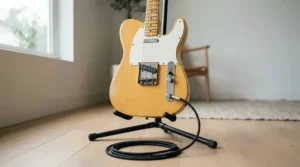
Some guitars are built to ease traditionalists into nylon strings. The Godin ACS-SA Slim does the opposite — it’s built for electric guitarists who want nylon tone without giving up any of the modern conveniences they’re used to, right down to a 13-pin synth connection for MIDI and modelling rigs.
Its silver leaf maple top over Canadian Laurentian basswood body, 25.5-inch scale, and notably narrow 1.715-inch (43.5mm) nut width put this firmly in electric-guitar territory dimensionally, while LR Baggs electronics handle the amplification side with the kind of clarity that brand is known for across the acoustic world. Here’s what the spec sheet won’t tell you outright: that narrow nut and slim profile mean fast electric-style runs translate almost directly onto nylon strings, which is precisely the crossover experience Godin engineered this instrument to deliver.
This is a specialist pick — not for the player chasing a traditional flamenco or classical voice, but for anyone integrating nylon tone into an existing electric rig, particularly those using modelling amps or synth pedals via the 13-pin output.
Pros:
- ✅ 13-pin synth connection genuinely useful for modelling and MIDI rigs
- ✅ Slim electric-style neck feels immediately familiar to electric players
- ✅ LR Baggs electronics deliver clear, dependable amplified tone
Cons:
- ❌ Narrow nut width moves it away from traditional classical feel entirely
- ❌ Niche appeal — less suited to players wanting authentic classical or flamenco tone
At roughly £950-£1,150, the Godin ACS-SA Slim is a considered investment aimed squarely at a specific type of player rather than a general-purpose recommendation.
7. Cordoba GK Pro Negra — best professional pick for flamenco and live work
Named for Nicolas Reyes and Tonino Baliardo of the Gipsy Kings, the Cordoba GK Pro Negra was never designed to be a beginner’s guitar, and everything about its spec sheet confirms that. A solid European spruce top paired with solid Indian rosewood back and sides gives it a darker, bassier voice than its “blanca” sibling — the kind of tonal depth that suits modern flamenco, Latin, and jazz crossover playing that demands more low-end weight without losing percussive attack.
Its Fishman PreFix ProBlend preamp with 3-band EQ is genuinely professional-grade, built to handle the unpredictability of live sound engineers and varying PA setups without falling apart tonally. A Spanish heel neck joint, ebony fingerboard, and a slightly thinner body depth and nut width than a traditional Spanish guitar make it comfortable to play for extended sets, while the included humidified hardshell case reflects Cordoba’s understanding that solid-wood instruments at this level need proper environmental protection during touring.
This is the pick for the working musician — someone playing regular paid gigs where reliability, tonal control, and projection under a full band mix genuinely matter, rather than a first or even second instrument.
Pros:
- ✅ 3-band Fishman PreFix ProBlend preamp handles demanding live mixes
- ✅ Darker, bassier tone suits modern flamenco and Latin-jazz crossover
- ✅ Includes humidified hardshell case for proper touring protection
Cons:
- ❌ Professional price point puts it out of reach for casual players
- ❌ Darker voicing may not suit players wanting a brighter, traditional Spanish tone
At around £1,600-£1,900, the Cordoba GK Pro Negra is unapologetically a professional instrument, and the price reflects genuinely professional-grade solid-wood construction and electronics rather than brand premium alone.
Practical Usage Guide: Setting Up and Maintaining Your Electro Classical Guitar
Buying the guitar is honestly the easy part. Keeping it sounding good — and keeping its electronics reliable — takes a little ongoing attention that Amazon listings never mention. Start with strings: nylon strings stretch considerably more than steel during their first few days, so expect to retune frequently in week one; this isn’t a fault, it’s simply how nylon behaves as it settles.
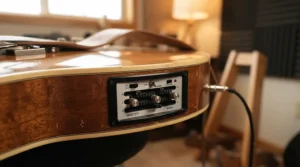
Battery management deserves real attention on any classical guitar with pickup, since most preamps (including the MagusPro, AEQ210T, and Fishman systems featured above) run on a 9V battery that drains even when the guitar is untouched if a cable stays plugged into the output jack — many designs use the jack itself as an on/off switch. Unplug it after every session; a dead battery mid-gig is an entirely avoidable disaster. Keep a spare in your gig bag pocket at all times.
Humidity is the other silent threat, particularly for solid-top instruments like the Cordoba C4-CE, Ortega RCE141, and Cordoba GK Pro Negra. UK homes swing between damp winters and dry, centrally heated air, both of which can cause a solid top to crack or the neck to shift over time; a simple soundhole humidifier and a case (rather than leaving it on a stand permanently) go a long way. Common first-30-days mistakes include over-tightening the truss rod without professional guidance and forgetting to loosen string tension slightly before air travel — both genuinely preventable with a little forethought.
✨ Ready to plug in and play? Check current prices and availability on the models above before stock shifts.
Electro Classical Guitars for Live Performance: Real-World Scenarios
Different players need genuinely different things from an electro classical for live performance, and matching the instrument to the actual gig matters more than chasing the “best” guitar in the abstract. Consider three realistic profiles.
The wedding and function musician, playing quiet background sets in venues with unpredictable acoustics, generally prioritises feedback resistance and a natural, unobtrusive amplified tone over raw volume. The Ibanez GA35TCE‘s thinline body and phase switch make it a genuinely smart budget choice here, while the Cordoba C4-CE offers a step up in tonal richness for those who’ve built a steady client base and can justify the investment.
The touring or working flamenco and Latin-jazz musician, playing regular paid sets through full-band PA systems, needs an instrument that survives inconsistent stage conditions and holds tonal character under pressure — this is exactly the Cordoba GK Pro Negra‘s territory, backed by its professional-grade Fishman preamp and darker projection.
The crossover electric or singer-songwriter player, occasionally reaching for nylon texture within a set built mostly around electric or steel-string guitar, benefits most from an instrument that feels immediately familiar in the hand — which is precisely the case the Yamaha NTX1 and Godin ACS-SA Slim make, depending on how deep that crossover goes.
Buyer’s Decision Framework: Which Electro Classical Guitar Should You Choose?
If budget is your primary constraint and you’re specifically hunting for an electro classical guitar under £300, choose the Ibanez GA35TCE or keep a close eye on Yamaha NTX1 pricing — both deliver usable electronics without pretending to be something they’re not.
If tonal development over years of ownership matters more than saving an extra £50-£100 upfront, choose the Ortega RCE141 — its solid top is the standout feature that laminate-topped rivals in the same bracket simply can’t match.
If you’re an intermediate player ready to commit to nylon guitar as a serious pursuit rather than a passing curiosity, choose the Taylor Academy 12e-N or Cordoba C4-CE, depending on whether comfort features or raw tonal richness matter more to you personally.
If you play paid gigs regularly and reliability under pressure is non-negotiable, choose the Cordoba GK Pro Negra — and if your playing already lives mostly in electric-guitar territory with pedals and modelling gear, choose the Godin ACS-SA Slim instead.
How to Choose an Electro Classical Guitar
Picking the right electro classical guitar comes down to working through a handful of practical questions in order, rather than getting swept up by spec sheets alone.
- Decide your primary use case first. A bedroom-practice instrument has very different priorities from a gigging one — settle this before comparing specs.
- Check the nut width against your existing playing background. Traditional classical necks run 50-52mm; crossover models like the Yamaha and Godin run considerably narrower.
- Prioritise solid tops if budget allows. Solid wood genuinely improves in tone over years, while laminate tops stay tonally static.
- Research the specific pickup and preamp system, not just the guitar brand — a mediocre pickup can undersell an excellent-sounding acoustic instrument once plugged in.
- Factor in battery access and output options. XLR outputs and easily accessible battery compartments matter far more once you’re gigging regularly than they seem to on a spec sheet.
- Try before committing wherever possible, since neck comfort and unplugged tone are genuinely subjective and vary person to person.
- Set a realistic total budget including a gig bag or case, strings, and a spare 9V battery — accessories add up quickly and are easy to forget when comparing headline prices.
Nylon String Pickup Systems Explained
Not all nylon string pickup systems work the same way, and understanding the differences genuinely changes how you shop. As MusicRadar’s acoustic pickup guide explains, the three broad categories are under-saddle piezo, soundboard transducer, and soundhole pickups, each producing a distinctly different amplified character.
Under-saddle piezo systems — used in the Ibanez GA35TCE, Ortega RCE141, and Cordoba GK Pro Negra above — sit directly beneath the saddle and pick up string vibration with excellent clarity and reliable feedback resistance, though purists sometimes describe the tone as slightly more clinical than a microphone captures unplugged. Systems that blend piezo with an internal microphone element, like Fishman’s PreFix ProBlend found on the Cordoba GK Pro Negra, aim to combine that piezo clarity with more natural acoustic body, at the cost of slightly greater feedback sensitivity at high stage volumes.
What most buyers overlook is that the preamp matters just as much as the pickup element itself — a well-designed preamp with genuinely useful EQ can rescue a mediocre pickup, while a poor preamp can flatten the output of an excellent one. This is precisely why the same underlying piezo technology can sound dramatically different across the Yamaha NTX1‘s A.R.T. system versus a basic aftermarket piezo retrofit.
Best Preamp for Classical Guitar: What Actually Matters
Chasing the best preamp for classical guitar tone often means looking past the marketing name entirely and focusing on three practical features: a genuinely usable EQ (not just a single tone knob), an onboard tuner that doesn’t require external pedals, and a phase switch or notch filter for feedback control on louder stages.
Based on the spec comparison across this guide, the Cordoba GK Pro Negra‘s Fishman PreFix ProBlend and the Ibanez GA35TCE‘s AEQ210T both include genuinely useful phase-switching functionality — a feature that’s easy to dismiss on a spec sheet but genuinely transforms usability the first time you’re fighting feedback five minutes before a set starts. By contrast, simpler preamps like the volume-and-tone-only setup on some entry-level instruments leave you more reliant on careful mic and speaker positioning to avoid the same problem.
The honest takeaway: a superb preamp on a mediocre guitar body will never outperform a solid-top instrument with a modest preamp, but the reverse is equally true — even the Cordoba C4-CE‘s excellent mahogany top depends on its Fishman Sonitone system being set up and understood properly to sound its best on stage.
Electro Classical Guitar Under £300: Is It Worth It?
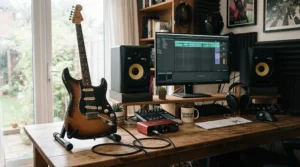
The honest answer is: it depends entirely on what you’re asking that guitar to do. An electro classical guitar under £300, like the Ibanez GA35TCE or budget-tier Yamaha NTX1 pricing, will reliably deliver usable amplified tone for practice, small open mics, and casual home recording — genuinely solid value for a first instrument or a secondary nylon guitar alongside a primary steel-string or electric setup.
Where the compromises show up is consistency at higher stage volumes and long-term tonal development; laminate tops (common at this price) don’t open up over years the way solid tops do, and budget preamps tend to offer more limited EQ shaping when a venue’s acoustics fight against you. For a beginner or hobbyist, none of that outweighs the value proposition. For a working musician gigging multiple nights a week, it’s usually worth stretching toward the £300-£500 bracket represented by the Ortega RCE141 or Cordoba C4-CE instead.
Electro Classical Guitar vs Traditional Acoustic Classical Guitar
The core trade-off here isn’t really about sound quality at all — a good electro classical guitar sounds identical to its acoustic-only counterpart when unplugged, since the electronics are simply an addition rather than a replacement. The real difference is flexibility versus simplicity.
A traditional acoustic-only classical guitar has no battery to manage, no preamp electronics to eventually service or replace, and often a marginally lighter overall weight without the pickup hardware and control cavity. It’s the purer, lower-maintenance choice for players who only ever perform unplugged or in small acoustic settings, and it typically costs somewhat less than an equivalent electro model from the same product line.
An electro classical guitar, by contrast, opens up performance contexts that simply aren’t available otherwise: full-band gigs, larger venues, and direct recording via XLR or line output without needing a separate microphone setup. For any UK player who might ever perform beyond a living room — even occasionally — the electro classical guitar under discussion throughout this guide is almost always the more future-proof purchase, since you can always choose not to plug in, but you can’t retroactively add quality electronics to a purely acoustic instrument without professional installation and expense.
| Factor | Electro Classical | Acoustic-Only Classical |
|---|---|---|
| Live performance flexibility | Excellent — plug straight into PA/amp | Requires external microphone |
| Weight & simplicity | Slightly heavier, more components | Lighter, nothing to maintain electronically |
| Typical price | Moderately higher for equivalent build | Somewhat lower for equivalent build |
| Best For | Gigging musicians, recording, crossover players | Purely acoustic players, traditionalists |
Looking at the table above, the deciding factor really comes down to whether performance flexibility is worth the modest extra cost and minor added weight — for the vast majority of players reading a guide like this one, it generally is.
Common Mistakes When Buying a Classical Guitar With Pickup
The single most common mistake is buying based on brand reputation alone without checking the specific pickup and preamp model fitted — the same brand can use dramatically different electronics across its range, as the gap between the Yamaha NTX1‘s A.R.T. system and lower-tier Yamaha electronics demonstrates.
A second frequent error is ignoring nut width and body depth entirely, then being surprised the guitar feels unfamiliar compared to a previous instrument — always check these figures against a guitar you already know you’re comfortable playing. Third, many first-time buyers skip budgeting for a proper hardshell case on solid-top instruments like the Cordoba C4-CE or Cordoba GK Pro Negra, then experience preventable cracking from humidity or travel knocks within the first year or two of ownership.
Finally, plenty of buyers overlook output options entirely, assuming a quarter-inch jack is all they’ll ever need, only to discover later that XLR output (present on the Ibanez GA35TCE, for instance) would have saved them from buying a separate DI box for recording or larger PA setups.
Long-Term Cost & Maintenance
Total cost of ownership on any electro classical guitar extends well beyond the sticker price, and it’s worth budgeting honestly for it upfront. Nylon strings need replacing roughly every two to four months with regular play, at a modest ongoing cost — cheaper than steel strings, incidentally, which is one underrated advantage of the nylon format generally.
Preamp batteries (9V, across virtually every model featured here) last anywhere from 40 to 100 hours of active use depending on the system, so budgeting for a handful of spares annually is sensible rather than optional for gigging players. Setup and fret maintenance costs scale with guitar quality and usage frequency — a solid-top instrument played several times weekly, like the Cordoba GK Pro Negra in a working musician’s rotation, benefits from an annual professional setup to maintain accurate intonation and playability, typically a modest cost relative to the instrument’s overall value.
| Cost Factor | Budget Tier (e.g. Ibanez GA35TCE) | Premium Tier (e.g. Cordoba GK Pro Negra) |
|---|---|---|
| String replacement (annual) | Low, roughly every 2-3 months | Low, similar frequency, premium string sets |
| Preamp battery | Standard 9V, moderate lifespan | Standard 9V, similar lifespan |
| Case/protection | Gig bag often sufficient | Hardshell case strongly recommended |
| Professional setup | Optional, as needed | Recommended annually for gigging use |
The analysis here is straightforward: premium instruments don’t necessarily cost dramatically more to maintain day-to-day, but they justify — and reward — a higher standard of care given the larger upfront investment in solid tonewoods and professional-grade electronics.

Frequently Asked Questions
❓ What is the difference between a classical guitar and an electro classical guitar?
❓ Is an electro classical guitar under £300 good enough for gigging?
❓ Can beginners use nylon string pickup systems without extra equipment?
❓ What is the best preamp for classical guitar recording at home?
❓ Do electro classical guitars sound worse unplugged than regular classical guitars?
Conclusion
Choosing between these seven guitars really comes down to being honest with yourself about how and where you’ll actually play. The Ibanez GA35TCE and Yamaha NTX1 cover the realistic entry point for anyone wanting a genuine classical guitar with pickup without overspending, while the Ortega RCE141 quietly punches above its price bracket thanks to a solid top that laminate rivals simply can’t replicate.
Moving up, the Cordoba C4-CE and Taylor Academy 12e-N reward committed intermediate players with noticeably richer tone and more considered electronics, and at the top of the market, the Godin ACS-SA Slim and Cordoba GK Pro Negra serve genuinely specialist needs — electric-crossover flexibility on one hand, professional flamenco-grade projection on the other.
None of these instruments is objectively “best.” The best electro classical guitar is the one that matches your actual playing context, your budget, and — just as importantly — how it feels under your own hands, which no spec sheet or review can fully substitute for trying yourself wherever possible.
It’s also worth remembering that the UK has its own rich classical guitar heritage worth drawing inspiration from — the Royal College of Music’s tribute to Julian Bream is a genuinely worthwhile read for anyone wanting to understand how far the instrument has travelled, from a purely acoustic recital tradition to the amplified, genre-crossing electro classical guitars covered in this guide.
✨ Don’t Miss These Exclusive Deals!
Take your nylon-string journey further with these carefully selected instruments — check current prices and availability today!
Recommended for You
- Electro Acoustic vs Acoustic Guitar: 7 Best Picks (2026)
- Acoustic Guitar for Live Performance: 7 Proven Stage Picks (2026)
- Electro Acoustic Guitar: 7 Best Picks for UK Players (2026)
Disclaimer: This article contains affiliate links. As an Amazon Associate, I earn from qualifying purchases. If you purchase products through these links, we may earn a small commission at no additional cost to you.
✨ Found this helpful? Share it with your friends! 💬🤗
