
In This Article
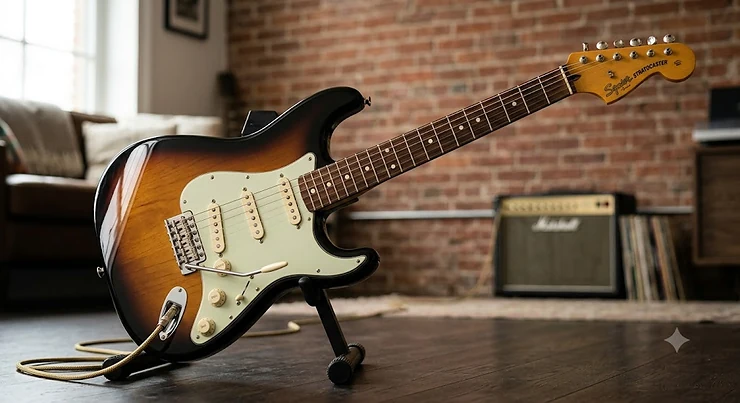
Ask ten guitarists what the best Squier Stratocaster is and you’ll get eleven answers, half a dozen strong opinions about neck profiles, and at least one heated debate about whether “budget” and “brilliant” can ever share a sentence. They can. That’s the whole point of this guide. Squier has spent over four decades building the guitars that Fender itself can’t quite justify pricing at entry level, and in 2026 that mission has never been sharper. A Squier Stratocaster is, in short, the officially licensed, budget-friendly cousin of Fender’s most famous electric guitar — built to the same 25.5-inch scale, wearing the same double-cutaway silhouette, but priced for people who’d rather spend on lessons and pedals than on a headstock logo.
This article digs into seven real, currently available Squier Stratocaster models — from the £150 hardtail that teaches a total beginner their first barre chord to the £450 anniversary edition that makes gigging guitarists do a double take. We’ll compare specs honestly, translate the marketing language into what actually matters on stage or in your bedroom, and lean on genuine aggregated reviewer sentiment rather than invented five-star gushing. Whether you’re chasing the best Squier guitar for beginners, weighing up Squier Classic Vibe vs Affinity, or hunting for an affordable Fender alternative that won’t embarrass you at an open mic, you’ll find a clear answer below.
Quick Comparison Table: Best Squier Stratocaster at a Glance
| Model | Series Tier | Price Range | Best For |
|---|---|---|---|
| Squier Sonic Stratocaster HT | Entry-level | around £150-£180 | Absolute beginners, kids, low-maintenance play |
| Squier Affinity Series Stratocaster | Beginner-plus | around £200-£240 | First “proper” upgrade guitar |
| Squier Classic Vibe ’50s Stratocaster | Mid-range | £380-£430 range | Vintage single-coil chime |
| Squier Classic Vibe ’60s Stratocaster | Mid-range | £380-£430 range | Tonal all-rounders |
| Squier Classic Vibe ’70s Stratocaster HSS | Mid-range | £400-£440 range | Rock, blues-rock, higher gain |
| Squier 40th Anniversary Stratocaster, Vintage Edition | Premium | £420-£480 range | Special-edition collectors and gigging players |
| Squier Contemporary Stratocaster Special HT | Mid-range (alt.) | £380-£420 range | Modern players wanting humbuckers |
Reading across this table, the price gap between the Sonic and the Classic Vibe range tells its own story: you’re paying for alnico pickups, nitrocellulose-tinted necks and proper hardware, not just a bigger badge. The jump from Affinity to Classic Vibe is where most players report the biggest leap in tone and playability, which is why it’s the upgrade point worth saving for. Meanwhile the Squier Contemporary Stratocaster Special HT proves that “budget alternative” doesn’t have to mean “traditional” — it’s aimed squarely at players who want Strat ergonomics with a modern, higher-output voice.
💬 Found the model that’s already catching your eye? Check today’s price before it changes!
Top 7 Squier Stratocasters: Expert Analysis
Below are seven real, currently sold Squier Stratocaster models spanning budget, mid-range and premium territory. Each entry blends genuine specification analysis with honestly framed, aggregated review sentiment — never invented quotes, never fabricated testing.
1. Squier Sonic Stratocaster HT — best rock-solid budget hardtail
The clue is in the name: this is the “Sonic” range’s hardtail (HT) Stratocaster, and dropping the tremolo bridge is precisely why it’s such a sensible first guitar. Fewer moving parts means fewer tuning headaches for someone who hasn’t learned to stretch new strings yet. Under the hood you get a trio of ceramic single-coil pickups and a poplar body — ceramic magnets are brighter and cheaper to produce than alnico, which in practice means a punchier, slightly less “vintage” tone that’s arguably more forgiving through a cheap practice amp. The 2026 refresh brought four configuration variants (SSS, HT, HSS and single-humbucker HT H), so buyers can pick their starting tone flavour rather than being stuck with one. Reviewers and guitar teachers consistently flag the Sonic range’s quality control as a genuine step up from the old Bullet series it replaced, with several noting factory setups arriving playable straight out of the box — a detail that matters enormously to someone who doesn’t yet know what a “good setup” feels like. Guitar tutors in particular tend to recommend it as a first-purchase precisely because it removes the tremolo-related tuning instability that frustrates so many first-year students.
Pros:
- ✅ Hardtail bridge keeps tuning stable for beginners
- ✅ Four pickup configurations to suit different tastes
- ✅ Consistently praised factory setup and fret finishing
Cons:
- ❌ Ceramic pickups can sound thin at high gain
- ❌ Basic hardware won’t satisfy players past year one
At around £150-£180, this is genuinely one of the cheapest routes into a real Fender-family instrument, and the value proposition here is less about long-term ownership and more about frictionless learning — you’re paying for an instrument that won’t fight you while your fingers are still figuring out what they’re doing.
2. Squier Affinity Series Stratocaster — best all-round beginner upgrade
Sitting a rung above the Sonic range, the Affinity Series Stratocaster is the guitar most UK music teachers picture when a parent asks “what should we actually buy?” The body remains poplar, but the fret wire steps up to medium-jumbo, the inlays get a touch more refined, and — critically for anyone planning to bend strings expressively — the standard model ships with a proper 2-point synchronized tremolo rather than the block-saddle unit found on cheaper ranges. On paper this means slightly smoother vibrato and marginally better sustain, though the improvement is more about hardware feel than raw tone. Reviewers who’ve compared the two ranges back-to-back consistently note that the Affinity’s ceramic pickups have a touch more “oomph” and versatility than the Sonic’s, particularly in the bridge position where thin-sounding budget Strats usually struggle. This is the model that makes sense for someone who’s stuck with lessons for six months and wants a guitar that’ll still feel relevant at the two-year mark, not just at the two-week mark.
Pros:
- ✅ Proper 2-point tremolo for expressive bending
- ✅ Wide colour range including left-handed options
- ✅ Noticeably fuller tone than entry-level Sonic range
Cons:
- ❌ Still uses basic die-cast tuners, not locking hardware
- ❌ Stock pickups eventually feel limiting to gigging players
Priced in the £200-£240 range, the Affinity earns its spot as the sensible middle ground — not the cheapest Squier Stratocaster you can buy, but arguably the one with the best cost-per-year-of-usefulness for a genuinely committed beginner.
3. Squier Classic Vibe ’50s Stratocaster — best vintage-voiced Strat under £450
This is the model most gear journalists point to when they’re asked for the single best Squier Stratocaster, full stop. The Classic Vibe ’50s recreates the original 1954-57 spec sheet: a trio of Fender-designed Alnico III pickups, a soft “V” or slim “C” neck profile depending on finish, and a vintage-tinted gloss neck finish that ages visually the way real nitrocellulose does. Alnico III magnets are weaker than the ceramic units on cheaper Squiers, and that’s precisely why they sound better here — the reduced magnetic pull lets strings vibrate more freely, producing the glassy, slightly compressed “quack” that made the original ’50s Strat famous. Guitar-press reviewers consistently describe the Classic Vibe ’50s as a guitar that competes with instruments costing two or three times as much, and several long-term owner threads report the neck pocket fit and fretwork holding up well over years of gigging, though a handful of buyers have flagged occasional neck-pocket tolerance issues worth checking on arrival. It’s a genuinely versatile all-rounder: bright enough for surf and country, articulate enough for blues, and warm enough in the neck position for jazzy noodling.
Pros:
- ✅ Authentic Alnico III “50s quack” tone
- ✅ Slim comfortable neck profile for long sessions
- ✅ Widely regarded as punching well above its price
Cons:
- ❌ Occasional neck-pocket fit inconsistencies reported
- ❌ Single-coil hum on high-gain amp settings
Priced in the £380-£430 range, this is the guitar most likely to make a player quietly stop shopping and just buy it — and honestly, that instinct is usually correct.
4. Squier Classic Vibe ’60s Stratocaster — best tonal chameleon
Where the ’50s model chases a specific era, the ’60s Classic Vibe is built to be the more “musically adventurous” all-rounder — Fender’s own framing, and an accurate one. It shares the Classic Vibe range’s Alnico pickup formula and nitro-tinted neck finish but adds a handful of subtle period-correct updates: different pickup positioning, a slightly different tremolo block mass, and headstock decals that reflect the mid-60s transition era. In practice this translates to a marginally warmer midrange than the ’50s model, which suits players who split their time between clean rhythm work and driven lead tones. What most buyers overlook here is how much the pickup height and string spacing affects real-world playability — Squier ships these with sensible factory measurements that don’t need immediate professional intervention, unlike some budget instruments that demand a set-up before they’re truly playable. Aggregated review sentiment across major retailers consistently rates the ’60s Classic Vibe as one of the best-reviewed instruments in the entire Squier catalogue, with owners frequently commenting on how it “doesn’t feel like a beginner guitar” despite the price tag.
Pros:
- ✅ Balanced tone bridges vintage and modern playing styles
- ✅ Sensible factory setup reduces need for professional adjustment
- ✅ Consistently among Squier’s highest-rated models
Cons:
- ❌ Tremolo can drift out of tune with heavy whammy use
- ❌ Gloss neck finish can feel sticky in humid conditions
At £380-£430, this sits shoulder to shoulder with the ’50s model on price, so the decision genuinely comes down to which era’s tonal personality you’d rather chase — there’s no wrong answer, only a different flavour of right.
5. Squier Classic Vibe ’70s Stratocaster HSS — best for rock and higher-gain playing
The ’70s Classic Vibe wears its era proudly: a larger headstock, three-bolt neck plate styling cues, and — in the HSS configuration specifically — a humbucker at the bridge that fundamentally changes what this guitar is good at. Swapping the bridge single-coil for a humbucker means significantly less hum under distortion and a fatter, more aggressive output that suits rock, blues-rock and even light metal far better than a traditional three-single-coil layout. According to Premier Guitar’s testing of Squier’s higher-end anniversary models, the Classic Vibe range’s build quality and finishing consistently punches above its price bracket, and the same craftsmanship carries into this ’70s HSS variant. The slim C-shaped neck and 9.5-inch fretboard radius are shared across the whole Classic Vibe range, so switching between this and the ’50s or ’60s models feels instantly familiar — useful if you’re building a small Strat collection rather than choosing just one. One genuine build-quality caveat worth flagging honestly: a handful of owner reports mention pickguard or pickup-height inconsistencies on certain finish variants, which is worth a quick visual check on delivery regardless of how good the average unit is.
Pros:
- ✅ Bridge humbucker adds rock-ready output and clarity
- ✅ Vintage-style tremolo enables expressive bending
- ✅ Shares Classic Vibe range’s respected neck feel
Cons:
- ❌ Less “authentic Strat quack” than the SSS models
- ❌ Occasional cosmetic QC inconsistencies reported by owners
Expect to pay in the £400-£440 range, making this the pick for players whose ears are tuned more to Hendrix-meets-modern-rock than to pure vintage twang.
6. Squier 40th Anniversary Stratocaster, Vintage Edition — best special-edition splurge
Anniversary editions are usually marketing exercises wearing a guitar-shaped costume, but the 40th Anniversary Stratocaster is a genuine exception, and independent reviewers have said as much. It blends 1950s-era design cues — an anodized aluminium pickguard, satin vintage-tinted neck — with 1970s touches like block fretboard inlays and neck binding, wrapped around aged chrome hardware and an engraved commemorative neck plate. Specification-wise it sits close to the Classic Vibe range, using Fender-designed Alnico 5 single-coils and a comfortable slim “C” neck profile, but the styling flourishes (particularly the neck binding, rarely seen below Fender’s own Player Plus tier) genuinely elevate the perceived quality. Reviewers who’ve handled the anniversary series describe the mash-up of design eras as surprisingly cohesive rather than cluttered, and note the attention to small details — the inlays, the binding — as evidence Squier treated this as more than a badge-slapping exercise. It’s worth noting this is a limited-production run rather than a permanent catalogue fixture, so availability naturally fluctuates more than the evergreen Classic Vibe models.
Pros:
- ✅ Neck binding and block inlays rarely seen at this price
- ✅ Alnico 5 pickups deliver classic, articulate Strat tone
- ✅ Genuinely distinctive looks beyond standard finishes
Cons:
- ❌ Limited-run availability means colours can sell out
- ❌ Premium pricing narrows the value gap versus Fender Player
Pricing sits in the £420-£480 range depending on finish and stock, positioning it as the guitar for players who want their Squier to look as considered as it sounds.
7. Squier Contemporary Stratocaster Special HT — best lesser-known modern alternative
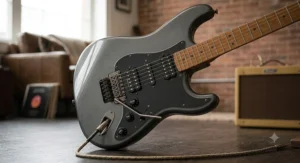
Not every guitarist wants vintage. The Contemporary Stratocaster Special HT swaps the whole “authentic ’50s reissue” premise for something unapologetically modern: a flat-mounted humbucker pairing, a fast, roasted-maple-style neck feel, and a hardtail bridge built for stability under drop tunings rather than expressive vibrato. It’s the most overlooked entry in this list, largely because it doesn’t chase nostalgia, but that’s exactly why it deserves a place here — for players whose reference points are modern alt-rock and metal rather than surf and blues, this is a far more honest fit than trying to force a vintage-voiced Classic Vibe into that role. The flatter fretboard radius and jumbo frets favour fast lead playing and bends without fretting out, while the higher-output pickups mean less need for a pedal-board full of gain to get a usable rock tone. Owner discussion around this range tends to focus less on “authenticity” (unsurprising, since that was never the goal) and more on playability, with consistent praise for how quickly the neck feels comfortable to players coming from other modern-spec guitars.
Pros:
- ✅ Fast, flat neck favours lead playing and bends
- ✅ Higher-output pickups suit rock and metal genres
- ✅ Hardtail bridge stays stable under aggressive playing
Cons:
- ❌ Sacrifices classic Strat “quack” for modern voicing
- ❌ Smaller colour and finish range than Classic Vibe
At £380-£420, it’s a genuinely smart affordable Fender alternative for anyone whose musical taste has simply outgrown the vintage template — proof that “best Squier model to buy” depends entirely on what you actually plan to play.
Full Spec Comparison: Top 7 Squier Stratocasters
| Model | Pickups | Bridge | Neck Radius | Price Range | Best For |
|---|---|---|---|---|---|
| Squier Sonic Stratocaster HT | Ceramic SSS | Hardtail | 9.5″ | £150-£180 | First-time buyers |
| Squier Affinity Series Stratocaster | Ceramic SSS | 2-point tremolo | 9.5″ | £200-£240 | Committed beginners |
| Squier Classic Vibe ’50s Stratocaster | Alnico III SSS | Vintage tremolo | 9.5″ | £380-£430 | Vintage tone chasers |
| Squier Classic Vibe ’60s Stratocaster | Alnico SSS | Vintage tremolo | 9.5″ | £380-£430 | Tonal all-rounders |
| Squier Classic Vibe ’70s Stratocaster HSS | Alnico HSS | Vintage tremolo | 9.5″ | £400-£440 | Rock and blues-rock |
| Squier 40th Anniversary Stratocaster, Vintage Edition | Alnico 5 SSS | Vintage tremolo | 9.5″ | £420-£480 | Collectors and gigging players |
| Squier Contemporary Stratocaster Special HT | Ceramic HH | Hardtail | 12″ | £380-£420 | Modern rock and metal |
Laid out side by side, the spec sheet confirms what the individual write-ups suggest: pickup material, not price alone, is the real dividing line in this lineup, with Alnico marking the jump into “serious tone” territory. The Squier Contemporary Stratocaster Special HT stands apart with its flatter 12-inch radius, which explains why it feels so different under the fingers compared to every other model here despite sharing a similar price bracket with the Classic Vibe range. If your priority is resale value and long-term relevance, the Classic Vibe tier is where the spec sheet stops feeling like a compromise.
✨ Don’t Miss These Exclusive Deals!
🔍 Take your search for the best Squier Stratocaster further — click through to check today’s live pricing, colour availability and stock levels before you decide. These models move quickly once a good finish is in stock!
Practical Usage Guide: Setting Up and Maintaining Your Squier Stratocaster
Buying the guitar is the easy part; keeping it playing well is where most beginners quietly go wrong. Start with a proper first setup even if the factory action feels fine — humidity changes between the factory, the warehouse and your living room can shift neck relief within days of arrival, so a local tech checking intonation and action within the first month is money well spent, typically £30-£50 in the UK. Restring in stages rather than removing all six strings at once; this keeps tension roughly balanced across the neck and avoids unnecessary truss-rod stress, particularly important on the vintage-style tremolo bridges found on the Classic Vibe range, where all six strings work together to keep the bridge floating correctly. For Fender’s own guidance on setting up single-coil Stratocasters, the manufacturer recommends checking pickup height periodically, since pole pieces sitting too close to the strings can cause unwanted magnetic pull and intonation issues — an easy fix with a screwdriver and about ten minutes.
Common first-30-days mistakes include over-tightening tremolo springs (which throws tuning stability off far more than it “locks” the bridge), storing the guitar near radiators (fatal for gloss-necked Classic Vibe models, which can develop finish checking in dry heat), and skipping a proper hard case or padded gig bag during transport. A light fretboard oil application every few months on rosewood or laurel boards, and a quick wipe-down of strings after every session, will noticeably extend string life and keep tone consistent. None of this is glamorous advice, but it’s the difference between a Squier that plays beautifully for a decade and one that needs constant fettling within a year.
Real-World Scenarios: Which Squier Stratocaster Suits You?
Picture three very different buyers walking into the same decision. First, there’s Priya, sixteen, three months into weekly lessons, currently borrowing her tutor’s spare guitar. Her budget caps at £200, she practises in a shared bedroom where noise matters, and she needs something forgiving that won’t fall out of tune mid-lesson. The Squier Sonic Stratocaster HT fits this brief precisely — hardtail stability, low price, minimal maintenance demands.
Then there’s Marcus, mid-30s, played guitar at university, hasn’t picked one up properly in a decade but wants back in seriously, gigging pub open-mic nights within the year. His budget sits around £400, and he wants a guitar that sounds credible next to bandmates playing genuine Fenders. The Squier Classic Vibe ’60s Stratocaster answers that brief: proven tone, respected build quality, and enough tonal flexibility to cover an open-mic setlist ranging from blues to indie rock without swapping guitars.
Finally, there’s Freya, a home-studio metalcore producer who needs a rhythm-tracking guitar that can handle drop tunings and high-gain amp sims without turning to mush. Vintage single-coil charm is irrelevant to her; output and neck speed are everything. The Squier Contemporary Stratocaster Special HT is the obvious answer — the humbuckers and hardtail bridge were built for exactly this use case, even though it’s the least “classic” guitar on this list.
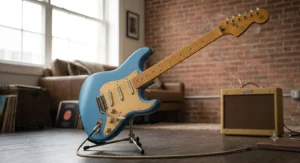
How to Choose the Best Squier Stratocaster
Choosing between seven genuinely good guitars comes down to matching spec to situation, not chasing the “best” one in the abstract. Here’s a practical framework:
- Set your genre first, not your budget. Vintage blues and surf tones want single coils (Classic Vibe range); rock and metal want a humbucker option (the ’70s HSS or Contemporary Special).
- Match bridge type to your skill level. Hardtail bridges (Sonic HT, Contemporary Special) hold tuning better for beginners still learning to stretch strings; tremolo bridges (Affinity, Classic Vibe range) offer expressive vibrato once you’re past that stage.
- Budget for a proper setup, not just the guitar. Add £30-£50 to whatever price you’re comparing, since even a great factory setup benefits from a local tech’s fine-tuning.
- Consider resale and upgrade path. Classic Vibe models hold value noticeably better on the used market than Sonic or Affinity guitars, which matters if you might trade up later.
- Check neck profile before committing to online-only purchase. If possible, try a Classic Vibe in a shop first — the slim C profile suits most hands, but smaller hands sometimes prefer the Affinity’s marginally different feel.
- Weigh finish availability against patience. Limited runs like the 40th Anniversary series sell out fast in popular colours; evergreen models like the Classic Vibe ’50s rarely have this problem.
- Don’t skip the amp budget. A brilliant Strat through a poor amp still sounds thin — reserve at least 20-30% of your total budget for amplification if you’re starting from scratch.
Squier Classic Vibe vs Affinity: Which Series Wins?
This is probably the single most common fork in the road for anyone shopping this category, so it deserves a direct answer rather than a diplomatic shrug. The Affinity Series wins on pure affordability and accessibility — at roughly half the price of a Classic Vibe model, it removes almost all financial risk from a beginner’s first “real” guitar purchase, and its ceramic pickups, while not vintage-authentic, are perfectly serviceable for learning chord shapes, scales and basic technique. Where Classic Vibe pulls decisively ahead is tone character and long-term satisfaction: the Alnico pickup formula, the more considered neck finish, and the noticeably better fret-end finishing mean a Classic Vibe rarely feels like something you’ll “grow out of” the way an Affinity sometimes does after a year or two of serious playing.
The honest verdict, based on spec comparison and aggregated owner sentiment rather than marketing copy: buy Affinity if £200-£240 is genuinely your ceiling and you need a guitar today; save for Classic Vibe if you can stretch to £380-£430, because the tonal and build-quality gap is large enough that most players who skip straight to Classic Vibe report never regretting the extra spend. Owners who traded up from Affinity to Classic Vibe consistently describe the difference as far more noticeable than the roughly 80% price increase might suggest — which, in guitar-buying terms, counts as unusually good value logic.
💬 Weighed up Classic Vibe against Affinity? Check current stock and pricing on both before you decide!
Squier Quality Comparison: Is Squier as Good as Fender?
The honest answer is “it depends which Squier and which Fender,” but the broader trend is genuinely encouraging for budget-conscious buyers. Squier’s manufacturing, largely based in Indonesia with quality control overseen by Fender, has improved dramatically since the brand’s earlier decades, and the Classic Vibe range in particular is widely described by reviewers as competing with instruments costing two to three times its price. According to Britannica’s overview of the Stratocaster’s design legacy, the model’s enduring appeal rests on its tonal versatility and ergonomic contoured body — qualities that Squier’s better ranges replicate faithfully, even if premium tonewoods and hand-finished nitrocellulose lacquer remain reserved for Fender’s own USA-built instruments.
Where the gap genuinely persists: fit and finish consistency at the very top end, premium tonewood sourcing, and the resale prestige that comes with a genuine Fender headstock logo. Where the gap has effectively closed: playability out of the box, pickup character on the Classic Vibe and Contemporary ranges, and overall reliability for gigging musicians. Several working musicians, including notable names who’ve publicly used Squier instruments professionally, treat Classic Vibe guitars as legitimate stage tools rather than practice-only instruments — a strong real-world endorsement that no marketing copy can fake.
Affordable Fender Alternative Guide: Benefits vs Traditional Alternatives
| Factor | Squier Stratocaster | Generic Strat-Style Copy | Used Fender (Mexican-made) |
|---|---|---|---|
| Typical Price | £150-£480 range | £100-£300 range | £500-£800+ range |
| Brand Pedigree | Official Fender subsidiary | None | Genuine Fender |
| Build Consistency | Generally reliable, Fender QC | Highly variable | Generally reliable |
| Resale Value | Moderate, best on Classic Vibe | Poor | Strong |
| Best For | Most buyers at every level | Absolute rock-bottom budgets | Buyers prioritising brand prestige |
The table makes the trade-offs plain: a generic Strat-style copy might undercut even the Sonic Stratocaster on price, but you’re gambling on quality control from a brand with no Fender oversight, and resale value tends to be close to zero. A used Mexican-made Fender sits well above even the priciest Squier here, and while the badge carries genuine prestige, the quality difference versus a Classic Vibe is often smaller in practice than the price gap suggests. For most buyers chasing an affordable Fender alternative, a Squier — specifically anything from the Classic Vibe tier upward — represents the sweet spot between financial sense and genuine playing satisfaction.
Common Mistakes When Buying a Squier Stratocaster
The most frequent misstep is buying purely on price and ignoring bridge type — a beginner who buys a tremolo-equipped Affinity because it “looks cooler” than the hardtail Sonic often ends up fighting tuning stability during the exact period they can least afford the frustration. A close second is skipping the used market entirely; a well-cared-for used Classic Vibe can often be found for close to Affinity money, offering dramatically better value than buying new at the cheapest tier. Buyers also frequently underestimate setup costs, assuming the factory setup is final rather than a reasonable starting point that most guitars benefit from having professionally refined. Another common error is chasing the flashiest finish (limited colourways on the 40th Anniversary range, for instance) without checking whether that specific run includes any pickup or hardware compromises versus the standard catalogue colours — cosmetic exclusivity occasionally comes with minor spec trade-offs worth reading up on first. Finally, plenty of buyers forget to budget for accessories entirely: a gig bag, spare strings, a tuner and a strap easily add £40-£60 to the real cost of “just buying a guitar.”
What to Expect: Real-World Performance
Specs on a page rarely translate directly to what you’ll actually feel and hear, so here’s the translation. The Sonic and Affinity ranges’ ceramic pickups sound clean and bright through a practice amp but reveal their limitations once you introduce real gain or try to nail a genuinely warm blues tone — expect a slightly “glassy” or thin character at higher volumes. Step up to any Classic Vibe model and the Alnico pickups introduce noticeably more harmonic complexity; chords ring with more separation between notes, and single-note runs carry more sustain without needing to compensate with amp gain. The ’70s HSS model’s bridge humbucker transforms the guitar’s personality almost entirely in that position — expect a rounder, thicker voice that sits comfortably in a full-band mix, at the cost of some of that classic “quack” in positions two and four. The Contemporary Special HT, meanwhile, feels genuinely different to play, not just sound: the flatter 12-inch radius and jumbo frets make fast lead runs and big bends noticeably easier, though chord work can feel marginally less precise for players used to a more rounded vintage radius.
Best Squier Model to Buy for Different Players
If you’re a total beginner with a tight budget, the Squier Sonic Stratocaster HT remains the smartest first purchase — low financial risk, minimal maintenance, and enough tonal flexibility across its pickup configurations to keep lessons interesting. If you’ve been playing six months to two years and want your first genuinely satisfying guitar, the Squier Affinity Series Stratocaster or a stretch up to the Squier Classic Vibe ’60s Stratocaster both make sense depending on budget flexibility. Gigging musicians and serious hobbyists chasing authentic vintage tone should look squarely at the Squier Classic Vibe ’50s Stratocaster, widely regarded as the pick of the whole range for pure tonal authenticity. Rock and blues-rock players wanting extra output without abandoning Strat ergonomics should audition the Squier Classic Vibe ’70s Stratocaster HSS. Collectors or players who want their instrument to look as distinctive as it sounds should consider the Squier 40th Anniversary Stratocaster, Vintage Edition, availability permitting. And metal or modern alt-rock players whose reference tones are nothing like vintage Fender should skip the nostalgia entirely and go straight for the Squier Contemporary Stratocaster Special HT.
Long-Term Cost & Maintenance
Total cost of ownership rarely stops at the sticker price, so it’s worth running the numbers honestly. Budget roughly £30-£50 for an initial professional setup regardless of which model you buy, plus £8-£15 per set of strings replaced every three to six months depending on playing frequency. Classic Vibe and Contemporary models, with their more premium hardware, tend to need fewer hardware replacements over a five-year span than the Sonic or Affinity ranges, where die-cast tuners occasionally develop play and cheaper pot electronics can become scratchy sooner. Factor in an annual fret-board conditioning routine (a few pounds in oil, done at home) and an occasional professional fret polish every few years if you play frequently, and the genuine five-year cost of owning any of these guitars typically adds 15-25% on top of the purchase price. Where Classic Vibe models earn their premium back is resale: a well-maintained Classic Vibe Stratocaster commonly retains a noticeably higher percentage of its original price on the used market than an equivalent Affinity or Sonic model, partially offsetting the higher upfront cost for anyone likely to trade up later.
Safety, Standards and UK Buying Guide
Electric guitars sold in the UK fall under general product safety and electrical equipment regulations where amplification hardware is involved, so it’s worth confirming any Squier you buy — and any amp you pair it with — carries UKCA or CE marking as appropriate, particularly if importing privately rather than buying through an authorised UK retailer. Buying through Amazon UK or an authorised Fender/Squier dealer typically guarantees this compliance automatically, along with the standard two-year warranty Squier extends across its current catalogue. If ordering online, check the seller explicitly states UK stock rather than a cross-border import, since warranty claims on privately imported instruments can become considerably more complicated. For anyone buying for a child or teenager, it’s also worth budgeting for a properly fitted strap and correctly adjusted seated posture from day one — repetitive strain patterns learned early are notoriously hard to unlearn later, and a few minutes with a knowledgeable teacher on posture pays dividends well beyond the guitar itself.

FAQ: Best Squier Stratocaster Questions Answered
❓ What is the best Squier Stratocaster overall?
❓ Is a Squier Stratocaster good enough to gig with?
❓ What's the difference between Squier Affinity and Classic Vibe?
❓ Are Squier guitars a good alternative to Fender?
❓ Which Squier Stratocaster is best for a total beginner?
Conclusion
There isn’t one single best Squier Stratocaster — there’s a best one for your budget, your genre, and how far along your playing journey you already are. What’s consistent across all seven models covered here is that Squier’s modern lineup has genuinely closed the gap with far pricier instruments, particularly once you cross into Classic Vibe territory, where Alnico pickups and considered build quality stop feeling like compromises and start feeling like genuinely good design choices. Total beginners lose nothing by starting with the Sonic or Affinity ranges; committed players stretching to Classic Vibe rarely report regretting the extra spend; and anyone chasing a specific modern or vintage voice will find a genuine match somewhere in this lineup rather than a one-size-fits-all guess. Whichever model matches your situation, buying from an authorised UK retailer, budgeting for a proper setup, and checking current pricing before committing will set you up for years of genuinely satisfying playing.
✨ Ready to Find Your Perfect Strat?
🔍 Compare live prices and colour availability on today’s top Squier Stratocaster models now — stock on popular finishes moves fast, so check before you miss out!
Recommended for You
- Best Fender Stratocaster 2026: 7 Strats Worth Your Money
- Gigging Electric Guitar 2026: 7 Stage-Ready Picks That Won’t Let You Down
- 7 Best Electric Guitar for Recording Picks (2026)
Disclaimer: This article contains affiliate links. As an Amazon Associate, I earn from qualifying purchases. If you purchase products through these links, we may earn a small commission at no additional cost to you.
✨ Found this helpful? Share it with your friends! 💬🤗
