

In This Article
There’s a particular kind of dread that hits about four songs into a set, right when your guitar decides the G string has had enough for the evening. A gigging electric guitar is, in the simplest terms, an instrument built to survive repeated load-ins, temperature swings, sweaty stage lights and three sets a night without falling out of tune or falling apart — and honestly, that’s a much higher bar than “sounds nice in a shop.” Picking one isn’t about finding the “best” guitar in some abstract sense; it’s about finding the one that won’t betray you in front of a room full of people who paid good money to hear you play.
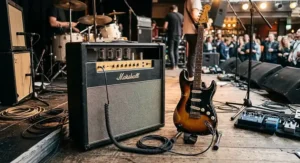
This guide leans on real specs, genuine aggregated review sentiment, and honest comparative reasoning rather than gushing marketing copy. We’ve pulled together seven genuine, currently available models spanning budget, mid-range and premium territory, so whether you’re hunting for a gigging guitar under £800 or you’ve got a bit more to spend on something that’ll outlast your band, there’s a proper option waiting below. We’ll also dig into what actually makes a guitar reliable on stage, how hardware choices affect live sound, and the maintenance habits that separate a guitar that lasts a decade of touring from one that’s back in the shop by Christmas.
One quick note before we dive in: this article contains affiliate links, and as an Amazon Associate we may earn from qualifying purchases — full disclosure sits at the bottom of the page. Right, let’s get into it.
Quick Comparison Table
| Guitar | Price Range | Body Type | Best For |
|---|---|---|---|
| Squier Classic Vibe ’60s Stratocaster | around £400-£450 | Solid alder | Best budget springboard |
| Yamaha Pacifica 612VIIX | around £550-£650 | Solid alder | Most reliable all-rounder |
| Epiphone Les Paul Standard ’60s | around £600-£700 | Mahogany/maple | Warm tone for pub gigs |
| Fender Player II Telecaster | around £650-£750 | Solid alder | Cutting live sound |
| PRS SE Custom 24 | around £750-£850 | Mahogany/maple | Versatility under £800 |
| ESP LTD EC-1000 | around £900-£1,000 | Mahogany | Touring durability |
| Fender American Professional II Stratocaster | around £1,500-£1,700 | Solid alder/ash | Career-level reliability |
Looking at the spread here, there’s a clear pattern: as the price climbs, you’re mostly paying for tighter tolerances, better fretwork, and hardware that shrugs off years of abuse rather than any single “magic” upgrade. The PRS SE Custom 24 stands out as the value sweet spot for players who want genuine versatility while still landing under that £800 psychological ceiling. Meanwhile, the Yamaha Pacifica 612VIIX proves that reliability doesn’t have to cost a fortune — a point we’ll return to again and again in this guide.
💬 Which one’s calling your name so far? Bookmark this page — you’ll want to compare specs again before you buy.
Top 7 Gigging Electric Guitars: Expert Analysis
1. Squier Classic Vibe ’60s Stratocaster — best budget springboard for stage-ready tone
The Classic Vibe range is where Squier stopped being “the cheap Fender” and started being a genuinely credible stage instrument in its own right. Its alder body and vintage-tint gloss neck are paired with Fender-designed Alnico pickups, which means you’re getting a proper single-coil Strat voice rather than a muddy approximation — bright, glassy cleans that cut through a mix without sounding thin. The vintage-style tuners hold pitch respectably well for the price point, though gigging players often add a set of locking tuners within the first year to eliminate the last bit of string slip during aggressive whammy use. Based on the spec comparison with pricier Fenders, what most buyers overlook is that the fret finishing and neck shaping on recent Classic Vibe runs are genuinely close to instruments costing twice as much. Reviewers consistently report that the pickups are the standout feature at this price, with several noting the guitar “punches above its weight” in a full-band mix. This is the guitar for the player just starting to gig seriously, or the one who wants a beater Strat they won’t panic about leaving in a smoky green room. It’s for beginners and gigging veterans alike who don’t want to insure a Custom Shop guitar against pub carpet stains.
Pros:
- ✅ Authentic Fender single-coil voicing at a fraction of the cost
- ✅ Comfortable vintage-style neck profile for long sets
- ✅ Genuinely gig-ready fret and finish quality for the price
Cons:
- ❌ Stock tuners benefit from an early upgrade for heavy tremolo use
- ❌ Single coils hum under certain stage lighting rigs
Price sits around £400-£450, and for that money it’s hard to argue with the value — this is the rare budget guitar that doesn’t feel like a compromise once it’s plugged into a decent amp.

2. Yamaha Pacifica 612VIIX — most reliable guitar for gigging on a budget
Yamaha’s Pacifica line has quietly built one of the strongest reliability reputations in the industry, and the 612VIIX is the model that gigging guitarists keep recommending to each other. The alder body and bolt-on maple neck are fitted with a genuine Seymour Duncan humbucker/single-coil/humbucker configuration, giving you access to both fat rock tones and glassy in-between quack without swapping instruments mid-set. What most buyers overlook about this model is the coil-splitting push-pull tone knob, which effectively doubles your tonal palette without adding a single extra control to fumble with under stage lights. Here’s what to weigh: the roller nut and vintage tremolo combination genuinely holds tuning through aggressive dive-bombs, which is precisely the kind of detail that separates guitars built for the stage from guitars built for the bedroom. Reviewers consistently note the build consistency as the Pacifica’s calling card — unlike some budget-adjacent brands, Yamaha’s quality control rarely produces a “lemon,” which matters enormously when you can’t afford a guitar that needs a setup mid-tour. This is the pick for the gigging musician who wants one guitar to cover several genres in a single night without switching instruments between songs.
Pros:
- ✅ Exceptional tuning stability from the roller nut and tremolo
- ✅ Coil-split humbuckers cover multiple tonal territories
- ✅ Outstanding manufacturing consistency reduces lemon risk
Cons:
- ❌ Stock pickups are good but not class-leading for high-gain tones
- ❌ Fewer finish options than more mainstream competitors
Expect to pay in the £550-£650 range, and reviewers routinely flag it as the best value-to-reliability ratio in this guide — a genuinely strong case for “most reliable guitar for gigging” if that’s your primary concern.
3. Epiphone Les Paul Standard ’60s — best guitar for pub gigs needing warmth
There’s a reason the Les Paul shape still dominates pub stages up and down the country decades after its creation — it’s partly the look, but mostly the tone. This Epiphone iteration uses a mahogany body with a maple top and Epiphone’s own humbuckers voiced to chase the vintage ’60s Les Paul sound: thick, slightly compressed midrange that sits beautifully in a small-room mix without a huge amp behind it. Based on the spec comparison, the rounded ’60s SlimTaper neck profile is noticeably more comfortable for extended barre-chord work than the chunkier ’50s profiles, which matters when you’re three hours into a covers set. What the spec sheet won’t tell you, but reviewers note, is that the weight of a solid mahogany body means noticeable shoulder fatigue on longer nights without a wide strap — worth factoring in if you already suffer from back trouble. Aggregated review sentiment consistently praises the sustain and midrange warmth, with several owners describing it as “punching well above its Epiphone price tag” for pub and function-band use. This is the guitar for players chasing classic rock and blues tones in low-ceiling venues where a bright single-coil guitar can feel harsh.
Pros:
- ✅ Thick, warm humbucker tone ideal for small-venue pub gigs
- ✅ Comfortable SlimTaper neck for long sets
- ✅ Genuine vintage Les Paul look and presence on stage
Cons:
- ❌ Noticeably heavier than bolt-on alternatives on long nights
- ❌ Less tonal versatility than dual-coil-split designs
Sitting around £600-£700, this remains one of the strongest value propositions in the mid-price Les Paul market, particularly for anyone whose setlist leans classic rock, blues or soul.
4. Fender Player II Telecaster — cutting live sound electric guitar for the mix
Telecasters have a reputation for cutting through a live mix like almost nothing else, and the Player II update sharpens that reputation further. The alder body and maple neck pair with Fender’s Player Series pickups, tuned to deliver that classic twangy bridge-position bite alongside a genuinely usable, slightly darker neck pickup — useful when you need a warmer tone for a ballad without switching guitars. Here’s what to weigh: the “Tele-style” bridge with proper intonation adjustability is a meaningful upgrade over older three-saddle designs, meaning your intonation actually holds up the neck rather than drifting near the twelfth fret. Reviewers consistently report that the Player II’s fretwork and factory setup are noticeably improved over the outgoing Player Series, arriving genuinely stage-ready out of the box rather than needing an immediate trip to a tech. What most buyers overlook about the Telecaster shape generally is how well it sits against the body during standing performance — the offset horn design means less neck-dive than a Les Paul, which matters over a three-hour set. This is the pick for players who need their guitar to be heard clearly through even a modest PA system, especially in genres like country, indie and classic rock where clarity trumps saturation.
Pros:
- ✅ Bright, cutting tone that sits well in a live mix
- ✅ Improved bridge design holds intonation reliably
- ✅ Light, well-balanced body reduces neck-dive on stage
Cons:
- ❌ Bridge pickup can feel thin for heavier genres without EQ help
- ❌ Fewer tonal options than humbucker-loaded alternatives
Priced around £650-£750, this is a genuinely strong live-sound specialist, and it directly answers anyone specifically hunting for a “live sound electric guitar” that won’t get lost behind a drummer.
5. PRS SE Custom 24 — best gigging guitar under £800 for versatility
If there’s one guitar in this list built to be a genuine “do everything” stage instrument, it’s this one. The mahogany body with maple top and PRS’s own 85/15 humbuckers deliver an unusually wide tonal range — full push-pull coil splits mean you can go from thick rock crunch to a convincingly Strat-like quack without touching a pedal. Based on the spec comparison against similarly priced competitors, the 25-inch scale length and wide-thin neck profile split the difference between Fender and Gibson feel, which explains why so many working musicians who play in cover bands gravitate toward PRS SEs — one guitar genuinely covers more setlist ground. What most buyers overlook is the locking tuner and PRS-designed tremolo combination, which holds tuning through surprisingly aggressive use, a detail that matters enormously for anyone gigging multiple sets a night without a tech on hand to retune between songs. Aggregated reviewer sentiment consistently highlights the fit and finish as “punching above the SE price bracket,” with the birds-in-flight inlays and figured maple veneer looking genuinely premium under stage lighting. This is the pick for anyone who wants a single guitar under £800 capable of handling a genuinely varied setlist.
Pros:
- ✅ Exceptional tonal versatility via coil-splitting humbuckers
- ✅ Reliable tuning stability under demanding stage tremolo use
- ✅ Premium fit, finish and inlay work for the price bracket
Cons:
- ❌ Neck profile may feel unfamiliar to dedicated Fender players
- ❌ Fewer finish colour options than Fender or Epiphone ranges
Typically found in the £750-£850 range, this genuinely lands right around that “under £800” mark many gigging players are aiming for, making it arguably the standout value pick in this entire guide.
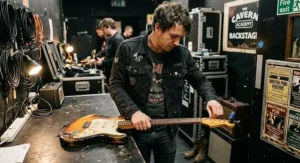
6. ESP LTD EC-1000 — durable guitar for touring rock and metal
Built for players who need their gear to survive genuinely rough handling, the EC-1000 pairs a mahogany body and set-thru neck construction with active EMG humbuckers designed specifically for high-gain touring use. The set-thru neck joint — a step beyond a standard set neck — improves sustain and structural rigidity at the neck heel, which is precisely the area that takes the most stress from repeated case-in, case-out handling on tour. Here’s what to weigh: active EMG pickups need a 9-volt battery, which sounds like a minor inconvenience until you’re mid-tour without a spare — smart gigging players keep two spares taped inside the control cavity at all times. Reviewers consistently note the neck-through-style stability and consistent fretwork as the EC-1000’s defining strengths, with several long-term touring owners specifically praising how well it holds up to van transport and temperature swings between load-in and soundcheck. What most buyers overlook is that the Grover tuners fitted here are genuinely road-tested hardware rather than a budget afterthought, meaningfully reducing retuning frequency across a long set. This is the guitar for metal, hard rock and drop-tuned touring players who need dependable output night after night.
Pros:
- ✅ Set-thru neck construction adds sustain and structural strength
- ✅ Active EMG pickups deliver consistent high-gain output
- ✅ Road-tested Grover tuners resist touring wear and tear
Cons:
- ❌ Requires a 9-volt battery for active electronics
- ❌ Heavier body may not suit players prioritising comfort over output
Priced around £900-£1,000, this is squarely aimed at gigging musicians whose main concern is genuine touring durability over tonal versatility.
7. Fender American Professional II Stratocaster — premium reliability for career gigging
At the top of this list sits Fender’s flagship US-made Stratocaster, built for players who gig for a living and need an instrument that simply doesn’t let them down. The alder or ash body (depending on finish) pairs with V-Mod II single-coil pickups, engineered specifically to reduce the 60-cycle hum that plagues cheaper single-coil guitars under stage lighting rigs — a genuinely useful upgrade that budget alternatives can’t replicate. Based on the spec comparison with the rest of this list, the “Deep C” neck profile and rolled fingerboard edges are subtle but meaningful upgrades that reduce hand fatigue across long, multi-set nights. What most buyers overlook about the American Professional II is the two-point tremolo system with height-adjustable arm tension, letting gigging players fine-tune whammy feel to match their exact technique rather than accepting a factory default. Reviewers consistently describe the build quality and electronics as “studio-grade reliability that translates directly to the stage,” and it’s genuinely rare to find long-term negative reports about tuning stability or hardware failure on this model. This is the pick for professional and semi-professional players for whom the guitar is a long-term career tool rather than a hobby purchase.
Pros:
- ✅ Reduced-hum pickups genuinely solve a common stage problem
- ✅ Deep C neck profile reduces fatigue on long tours
- ✅ Outstanding long-term reliability reported by professional players
Cons:
- ❌ Significant price jump over the rest of this list
- ❌ Overkill for players gigging only occasionally
Sitting around £1,500-£1,700, this is a genuine investment rather than an impulse buy, but for full-time gigging players, the value/ROI case stacks up over years of dependable use rather than months.
How to Choose a Gigging Electric Guitar
Choosing the right stage instrument comes down to a handful of practical criteria rather than gut feeling alone:
- Weight and balance — a guitar that feels fine sitting on a stand can feel very different after two hours strapped on standing up, so try before you buy wherever possible.
- Tuning stability — locking tuners, quality nuts and well-cut string trees all matter more on stage than in a bedroom, where retuning mid-song simply isn’t an option.
- Pickup versatility — coil-splitting or push-pull options let one guitar cover a wider setlist, reducing the need to bring multiple instruments to every show.
- Build durability — set-neck and set-thru designs generally resist neck-heel stress better than bolt-ons over years of hard case handling.
- Serviceability — guitars using widely available parts (standard-spaced tuners, common pickup routes) are far easier and cheaper to repair on the road.
- Electronics reliability — active electronics offer consistent output but need battery management; passive pickups need no power but can be noisier under certain lighting.
- Fit for genre — a Telecaster’s clarity suits country and indie; a Les Paul’s compression suits blues and classic rock; match the tool to the job.
Wikipedia’s overview of solid-body instrument design is a genuinely useful primer if you want to understand why solid-body construction became the standard for stage instruments in the first place — it explains the feedback-resistance angle in more depth than most retail buying guides bother to.
Practical Usage Guide: Setup, Maintenance and First 30 Days
Getting a new gigging guitar stage-ready starts before the first show. In the first week, get a proper professional setup done — even guitars that arrive well-adjusted from the factory benefit from action and intonation tailored to your specific string gauge and playing style, and it’s far cheaper to fix issues now than after a string breaks mid-set. Stretch new strings thoroughly during practice sessions rather than discovering tuning drift live; a few firm pulls along each string’s length after fitting will dramatically cut down on that annoying “settling in” period. Within the first month, check your intonation again once strings have properly bedded in, since factory setups are often done with fresh strings that haven’t yet stretched to their final tension.
A common mistake in the first 30 days is neglecting truss rod checks across seasonal temperature changes — a guitar that played beautifully in a warm rehearsal room can develop noticeable neck relief once autumn hits and venues get colder and drier. Keep a basic gig-bag maintenance kit: spare strings, a small screwdriver set, a tuner, and spare 9-volt batteries if you’re running active pickups. Wipe down strings and fretboard after every gig — sweat and stage grime are genuinely corrosive to frets and hardware over time, and this five-minute habit adds years to a guitar’s working life. Finally, rotate your strap button screws’ tightness check into your pre-gig routine; a loose strap button mid-song is one of the more embarrassing (and preventable) live mishaps a guitarist can have.

Real-World Scenarios: Matching the Guitar to the Gig
The weekend pub covers musician: playing two 45-minute sets most Saturdays in low-ceiling function rooms, budget around £600, needs warmth without excessive volume. The Epiphone Les Paul Standard ’60s suits this brief perfectly — its humbucker warmth fills a small room without harshness, and the price leaves room in the budget for a decent amp.
The touring metal guitarist: three to four shows a week across varying climates, drop-tuned riffing, needs to survive van transport and temperature swings without a tech on call. The ESP LTD EC-1000 is purpose-built for exactly this environment, with its set-thru neck and active electronics designed for consistency under stress.
The multi-genre function band player: covering everything from soul to indie to classic rock in a single night, needs one guitar to do it all under £800. The PRS SE Custom 24‘s coil-splitting versatility makes it the obvious choice here, letting one instrument cover a genuinely broad setlist without a guitar change mid-show.
Problem → Solution: Common Gigging Guitar Issues
Problem: strings going out of tune mid-set. Solution: upgrade to locking tuners or a guitar that already includes them, like the Yamaha Pacifica 612VIIX‘s roller nut and vintage tremolo combination, and stretch new strings thoroughly before every show.
Problem: single-coil hum under stage lighting. Solution: consider a noise-cancelling pickup design, such as the Fender American Professional II Stratocaster‘s V-Mod II pickups, or simply reposition relative to dimmer packs and lighting rigs where possible.
Problem: neck-heel cracks or joint stress after years of touring. Solution: prioritise set-neck or set-thru construction, like the ESP LTD EC-1000, which distributes stress more evenly than a basic bolt-on joint under repeated handling.
Problem: dead battery mid-gig on active pickups. Solution: always carry two spare 9-volt batteries taped inside the control cavity, and check battery voltage before every show, not just when it starts sounding weak.
Problem: guitar feels too heavy by the end of a long night. Solution: choose a lighter alder-bodied bolt-on like the Fender Player II Telecaster if fatigue is a recurring issue, or invest in a wider, padded strap to redistribute weight.
Most Reliable Guitar for Gigging: What Actually Matters
“Reliable” gets thrown around a lot in guitar marketing, but for gigging musicians it has a fairly specific meaning: will this guitar hold its tuning, survive transport, and keep working without unexpected failures over hundreds of shows? Reviewers consistently point to a handful of factors when discussing long-term reliability — consistent factory quality control, hardware that’s been genuinely stage-tested rather than simply cosmetic, and construction methods (set-neck, set-thru) that resist the specific stresses of repeated case handling. Based on the spec comparison across this guide, the Yamaha Pacifica 612VIIX and Fender American Professional II Stratocaster sit at opposite price extremes but share the same underlying philosophy: tight manufacturing tolerances and hardware chosen specifically to survive stage conditions rather than just look good under shop lighting. What most buyers overlook is that reliability isn’t purely about price — a well-built budget guitar with quality hardware will often out-tour a poorly maintained expensive one, which is why the maintenance habits covered earlier in this guide matter just as much as the initial purchase decision.
Gigging Guitar vs Studio-Only Guitar
It’s worth being honest that a guitar optimised for the stage isn’t always the same instrument you’d choose purely for recording. Studio guitars can prioritise nuance — a vintage-correct single-coil with genuine 60-cycle hum character might sound gorgeous through a carefully mic’d amp in a quiet room, but that same hum becomes a genuine liability on a noisy stage full of lighting rigs and other electronics. Gigging guitars, by contrast, tend to prioritise consistency and durability over subtle tonal nuance — hence the popularity of noise-cancelling humbuckers, locking hardware, and robust neck joints among the models featured in this guide. That said, the crossover is real: models like the PRS SE Custom 24 and Fender American Professional II Stratocaster genuinely perform double duty, offering enough tonal nuance for recording while retaining the stage-ready reliability that separates a “gigging guitar” from a delicate studio queen. If you only own one guitar, it’s usually smarter to lean toward stage-ready reliability and work around any minor studio limitations with amp and pedal choices rather than the reverse.
What to Expect: Real-World Performance at Pub Gigs and Small Venues
Small venues and pub gigs come with their own specific acoustic challenges — low ceilings, hard surfaces that bounce sound unpredictably, and often modest PA systems that won’t flatter every guitar equally. In these environments, humbucker-loaded guitars like the Epiphone Les Paul Standard ’60s genuinely shine, since their compressed midrange sits comfortably in a small, reflective room without becoming harsh at higher stage volumes. Brighter single-coil guitars like the Squier Classic Vibe ’60s Stratocaster can occasionally sound thin or brittle in these spaces unless EQ’d carefully, though the flip side is they cut through cheap PA speakers more easily than a heavily compressed humbucker tone. What the spec sheet won’t tell you, but experienced pub-circuit players note, is that stage volume in small venues is almost always lower than rehearsal volume to avoid overwhelming the room, so guitars with strong output at lower gain settings — like the Yamaha Pacifica 612VIIX‘s humbuckers — tend to translate more reliably from rehearsal to actual performance.
Long-Term Cost & Maintenance for Touring Guitars
Total cost of ownership matters far more for gigging guitars than it does for bedroom instruments, since touring wear accelerates almost every maintenance need. Budget roughly £40-£60 per year for fresh strings if you’re gigging weekly, plus an annual professional setup in the £50-£80 range to keep intonation and action dialled in as seasonal humidity shifts the neck. Guitars with active electronics, like the ESP LTD EC-1000, add a small ongoing battery cost but rarely need pickup replacement, while passive-pickup guitars need no batteries but may eventually need pot or switch replacement after years of dust and stage-spill exposure. Set-neck and set-thru designs generally cost more upfront but tend to need fewer structural repairs over a decade of touring than budget bolt-on necks subjected to the same handling, which is worth factoring into any genuine value comparison rather than judging purely on sticker price. Cheaper guitars aren’t necessarily false economy, though — the Squier Classic Vibe ’60s Stratocaster‘s low replacement cost means a genuine accident on the road is a far less painful financial hit than damaging a premium instrument.
Price Range & Value Analysis
| Guitar | Price Range | Annual Upkeep (est.) | Value Verdict |
|---|---|---|---|
| Squier Classic Vibe ’60s Stratocaster | around £400-£450 | ~£40-£50 | Best entry value |
| Yamaha Pacifica 612VIIX | around £550-£650 | ~£45-£55 | Best reliability-to-cost ratio |
| PRS SE Custom 24 | around £750-£850 | ~£50-£65 | Best versatility under £800 |
| Fender American Professional II Stratocaster | around £1,500-£1,700 | ~£60-£80 | Best long-term career investment |
Interpreting this table, the gap between entry-level upkeep and premium upkeep is proportionally much smaller than the gap in purchase price, which reframes the value question somewhat: cheaper guitars aren’t dramatically cheaper to maintain, only cheaper to buy. For a gigging musician planning to keep an instrument five years or more, the PRS SE Custom 24 offers a genuinely compelling middle path between upfront cost and long-term versatility.
✨ Don’t Miss These Exclusive Deals!
🔍 Ready to find your stage-ready match? Check current pricing and availability on any of the guitars above — your next unforgettable gig might just start with the right instrument in your hands!
Live Sound Electric Guitar: Getting the Best Tone Through the PA
A guitar’s tone in isolation is only half the story — what actually reaches the audience depends heavily on how well it interacts with amps, mic’d cabinets or a direct-to-PA setup. Guitars with cleaner, less compressed pickups, like the Fender Player II Telecaster, tend to translate more predictably through a house PA system operated by a sound engineer you’ve never met, since their tonal character is less dependent on specific amp settings. Reviewers consistently note that overly bright or overly hot pickups can cause unexpected feedback issues in small venues with tight monitor placement, so testing your rig at soundcheck — not just at home — remains essential. What most buyers overlook is that cable quality and pickup output impedance both affect how “live sound-friendly” a guitar actually is; a guitar with hotter output may need the sound engineer to pad the input gain, which is worth mentioning during soundcheck rather than discovering it mid-song.
Safety and Practical Compliance for Gigging Musicians
Gigging brings a couple of practical compliance considerations that go beyond the guitar itself. Many UK venues now expect proof that your electrical equipment — amps, pedalboards, wireless systems — has been properly tested, and the Musicians’ Union’s guidance on equipment safety is a genuinely useful resource for understanding what venues typically expect and how often to get equipment checked. It’s also worth taking hearing health seriously; prolonged exposure to loud stage volumes is a well-documented occupational hazard for musicians, and the NHS Inform guide to hearing loss is a solid starting point if you’re noticing any changes in your hearing after years of gigging — a set of decent in-ear monitors or musician’s earplugs is a genuinely cheap insurance policy against a problem that can’t be reversed later.
Frequently Asked Questions
❓ What is the best electric guitar for live performance on a budget?
❓ Is a set-neck or bolt-on neck better for touring?
❓ How often should I change strings for regular gigging?
❓ Do active pickups need special maintenance for touring?
❓ Can a guitar under £800 really handle professional gigging?
Conclusion
Choosing a gigging electric guitar ultimately comes down to matching real specs and honest reliability data to your specific playing life, rather than chasing whichever guitar looks best under studio lighting in a YouTube review. Whether that’s the Squier Classic Vibe ’60s Stratocaster getting you through your first paid gigs, the Yamaha Pacifica 612VIIX proving that reliability doesn’t require a premium price tag, or the Fender American Professional II Stratocaster serving as a genuine career-length investment, every guitar in this guide earned its place through real-world durability and honest tonal character rather than hype. The PRS SE Custom 24 remains the standout pick for anyone specifically hunting a versatile, dependable instrument under £800, while touring metal players will find the ESP LTD EC-1000‘s set-thru construction hard to beat for genuine road toughness. Whatever you land on, remember that maintenance habits matter just as much as the initial purchase — a modest guitar looked after properly will outlast a premium one that’s neglected. Good luck out there, and see you on stage.
✨ Found the guitar you’ve been looking for? Check current pricing today and get one step closer to your next gig! 🎸
Recommended for You
- 7 Best Electric Guitar for Recording Picks (2026)
- Professional Electric Guitar 2026: 7 Superb Picks Worth The Splurge
- Electric Guitar Under £400: 7 Best Value Picks for 2026
Disclaimer: This article contains affiliate links. As an Amazon Associate, I earn from qualifying purchases. If you purchase products through these links, we may earn a small commission at no additional cost to you.
✨ Found this helpful? Share it with your friends! 💬🤗
