
In This Article
So you’ve decided you want to play guitar, or you’re upgrading from whatever dusty first instrument got you started, and now you’re staring down a wall of options wondering whether an electric guitar under £400 can actually hold its own. Here’s the short answer: yes, emphatically, and the reasons why are more interesting than you’d expect. What is an electric guitar under £400? It’s a solid-body or semi-hollow instrument priced roughly between £150 and £400 that uses magnetic pickups and an amplifier to produce sound, built from mid-tier tonewoods and hardware that punch well above what that price tag suggests in 2026.
Manufacturing has changed the game. Factories in Indonesia and China that once produced strictly entry-level instruments now turn out guitars with genuinely playable necks, reliable tuning stability, and pickups that don’t sound like an afterthought. The gap between a £180 guitar and a £900 one has narrowed considerably, even if it hasn’t vanished. This guide walks you through seven real, currently available instruments spanning that sweet spot, explains what actually separates a £250 guitar from a £550 one, and gives you a framework for spending your money wisely rather than guessing. Whether you eventually land on a Squier, a Yamaha, or something from a newer contender like Harley Benton, the goal here is the same: helping you avoid the classic beginner mistake of either overspending on features you won’t use for years or underspending on a guitar that fights you every time you pick it up.
We’ll cover budget heroes, genuine mid-range value, and a couple of options that nudge into premium territory for context, because understanding what £600 buys you makes it much easier to judge whether £400 is the right stopping point for your situation.
Quick Comparison Table
| Guitar | Price Range | Style | Best For |
|---|---|---|---|
| Squier Affinity Stratocaster HSS | around £190-230 | Solid-body, S-type | First-time buyers wanting classic tone |
| Harley Benton Fusion-III HH | around £150-190 | Solid-body, S-type | Tightest budget, rock/metal tones |
| Epiphone Les Paul Special-II | around £150-190 | Solid-body, LP-type | Warm humbucker tone on a budget |
| Yamaha Pacifica 112V | around £220-260 | Solid-body, S-type hybrid | All-round gigging and practice guitar |
| Ibanez RG421EX | around £280-330 | Solid-body, superstrat | Rock, metal, and fast playing styles |
| Yamaha Revstar RS320 | around £380-440 | Solid-body, chambered | Players wanting character above £400 |
| PRS SE CE 24 Standard Satin | around £480-560 | Solid-body, bolt-on | Stepping into premium build quality |
Looking at this spread, the jump from the sub-£200 Squier and Harley Benton options to the Yamaha Pacifica isn’t really about the wood or the electronics changing dramatically — it’s about consistency and set-up quality tightening up. Reviewers consistently note that the biggest leap in perceived quality happens between roughly £200 and £260, where fretwork and tuning stability stop being a lottery. Once you cross into the Revstar and PRS SE territory, you’re paying for more distinctive tonewood choices, upgraded pickups, and hardware that’s built to be gigged for years rather than just get you through lessons. For a deeper look at how pickups actually shape your tone, Wikipedia’s overview of the electric guitar is a solid starting point if you want the engineering behind the hype.
💬 Found a guitar that’s caught your eye already? Scroll down to see the full breakdown before you decide!😊
Top 7 Electric Guitars Under £400: Expert Analysis
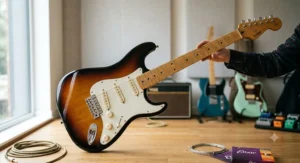
1. Squier Affinity Series Stratocaster HSS — best all-round beginner value
The Affinity Stratocaster HSS earns its reputation as the default recommendation for new players, and that reputation is largely deserved. Its poplar body and maple “C”-shaped neck combine with a 25.5-inch scale length to give you the classic Strat feel that so many guitarists eventually judge every other instrument against. What most buyers overlook about this model is the HSS configuration: the bridge humbucker gives you a rock-friendly growl that the original SSS-only Strats lacked, while the two remaining single coils preserve that glassy, quacky clean tone the design is famous for. This is a genuinely useful hybrid for a beginner who doesn’t yet know whether they’re a blues player or a rock player.
Reviewers consistently note that the split-shaft sealed tuners hold pitch well for the price bracket, and the two-point tremolo bridge offers usable vibrato without constant re-tuning headaches — provided you’re not diving and pulling up on it aggressively every song. Based on the spec comparison with pricier Fender-branded Strats, you’re sacrificing alder or ash tonewood richness and premium hardware, but you’re not sacrificing playability. It suits beginners who want an unmistakably iconic shape and sound, as well as parents buying a first guitar for a teenager who might quit within six months (a real and common scenario worth planning for financially).
Pros:
- ✅ Genuinely playable “C” neck straight out of the box
- ✅ HSS layout adds rock versatility over standard SSS Strats
- ✅ Wide colour and finish range to suit personal taste
Cons:
- ❌ Ceramic-magnet pickups lack the top-end sparkle of pricier alnico sets
- ❌ Can sound a touch thin without pedal or amp shaping
Sitting around £190-230, this remains one of the strongest starting points in the whole sub-£400 category, and the value verdict is straightforward: buy this if you want the Strat experience without gambling on lesser-known brands.
2. Harley Benton Fusion-III HH — best budget alternative-brand pick
Harley Benton has spent the last several years quietly forcing established manufacturers to justify their pricing, and the Fusion-III HH is a good example of why. Built in Indonesia with a double-humbucker layout, it leans into a fuller, more rock-oriented voice than the classic single-coil Strat clones dominating this price bracket. The specialist humbuckers aren’t from a boutique winder, but they’re voiced with noticeably more output than generic ceramic units found on some entry-level guitars twice its price, meaning you get usable crunch and lead tones without needing a pedal to compensate.
What the spec sheet won’t tell you, but user reports suggest, is that fret finishing and neck-pocket fit on recent Harley Benton runs have become remarkably consistent — a notable shift from the brand’s earlier reputation for hit-or-miss quality control. This is a guitar for the player who cares more about tone character than brand cachet, someone happy to shop direct via Thomann-style retailers and do their own final setup tweaks. If you’re chasing a Djent or metal-adjacent tone on the tightest possible budget, the coil-split option on many Fusion models (check the specific configuration before buying) adds welcome versatility.
Pros:
- ✅ HH pickups deliver more output than typical budget single coils
- ✅ Consistent recent build quality per aggregated owner feedback
- ✅ Coil-split wiring available on several variants for tonal range
Cons:
- ❌ Fewer physical stores to try before buying in the UK
- ❌ Resale value and brand recognition lag behind Fender-family names
At around £150-190, this is arguably the best pound-for-pound HH-equipped guitar in this entire guide, and the value verdict favours it heavily for rock-leaning beginners on the tightest budget.
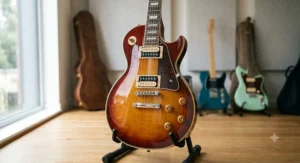
3. Epiphone Les Paul Special-II — best budget Les Paul tone
If the Stratocaster shape doesn’t appeal to you, Epiphone’s Les Paul Special-II remains the standard answer for affordable single-cutaway tone. Its mahogany body and bolt-on mahogany neck (note: not the set-neck construction of pricier Epiphone Les Pauls) keep costs down while still delivering the warmer, thicker midrange that mahogany bodies are known for compared with the brighter alder and poplar options elsewhere in this guide. The 700T and 650R open-coil humbuckers are unmistakably Les-Paul-flavoured — thick, a little dark, and forgiving of sloppy technique in the best way for beginners still building finger strength.
Based on the spec comparison with genuine Gibson Les Pauls costing four to five times as much, the bolt-on neck and simplified electronics (just one volume, one tone, no separate pickup volume controls) are the clearest compromises. Reviewers consistently note that out-of-the-box tuner stability can be inconsistent between units — a recurring theme in aggregated feedback that’s worth budgeting a tuner upgrade for if you keep the guitar long-term. This model suits players drawn to blues, classic rock, or metal rhythm work who want that rounder Les Paul voice without a Gibson-sized outlay.
Pros:
- ✅ Genuine Les Paul tonal character from mahogany and humbuckers
- ✅ Slim taper neck profile is comfortable for smaller hands
- ✅ Tune-o-matic bridge and stopbar aid sustain and tuning ease
Cons:
- ❌ Stock tuners are frequently flagged as the weak link
- ❌ Bolt-on neck lacks the sustain of set-neck Gibson-style construction
Priced around £150-190, this is the clear pick for anyone whose ear is set on that classic humbucker growl rather than Strat-style single-coil chime.
4. Yamaha Pacifica 112V — best all-rounder for mixed genres
The Pacifica 112V has quietly become one of the UK’s best-selling electric guitars, and spending time with the spec sheet explains why. Its solid alder body pairs with a maple neck and rosewood fingerboard, echoing Fender’s classic recipe, but Yamaha’s custom-wound Alnico V pickups and a coil-tap function set it apart from a straightforward Strat clone. What most buyers overlook here is that coil-tap switch: pull up on the tone knob and the bridge humbucker splits into single-coil mode, meaning one guitar genuinely covers both crunchy rock tones and cleaner, quack-adjacent sounds without needing to own two instruments.
Reviewers consistently note the fit and finish exceed what the price suggests, with a factory set-up that’s usually playable immediately rather than needing professional attention first. Based on the spec comparison with the Squier Affinity above, the humbucker-equipped bridge position gives the Pacifica a genuine edge for players who want rock tones without sacrificing the single-coil clarity that makes Strat-style guitars so versatile for blues and funk. This is the guitar to reach for if you’re genuinely unsure what genre you’ll end up gravitating toward.
Pros:
- ✅ Coil-tap function meaningfully expands the tonal palette
- ✅ Alnico V pickups avoid the thinness of cheaper ceramic units
- ✅ Consistently praised factory set-up quality
Cons:
- ❌ Vintage-style tremolo needs careful setup to stay in tune when used hard
- ❌ Small neck dimensions may not suit players with larger hands
Around £220-260, the Pacifica 112V represents genuine mid-range electric guitar value, and it’s the single guitar in this list I’d point most undecided beginners toward first.
5. Ibanez RG421EX — best for rock and metal riffing
Ibanez built its reputation on fast necks and shred-friendly guitars, and the RG421EX brings that DNA into the sub-£350 bracket. Its mahogany body and maple neck deliver a noticeably thinner, faster-feeling profile than the chunkier necks found on the Squier and Epiphone options above, which matters enormously if your priority is rapid fretting hand movement, tapping, or extended solo work. The Quick Change™-style tremolo bridge and double humbucker layout are voiced for gain — this is not a guitar built with jangly cleans as the priority, and it shows.
What the spec sheet won’t tell you, but genre-specific user reports suggest, is that the RG shape’s deep cutaways make upper-fret access dramatically easier than on Strat or Les Paul style bodies, a detail that matters far more once you’re actually soloing than it looks on paper. Based on the spec comparison with the Pacifica, the RG421EX trades all-round tonal versatility for specialisation: if metal, hard rock, or extended-range technique is your goal, this narrower focus is exactly what you want. It’s a poor choice, by contrast, for someone chasing warm jazz or country cleans.
Pros:
- ✅ Fast, flat neck profile ideal for lead and technical playing
- ✅ Deep body cutaways maximise upper-fret access
- ✅ Humbuckers voiced well for distortion and high-gain tones
Cons:
- ❌ Limited clean-tone versatility compared with single-coil designs
- ❌ Thinner neck profile may feel unfamiliar to complete beginners
At around £280-330, this is the guitar for the price-to-performance-focused metal or rock player who already knows their genre and wants a tool built specifically for it.
6. Yamaha Revstar RS320 — best character above £400
Stepping just over the headline £400 mark, the Revstar RS320 illustrates exactly what your extra money buys in the mid-range electric guitar value conversation. Its chambered body — hollowed internally rather than fully solid — adds resonance and a touch of acoustic-like openness to the tone that fully solid bodies in this guide can’t replicate, while keeping weight manageable for long practice sessions. The Focus Switch, a Yamaha-exclusive control, acts like a built-in EQ filter that tightens the midrange for cutting through a mix, giving players an extra tonal tool that budget guitars simply don’t offer.
Based on the spec comparison with the Pacifica 112V, the jump here is about distinctiveness rather than raw quality alone — the Revstar doesn’t sound like a Strat or Les Paul clone, and for players tired of the same two silhouettes dominating this price bracket, that matters. Reviewers consistently praise the eight-finish range and stainless steel frets, which resist wear far better than the nickel-silver frets found on cheaper guitars in this guide, meaning less refretting down the line. This suits an intermediate player upgrading from a first guitar who wants something that looks and sounds distinct from what everyone else in the practice room is playing.
Pros:
- ✅ Chambered body adds resonance without excess weight
- ✅ Focus Switch offers genuine tonal shaping most rivals lack
- ✅ Stainless steel frets resist wear far longer than nickel-silver
Cons:
- ❌ Sits above the strict £400 ceiling for the tightest budgets
- ❌ Less common in UK high-street shops for in-person trials
Around £380-440, the RS320 is the strongest argument in this guide for stretching your budget slightly — the value verdict here favours patience and saving a little more over settling.
7. PRS SE CE 24 Standard Satin — best premium jump under £600
If you’re wondering whether a £400 guitar or best electric guitar under £600 pick is the smarter move, the PRS SE CE 24 Standard Satin answers that question directly by being the most affordable PRS ever released. Its all-mahogany body with a satin finish and bolt-on maple neck deliver the resonance and snap PRS is famous for at a price point that would have been unthinkable from this brand a decade ago. The 85/15 “S” humbuckers, paired with a push-pull coil tap, mean you get genuine tonal range from throaty rock lead tones down to convincing single-coil cleans — a level of versatility that rivals guitars costing considerably more.
What most buyers overlook about this model is exactly how much has not been cut to hit this price: the same 25-inch scale, 24-fret rosewood fretboard with the signature bird inlays, and PRS-designed tremolo as the pricier gloss-finished CE 24. Reviewers consistently describe the fit, finish, and factory set-up as feeling like a considerably more expensive instrument, with the satin finish being the primary cost-saving measure rather than any meaningful build-quality compromise. This suits an intermediate-to-advanced player ready to invest in an instrument they’ll keep for years, or anyone treating a “£400 guitar worth buying” question as really being about long-term value rather than the lowest possible sticker price.
Pros:
- ✅ Same core specs as PRS’s pricier gloss CE 24 model
- ✅ Coil-tap wiring adds genuine single-coil-style versatility
- ✅ Widely described as feeling far above its actual price point
Cons:
- ❌ Sits meaningfully above the £400 ceiling most beginners target
- ❌ Satin finish shows fingerprints and marks more than gloss models
Priced around £480-560, this is the instrument to consider once you’ve decided that stretching toward £500-600 buys a guitar you genuinely won’t outgrow.
Practical Usage Guide: Setup, Maintenance & Your First 30 Days
Getting a new electric guitar under £400 home is only the start — what you do in the first month affects both playability and how long the instrument lasts. Start by checking the factory set-up: action height, intonation, and neck relief all shift slightly during shipping, and even well-built budget guitars benefit from a proper professional set-up in the first few weeks, typically costing £30-50 at a local shop. Change strings within the first month regardless of how the factory set sounds, since manufacturing strings are rarely fresh and a new set genuinely transforms tone on any of the seven guitars above.
A common first-30-days mistake is over-tightening the tremolo springs or truss rod without understanding what each adjustment does — leave major truss rod work to a technician until you’ve watched it done once. Wipe down strings and the fretboard after each session to slow corrosion and grime buildup, and store the guitar in its case or on a stable stand away from radiators, since temperature swings warp necks over time. If you’re practising through headphones or a small amp at higher volumes for extended sessions, it’s worth being aware of hearing health guidance — the HSE’s noise regulation guidance outlines exposure thresholds that apply just as much to enthusiastic bedroom practice as they do to professional venues, and cheap foam earplugs are a genuinely sensible investment for anyone practising daily at volume.
Real-World Scenarios: Which Guitar Actually Suits You?
Consider three realistic buyer profiles. First, the complete beginner on a strict budget, perhaps a student or someone testing whether guitar sticks as a hobby: the Squier Affinity Stratocaster or Harley Benton Fusion-III HH make the most sense here, since neither commits more than roughly £200 while still delivering a genuinely playable instrument that won’t sour the learning experience. Second, the returning player picking guitar back up after years away, with some technique retained but wanting an instrument that won’t feel like a downgrade from what they remember: the Yamaha Pacifica 112V or Ibanez RG421EX both suit this profile, offering more tonal range or playing speed than a pure beginner model.
Third, the gigging or serious hobbyist player ready to commit to one main instrument for the next several years, who has outgrown “just getting by” as a priority: the Yamaha Revstar RS320 or PRS SE CE 24 Standard Satin fit this bracket, trading a higher upfront cost for tonal distinctiveness and build quality that holds up under regular use. Matching your actual practice frequency and musical goals to one of these three profiles, rather than simply buying whatever’s cheapest or most expensive, is the single most useful filter for narrowing seven good options down to one.
✨ Don’t Miss These Exclusive Deals!
🔍 Take your guitar journey to the next level with these carefully selected instruments. Click on any highlighted model above to check current pricing and availability — these guitars will help you build authentic tone and technique you’ll actually enjoy playing for years.
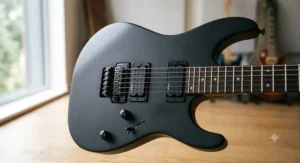
How to Choose an Electric Guitar Under £400
Choosing between dozens of similarly priced guitars comes down to a handful of genuinely important criteria, in roughly this order of priority:
- Body style and genre fit — Strat-style guitars suit blues, indie, and all-round playing; Les Paul-style guitars suit rock and blues with thicker tone; superstrat shapes like the Ibanez RG suit metal and technical playing.
- Pickup configuration — single coils (SSS) give brighter, clearer tone; humbuckers (HH) give thicker, higher-output tone; HSS hybrids offer the most versatility for undecided beginners.
- Neck profile and scale length — thinner necks suit smaller hands and faster playing; chunkier necks suit players who grip harder or prefer more surface contact.
- Build consistency and factory set-up — read aggregated review sentiment for tuning stability and fret finishing rather than trusting marketing copy alone.
- Finish and hardware quality — coil-taps, locking tuners, and better bridges at this price point add long-term value even if they seem like minor details early on.
- Genuine total cost — factor in a first professional set-up, a spare set of strings, and a gig bag if one isn’t included, since the guitar’s sticker price is rarely the full cost of getting started.
- Room to grow — a guitar with more tonal versatility (like a coil-tap) tends to outlast your changing taste in music better than a highly specialised one.
Best Electric Guitars Under £500: Is the Extra £100 Worth It?
Stretching from £400 to £500 buys you meaningfully different things depending on the brand, and it’s worth being specific rather than assuming “more expensive always means better.” The Yamaha Revstar RS320 sits right at this threshold and demonstrates the case for spending the extra £100: a chambered body, stainless frets, and a genuinely distinct voice that a straight £250-300 Strat clone cannot replicate regardless of set-up quality. On paper this means you’re paying for tonal character and long-term durability rather than raw playability, since even the cheapest guitars in this guide are perfectly playable once properly set up.
However, the honest counterpoint is that a player still learning basic chords and technique won’t yet notice the tonal nuances that separate a £250 guitar from a £480 one — the return on that extra spend scales with your playing experience, not before it. If you’re brand new to guitar, the value case for staying under £400 remains strong; if you’ve been playing for a year or more and know your musical direction, the jump toward £500 starts paying real dividends in tone and satisfaction.
Best Electric Guitars Under £600: Where Mid-Range Value Peaks
At the £600 ceiling, the PRS SE CE 24 Standard Satin becomes the standout case study for where mid-range electric guitar value genuinely peaks before diminishing returns set in. What most buyers overlook is that PRS deliberately built this model to undercut its own £700 gloss-finished sibling using a satin finish rather than cheaper core components — meaning the pickups, fretboard, scale length, and hardware are identical to a guitar costing considerably more. Based on the spec comparison across every guitar in this guide, this is the clearest example of a brand’s engineering and reputation becoming accessible at a genuinely competitive price rather than a compromised entry-level spin-off.
The table below makes the price-band trade-offs concrete.
| Price Band | What You Typically Get | Best For |
|---|---|---|
| £150-250 | Solid playability, basic hardware, occasional QC variance | Absolute beginners, second/spare guitars |
| £250-400 | Consistent set-up, better pickups, added tonal features (coil-tap) | Committed beginners, undecided genre players |
| £400-600 | Distinctive tonewoods, premium-brand engineering, superior hardware | Intermediate to advanced players, long-term keepers |
Reading across these bands, the biggest single jump in tangible quality happens between the first two tiers, while £400-600 is more about refinement, brand engineering, and distinctiveness than fixing fundamental flaws — useful context if you’re deciding exactly where your own budget ceiling should sit.
Mid-Range Electric Guitar Value: Features That Actually Matter (And Those That Don’t)
Marketing copy loves to highlight flashy specs that rarely affect real-world playing. Exotic wood veneers and elaborate finishes look great in photos but rarely change tone as much as pickup type and quality — the honeyburst or quilted-maple-look finish on a budget guitar is cosmetic, not tonal. Similarly, an extra-high fret count sounds impressive, but few beginner or intermediate players ever play reliably above the 19th fret, so 22 versus 24 frets rarely matters in practice.
What genuinely matters: pickup quality and configuration (as covered above), neck relief and fret-end finishing (poorly finished fret ends genuinely hurt your hand over long sessions), tuning machine quality (loose tuners are the single most common complaint across every budget brand in this guide), and bridge type matched to your playing style (a well-set-up tremolo is fine for occasional vibrato; a hardtail is more forgiving for beginners who don’t yet need pitch-bending tricks). Reviewers consistently note that tuner quality is the most commonly upgraded component across every budget guitar mentioned here, which tells you where manufacturers most often trim costs first.
Best Guitars for the Money: Common Mistakes When Buying
The single most common mistake is buying based on looks or a favourite artist’s signature model without considering genre fit — a superstrat like the Ibanez RG421EX is a poor choice for someone wanting warm jazz or country cleans, regardless of how it photographs. A second frequent error is assuming the most expensive option is automatically “the best guitar for the money” — value is a ratio, not an absolute price point, and the Harley Benton Fusion-III HH genuinely delivers more tone-per-pound than several pricier options in this guide for rock-focused players.
A third mistake is neglecting the total cost of ownership: skipping a proper professional set-up to save £40 often means months of frustration with a guitar that’s technically fine but poorly adjusted, which can wrongly convince a beginner they’re simply bad at playing. Finally, many first-time buyers skip trying an instrument in person when possible, relying entirely on spec sheets — neck profile and body contours are genuinely subjective, and what suits one player’s hands can feel wrong for another’s, even among guitars with near-identical specifications.
Electric Guitar Price to Performance: Long-Term Cost & Maintenance
Thinking in terms of total cost of ownership rather than sticker price alone changes the electric guitar price-to-performance calculation considerably. A budget guitar around £180 that needs a £40 professional set-up, a £15 string upgrade, and eventually a £25 tuner replacement effectively costs closer to £260 over its first year or two — closing much of the apparent gap to a £260 Yamaha Pacifica that needs none of those extras out of the box. Ongoing maintenance costs are broadly similar across every guitar in this guide: expect to budget roughly £10-15 every few months for fresh strings, plus occasional fret polishing or intonation checks (often free at the shop where you bought the instrument, worth asking about). It’s also worth knowing your statutory position if a guitar develops a genuine fault rather than a set-up quirk — GOV.UK’s guidance on returns and refunds sets out what retailers are legally required to offer.
Where guitars diverge more meaningfully is durability of finish and hardware under regular use. Stainless steel frets, as found on the Yamaha Revstar RS320, resist wear for years longer than the nickel-silver frets standard on cheaper models, delaying or eliminating an eventual refret that can cost £100-150 at a repair shop. Similarly, sealed and higher-quality tuners hold tuning stability for longer without needing replacement, a detail that genuinely affects the real-world price-to-performance ratio over a three-to-five-year ownership period rather than at the point of purchase alone.
£400 Guitar Worth Buying? A Buyer’s Decision Framework
Rather than agonising over every spec sheet, use this simplified decision framework. If you’re a complete beginner uncertain whether guitar will stick as a hobby, choose a sub-£200 option like the Squier Affinity or Harley Benton Fusion-III, because minimising financial risk matters more than maximising tone at this stage. If you’ve committed to learning but haven’t settled on a genre, choose a versatile mid-range pick like the Yamaha Pacifica 112V, because its coil-tap and balanced tone cover the widest range of musical directions. If you already know you want fast, high-gain rock or metal tones, the Ibanez RG421EX is a more specialised and arguably smarter £400 guitar purchase than a more “balanced” all-rounder.
If your budget genuinely allows £400-600 and you’re playing regularly enough to notice tonal nuance, the Yamaha Revstar RS320 or PRS SE CE 24 Standard Satin represent the strongest long-term value in this guide, since both are unlikely to be outgrown within a few years of steady practice. This simple “beginner risk versus genre certainty versus long-term commitment” framework covers the overwhelming majority of real buying decisions better than comparing spec sheets line by line.
Electric Guitar Safety: Hearing Protection & Practice Volume
It’s easy to overlook, but protecting your hearing matters just as much as protecting your instrument, especially once you start practising through an amplifier regularly or eventually gigging. Sustained exposure to loud amplified practice, even in a bedroom, carries real risk over years of regular playing, and official guidance on safe exposure levels applies well beyond professional workplaces. According to Which?’s guide to the Consumer Rights Act, buyers are also entitled to expect goods including musical instruments to be of satisfactory quality and fit for purpose when bought new — worth knowing if a guitar arrives with a genuine fault rather than a set-up quirk you can adjust yourself.
Practical steps include keeping practice amp volumes lower than feels “exciting” (a common beginner instinct that does long-term damage), using basic foam earplugs during extended sessions, and taking regular breaks during long practice runs. None of this diminishes the joy of playing loud occasionally — it simply means treating your hearing with the same care you’d give the guitar’s finish or strings.
Frequently Asked Questions
❓ What is the best electric guitar under £400 for a total beginner?
❓ Is it worth spending more than £400 on an electric guitar?
❓ Do budget electric guitars need a professional set-up?
❓ What's the difference between HH, SSS and HSS pickup configurations?
❓ How much should I budget beyond the guitar's price itself?
Conclusion
Choosing an electric guitar under £400 in 2026 isn’t really about finding a single “best” instrument — it’s about matching genuine musical goals, hand comfort, and genre interest to one of several genuinely capable options. The Squier Affinity Stratocaster and Harley Benton Fusion-III HH remain outstanding low-risk starting points for anyone still deciding whether guitar is a lasting hobby, while the Yamaha Pacifica 112V continues to earn its reputation as the most well-rounded all-purpose pick in this entire price bracket. For players ready to specialise or stretch slightly further, the Ibanez RG421EX, Yamaha Revstar RS320, and PRS SE CE 24 Standard Satin each demonstrate clearly where extra spending buys real, tangible improvements rather than just brand prestige.
What matters most is resisting the urge to overthink spec sheets at the expense of trying an instrument, budgeting honestly for that first professional set-up, and being realistic about which of the three buyer profiles covered earlier actually describes you right now. Any of the seven guitars in this guide will get you playing real music — the right one simply gets you there with less friction and more enjoyment along the way.
Recommended for You
- Title: Intermediate Electric Guitar: 7 Best Upgrades for 2026
- Electric Guitar Under £150: 7 Best Picks Worth Buying in 2026
- Best Electric Guitar Starter Pack UK 2026: 7 Top Kits Reviewed
Disclaimer: This article contains affiliate links. As an Amazon Associate, I earn from qualifying purchases. If you purchase products through these links, we may earn a small commission at no additional cost to you.
✨ Found this helpful? Share it with your friends! 💬🤗
