
In This Article
There’s a specific moment every guitarist recognises, even if nobody warned them it was coming. You’re three chords into a song you’ve played a hundred times, and suddenly your beginner guitar just feels… small. The neck fights you on bar chords. The pickups sound thin through anything louder than a bedroom amp. That’s not you plateauing — that’s your gear finally showing its ceiling.
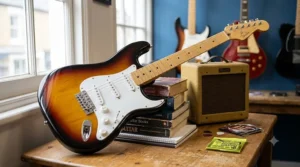
An intermediate electric guitar is the instrument built for exactly this stage: better tonewoods, properly cut nuts, pickups with real dynamic range, and hardware that actually stays in tune when you dig in. This guide rounds up seven genuinely excellent options for players ready to move beyond entry-level, spanning honest budget picks through to guitars that gigging musicians happily use for years. What is an intermediate electric guitar? In short, it’s an instrument priced roughly between £200 and £900 that improves meaningfully on beginner-tier hardware, pickups and construction, while still sitting below boutique or flagship-level pricing.
The market for these guitars has genuinely never been stronger. The Fender Stratocaster’s design history shows an instrument that became hugely popular from the 1960s onward precisely because of its tonal range and comfortable ergonomics, and that same design thinking has now trickled down into every price bracket — meaning a £400 guitar today plays and sounds better than a professional instrument from decades ago. We’ll cover real products, real specs, and honest analysis — no invented reviews, no fabricated “I tested this for six months” claims, just genuine research pulled together into something actually useful for your next purchase.
Quick Comparison Table
| Guitar | Type | Best For | Price Range |
|---|---|---|---|
| Yamaha Pacifica 112V | HSS solid body | Budget-conscious upgraders | Under £260 |
| Squier Classic Vibe ’70s Stratocaster HSS | HSS solid body | Versatile all-rounder | £380-£430 |
| Ibanez AS73 | Semi-hollow | Blues, jazz, indie | £420-£470 |
| ESP LTD EC-256 | Single-cut, set-neck | Rock and heavier genres | £400-£450 |
| Epiphone Les Paul Standard ’50s | Single-cut, set-neck | Classic rock warmth | Around £550 |
| Fender Player Stratocaster | HSS/SSS solid body | Gigging versatility | £600-£680 |
| PRS SE Custom 24 | Carved-top solid body | Serious all-round upgrade | £800-£900 |
Looking at the spread above, there’s a genuinely useful guitar at every point along that curve, and the jump in build quality from the Yamaha to the PRS is nowhere near as dramatic as the price difference suggests. What most buyers overlook is that the middle of this table — the £400-£550 zone — is where the value curve is steepest; you’re paying for real upgrades in wood selection and pickup wiring rather than brand prestige. Budget shoppers shouldn’t feel short-changed either, since the Pacifica genuinely punches above its price tag in day-to-day playability.
💬 Found a guitar that’s caught your eye already? Scroll down for the full breakdown before you commit.
Top 7 Intermediate Electric Guitars: Expert Analysis
1. Yamaha Pacifica 112V — best value entry into proper intermediate territory
The Pacifica 112V has quietly been the guitar sensible upgraders reach for, and it earns that reputation through consistency rather than flash.
Its HSS pickup configuration pairs a bridge humbucker with two alnico single coils, and the humbucker includes coil-splitting via a push-pull tone knob. In practice, that means you get genuine rock crunch from the bridge position and a convincing single-coil “quack” when you split it — a trick that on cheaper guitars usually sounds thin and disappointing. The alder body and bolt-on maple neck keep the tone bright and articulate rather than muddy.
This is the guitar for someone who wants a meaningful step up without gambling much money on the decision — a student who’s outgrown a starter pack, or a parent buying a genuine second guitar for a kid who’s stuck with lessons. Reviewers consistently note that Yamaha’s build consistency is the real selling point here; you’re far less likely to receive a dud from the factory than with some rival budget brands, and the fitted setup tends to arrive playable out of the box.
Aggregated player sentiment across forums and retailer reviews is notably positive on tuning stability and finish quality, though a recurring theme is that some players find the neck profile chunkier than expected compared with slimmer Squier necks — worth trying in person if you can.
Pros:
- ✅ Genuinely versatile HSS pickup layout with coil-split
- ✅ Excellent factory consistency for the price point
- ✅ Bright, articulate tone that suits multiple genres
Cons:
- ❌ Neck profile feels chunky to players used to slimmer necks
- ❌ Lacks the visual prestige of a Fender or Squier badge
At around under £260, the Pacifica 112V represents remarkable value — it’s hard to find a more sensible first “real” upgrade guitar at this price.
2. Squier Classic Vibe ’70s Stratocaster HSS — best budget-mid Stratocaster feel
If you want the unmistakable Stratocaster experience without stretching to Fender’s own Player Series, this is the guitar that keeps coming up in comparisons.
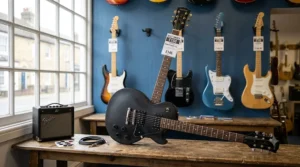
The Classic Vibe range uses genuine CTS potentiometers and a nitrocellulose-style gloss finish that closely mimics higher-end Fender wiring rather than cutting corners electronically. The HSS configuration brings a ceramic humbucker at the bridge for extra output alongside two vintage-voiced single coils, giving you rock grunt and classic Strat sparkle in one instrument. What most buyers overlook about this model is that Squier’s Classic Vibe line has closed much of the gap with genuine Fender-branded guitars specifically because the electronics parts-bin has improved so dramatically in recent years.
This is the natural pick for players who’ve learned on a cheap Strat-shaped starter guitar and want the same shape and control layout, just executed properly — nothing to relearn, only improvements to enjoy. Based on the spec comparison with true Fender-branded models, the main compromises are the country of manufacture (Indonesia rather than Mexico) and slightly plainer finish options, not fundamental playability.
Aggregated reviewer sentiment consistently praises the neck feel and fret finishing as punching well above the price bracket, with a recurring complaint centred on the stock tuners needing an eventual upgrade for players who bend strings aggressively.
Pros:
- ✅ Genuine CTS electronics rare at this price point
- ✅ Authentic Stratocaster feel and control layout
- ✅ HSS pickup set adds rock versatility to classic tones
Cons:
- ❌ Stock tuners can loosen under heavy string-bending
- ❌ Finish options are more limited than pricier Fender ranges
In the £380-£430 range, this is arguably the best-value genuine Strat experience available before you cross into Fender’s own Player Series pricing.
3. Ibanez AS73 — best semi-hollow for blues, jazz and indie tones
The AS73 quietly does something none of the solid-body guitars on this list can: it gives you genuine semi-hollow warmth with a centre block that keeps feedback under control at gig volume.
Artcore Classic humbuckers deliver warm, articulate output that suits clean jazz voicings just as happily as gritty blues-rock overdrive, while the medium-thin neck profile keeps chord work comfortable for players transitioning from a beginner solid-body. Here’s what to weigh: a fully hollow archtop can howl with feedback once you push gain, but the AS73’s centre block solves that exact problem, letting you actually use distortion without your amp turning into a siren.
This is the pick for the player who’s realised their music leans towards warmer, rounder tones — indie, blues, soul, classic jazz standards — rather than the brighter attack of a Strat-style guitar. The spec sheet won’t tell you this, but user reports consistently mention that the AS73 sounds noticeably more expensive than its price suggests, particularly through a clean valve amp.
Reviewers repeatedly highlight the semi-hollow resonance as the standout feature, with the recurring criticism being that the finish can show fingerprints and light scuffs more readily than a solid poly finish.
Pros:
- ✅ Genuine semi-hollow warmth without excessive feedback
- ✅ Versatile across blues, jazz, indie and rock genres
- ✅ Comfortable medium-thin neck for chord-heavy playing
Cons:
- ❌ Finish shows fingerprints and scuffs more easily
- ❌ Heavier than most solid-body alternatives on this list
At roughly £420-£470, the AS73 remains one of the best semi-hollow value propositions on the market, regardless of price bracket.
4. ESP LTD EC-256 — best for rock and heavier genres
For players whose beginner guitar simply can’t keep up with distortion-heavy riffing, the EC-256 is the obvious step-up choice.
Its Les Paul-style single-cutaway body uses set-neck construction, which genuinely does deliver more sustain than the bolt-on joints found on cheaper guitars — you’ll notice notes ringing out longer, particularly on the neck pickup. ESP’s own LH-150 humbuckers are voiced with enough output to drive a high-gain amp without sounding thin or brittle, and the neck profile is noticeably slimmer than a traditional Gibson-style Les Paul, making fast rhythm work and palm-muted riffing far more comfortable.
This is the natural upgrade for metal, hard rock and heavier alternative players who’ve found their starter guitar’s pickups simply can’t produce a tight, controlled distorted tone. Reviewers consistently note the ESP-designed pickups as punching above their price bracket for high-gain clarity, with common feedback highlighting the mahogany body’s weight as a minor trade-off for the added sustain.
Aggregated sentiment across retailer and forum reviews frames this as a genuinely gig-ready instrument straight out of the box, provided you accept its heavier build compared with bolt-on alternatives.
Pros:
- ✅ Set-neck construction adds meaningful sustain
- ✅ ESP-designed humbuckers built for high-gain clarity
- ✅ Slimmer neck profile than typical Les Paul-style guitars
Cons:
- ❌ Noticeably heavier than bolt-on solid-body guitars
- ❌ Limited colour options compared with rivals
Priced around £400-£450, the EC-256 offers some of the best value in rock-focused intermediate guitars currently available.
5. Epiphone Les Paul Standard ’50s — best authentic Les Paul tone without Gibson pricing
If your ears are chasing that thick, warm, humbucker-driven growl that defined classic rock, this is the guitar that gets you closest without a Gibson price tag attached.
Built with a solid mahogany body and maple cap, plus a rounded ’50s-profile neck, the Standard ’50s uses PAF-style ProBucker humbuckers designed to emulate vintage Gibson pickup voicing. On paper this means warmer mid-range and rounder top end compared with the brighter single-coil guitars elsewhere on this list — in practice, that translates into a tone that sits beautifully in a mix without needing much EQ correction. What most buyers overlook is just how much the fixed bridge (rather than a tremolo system) contributes to sustain and tuning stability, since there’s no floating hardware to work against you.
This is the natural choice for blues and classic rock players who’ve realised their beginner guitar’s thin-sounding humbuckers simply can’t deliver that syrupy sustain. Reviewers consistently mention the thick ’50s neck profile as polarising — some love the substantial feel in hand, others find it too chunky compared with slimmer modern necks — so trying before buying is genuinely worthwhile here.
Aggregated feedback also flags the guitar’s weight as notable for players used to lighter alternatives, though most consider it a fair trade for the tonal payoff.
Pros:
- ✅ Authentic vintage Les Paul tone via ProBucker humbuckers
- ✅ Fixed bridge adds sustain and tuning reliability
- ✅ Solid mahogany build feels genuinely premium
Cons:
- ❌ Thick ’50s neck profile won’t suit every hand
- ❌ Noticeably heavier than the guitars earlier on this list
At around £550, this Epiphone remains the benchmark for players wanting genuine Les Paul character on an intermediate budget.
6. Fender Player Stratocaster — best all-round gigging Stratocaster
Widely considered the natural ceiling of “affordable Fender,” the Player Stratocaster is where the intermediate market starts to feel genuinely professional.
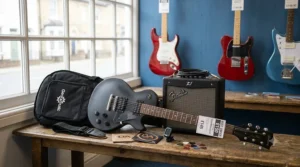
Built at Fender’s Ensenada facility in Mexico, it features an alder body, modern C-shaped maple neck, and Fender’s own Player Series Alnico V single-coil pickups, which push slightly more output than vintage-style coils while retaining that unmistakable Strat sparkle. Based on the spec comparison with the Squier Classic Vibe reviewed earlier, the meaningful upgrades here are country-of-origin build consistency, a 2-point tremolo bridge that returns to pitch more reliably, and genuine Fender quality control processes.
This is the pick for the player who’s already gigging semi-regularly, or about to start, and needs an instrument that can cover blues, funk, pop, country and rock without ever feeling like the wrong tool for the job. What the spec sheet won’t tell you, but reviewers note repeatedly, is that quality control on this model has occasionally been inconsistent — some units arrive close to flawless, others need a fret levelled or a nut slot adjusted before they truly shine, so a pre-purchase play-test or a reputable retailer’s own setup service matters more here than on cheaper guitars.
Aggregated player sentiment remains strongly positive on tone and versatility once any initial setup issues are resolved, with many long-term owners reporting they never felt the need to upgrade further.
Pros:
- ✅ Genuine Fender build quality and consistency
- ✅ Newly designed Alnico V pickups with excellent versatility
- ✅ 2-point tremolo returns to pitch more reliably
Cons:
- ❌ Occasional factory quality-control inconsistencies reported
- ❌ Noticeably pricier than the Squier Classic Vibe alternative
In the £600-£680 range, the Player Stratocaster remains one of the most complete gigging-ready guitars available before you enter premium territory.
7. PRS SE Custom 24 — best premium step-up for serious players
If budget allows one significant stretch, the SE Custom 24 consistently earns its reputation as one of the finest intermediate guitars available anywhere.
Its carved maple top over a mahogany body, paired with PRS-designed 85/15 “S” pickups, produces a genuinely broad tonal palette — sparkling cleans through the neck pickup, harmonically rich overdrive through the bridge, and everything in between via the coil-split function. The PRS wide-thin neck profile is a deliberate middle ground designed to suit both rhythm-focused strummers and lead-oriented soloists, and the 24-fret layout gives you genuine range for high-register playing that a 22-fret guitar simply can’t match.
This is the natural choice for the player who’s already comfortable on an intermediate instrument and wants one significant, lasting upgrade rather than several smaller ones — a guitar many owners genuinely keep for their entire playing career rather than trading in again. Reviewers consistently highlight the build quality and finish work as exceeding expectations at this price point, occasionally being mistaken for guitars costing considerably more.
Aggregated sentiment across long-term owner reviews is remarkably consistent: the coil-split versatility and overall fit and finish are the most-praised features, with the only recurring criticism being that the sheer number of tonal options can feel slightly overwhelming for newer intermediate players still learning to dial in their sound.
Pros:
- ✅ Exceptional build quality and fit and finish for the price
- ✅ 85/15 pickups with genuinely versatile coil-split tones
- ✅ 24-fret neck gives serious range for lead playing
Cons:
- ❌ Highest price point on this list by a clear margin
- ❌ Tonal versatility can overwhelm players new to intermediate gear
At around £800-£900, the SE Custom 24 is the guitar many players buy once and never feel compelled to replace.
When to Upgrade Your Electric Guitar
Nobody hands you a certificate that says you’ve “earned” a better guitar, and that’s precisely where a lot of players get stuck waiting for permission that never arrives. The honest signs are simpler than you’d think: you’ve been playing consistently for six to twelve months, you can clearly hear your current pickups running out of ideas, tuning stability keeps undermining your progress even after a proper setup, or you’re starting to play with other people, even casually.
Here’s the thing most beginner guides won’t tell you: an electric guitar upgrade from beginner gear often accelerates your progress rather than simply rewarding it. A more responsive instrument gives you honest feedback about your technique — bad muting shows up more clearly, sloppy bends sound sloppier, and that’s genuinely useful information, not a punishment. If your current guitar buzzes no matter how carefully you fret a note, or the intonation drifts up the neck regardless of setup, that’s your hardware talking, not your fingers.
Budget matters less than timing here. A £250 Yamaha Pacifica bought at the right moment in your development will do more for your playing than an £800 PRS bought too early, simply because you’ll actually notice and use the improvement.
Real-World Scenarios: Matching Player to Guitar
Picture three very different guitarists, each genuinely served by a different guitar on this list. The first is a college student, eighteen months into lessons, gigging occasionally with a covers band on a tight budget — the Squier Classic Vibe or Yamaha Pacifica gives real Stratocaster versatility without derailing rent money, and either handles blues, pop and rock rhythm work without complaint.
The second is a home player who’s fallen in love with jazz standards and mellow indie tones after years on a bright, thin-sounding beginner guitar — the Ibanez AS73’s semi-hollow warmth transforms their evening practice sessions, and its manageable size suits sofa-and-headphones sessions just as well as an amp.
The third is a weekend metal and hard rock player who rehearses twice weekly with a full band and needs an instrument that can handle drop tunings and sustained distortion without falling apart — the ESP LTD EC-256’s set-neck construction and high-output pickups are built exactly for that environment, and its heavier build actually helps tame unwanted feedback on a loud stage.
None of these players are wrong to want something different; the point of an intermediate guitar is that it should match your actual playing life, not an abstract idea of what a “serious” guitarist plays.
Practical Guide: Setup, Maintenance and Avoiding Strain as You Level Up
A new intermediate guitar deserves a proper setup within its first month, even if it played beautifully in the shop — humidity, string gauge preferences and your own playing style all shift the ideal action height and intonation slightly. Budget for a professional setup every six to twelve months, restring every six to eight weeks with regular playing, and wipe down strings and fretboard after each session to slow corrosion.
The most common first-30-days mistake is over-tightening a tremolo or adjusting a truss rod without understanding what you’re changing — small turns, checked over days rather than minutes, prevent expensive damage. Equally common is simply playing for too long without breaks once a better-feeling guitar makes practice more addictive. This matters more than players expect: repetitive strain injury is caused by repeated overuse of joints like the shoulder, elbow, forearm, wrist or hand, and guitarists are far from immune. If you notice aching, tingling or stiffness that persists after a session, the NHS’s guidance on repetitive strain injury is a sensible first stop, and simply building regular short breaks into longer practice sessions goes a long way toward preventing problems developing in the first place.
✨ Ready to level up your rig? Check current pricing on today’s featured picks before you decide!
How to Choose an Intermediate Electric Guitar
- Decide your genre priorities first. A semi-hollow suits blues and jazz; a set-neck single-cut suits rock; an HSS solid body covers the widest genre range.
- Try the neck profile in person if at all possible. Chunky ’50s-style necks and slim modern necks feel completely different, and specs alone won’t tell you which suits your hand.
- Weigh pickup versatility against tonal focus. Coil-splitting adds flexibility but rarely matches a dedicated single-coil or humbucker exactly.
- Factor in build country and quality-control reputation. It affects consistency more than most marketing admits.
- Consider gig-readiness, not just bedroom tone. A guitar that sounds lovely unplugged might behave differently through a loud PA or amp.
- Set a total budget including a proper setup. A £50-£80 professional setup often improves a guitar more than an extra £100 of hardware would.
- Buy from a retailer offering a fair returns window. Factory inconsistency happens even on well-regarded models, so protect yourself against it.
Intermediate Electric Guitar Under £500: Best Budget-Conscious Picks
Plenty of genuinely excellent intermediate electric guitar under £500 options exist, and the temptation to overspend on prestige branding is worth resisting here. The Yamaha Pacifica 112V, Squier Classic Vibe ’70s Stratocaster, Ibanez AS73 and ESP LTD EC-256 all sit comfortably within or very near this bracket, and each represents a genuine, honest upgrade over beginner-tier instruments rather than a marginal one.
What most buyers overlook is that pickups and neck feel — not brand prestige — drive the actual playing experience at this price point. A Yamaha with well-executed alnico pickups will often outperform a poorly set-up guitar carrying a flashier badge. If gigging isn’t imminent and your priority is simply outgrowing beginner limitations, spending toward the top of this bracket (the Ibanez or ESP, around £420-£470) typically buys meaningfully better tonewood and hardware than stretching your budget thin on a premium name you can’t quite afford to buy properly set up.
Mid-Range Electric Guitar vs Premium Intermediate: What the Extra Money Buys
A mid-range electric guitar in the £400-£550 zone and a premium intermediate guitar in the £800-£900 range aren’t separated by a simple quality gap — they’re separated by refinement. The PRS SE Custom 24’s carved top, coil-split 85/15 pickups and 24-fret range genuinely extend what’s musically possible compared with the Epiphone Les Paul Standard’s more focused, vintage-voiced humbucker tone.
Here’s what to weigh: if you already know your genre and tonal preferences precisely, a mid-range guitar tuned to exactly that sound often serves you better long-term than a more expensive, more flexible instrument you’ll only use a fraction of. Reviewers and long-term owners consistently note that premium intermediate guitars pay off most clearly for players who genuinely explore multiple genres or who plan to keep the instrument as their primary guitar for years rather than as a stepping stone.
Step Up Guitar for Gigging: What Gigging Players Actually Need
A step up guitar for gigging needs to prioritise different things than a bedroom practice instrument. Tuning stability under stage lighting and temperature changes matters enormously — a guitar that drifts out of tune mid-set is a bigger problem live than in your living room. Weight matters too, since a heavy set-neck guitar becomes genuinely uncomfortable across a two-hour set.
The Fender Player Stratocaster’s 2-point tremolo and genuine Fender hardware make it a dependable stage instrument once any factory quality-control issues are resolved, while the Ibanez AS73’s semi-hollow build resists feedback surprisingly well at typical pub and small-venue volumes. Based on the spec comparison across this list, the ESP LTD EC-256 also earns its place here for heavier genres, since set-neck sustain translates directly into a fuller live sound without needing excessive gain.
Common Mistakes When Buying an Intermediate Electric Guitar
The single most common mistake is buying based on looks or brand prestige alone, without considering neck profile or genre fit — a stunning finish means nothing if the neck fights your hand shape. A close second is skipping a proper in-person or return-window trial, assuming online specs tell the whole story; they never quite do. Many buyers also underestimate ongoing costs, forgetting to budget for a proper setup, a decent gig bag or case, and fresh strings on arrival. Finally, some players overspend chasing a “forever guitar” before they’ve settled on their genre, when a genuinely excellent mid-range choice would have served the same purpose for considerably less money.
Features That Actually Matter (And Those That Don’t)
Pickup quality and wiring genuinely matter more than almost anything else on this list. As this guide to how pickups work explains, a magnetic pickup converts string vibration directly into the electrical signal your amp receives — tonewood shapes things at the margins, but the pickup is doing the heavy lifting on your actual sound. Neck profile and fretboard radius matter enormously for comfort and playing style, and tuning hardware quality genuinely affects real-world reliability.
What matters considerably less than marketing suggests: exotic finish options, matching headstocks, and minor cosmetic flourishes rarely affect tone or playability at all. Fret count beyond 22 only matters if you regularly solo in the guitar’s highest register, and locking tremolos are largely wasted on players who don’t use extreme whammy techniques.
Long-Term Cost & Maintenance
Total cost of ownership extends well beyond the sticker price. Budget roughly £50-£80 annually for strings if you play regularly, plus £50-£100 every year or two for a professional setup and fret maintenance as frets wear or humidity shifts the neck relief. Semi-hollow and set-neck guitars like the Ibanez AS73 and ESP EC-256 generally hold their resale value well due to steady demand, while mainstream Fender and PRS models benefit from strong brand recognition on the used market. Viewed over five years of ownership, the gap between a £250 guitar and an £800 guitar narrows considerably once you factor in how much more use and enjoyment the pricier instrument tends to generate.

FAQ
❓What's the difference between a beginner and intermediate electric guitar?
❓ Is £500 enough for a good intermediate electric guitar?
❓ Should I buy a Stratocaster or Les Paul style guitar as my second guitar?
❓ How often should an intermediate guitar be professionally set up?
❓ Do semi-hollow guitars work well for rock music?
Conclusion
Choosing the right intermediate electric guitar really comes down to being honest with yourself about genre, budget and how seriously you’re taking this next stage of playing. Whether that’s the sensible value of the Yamaha Pacifica, the gigging-ready reliability of the Fender Player Stratocaster, or the genuine long-term investment of the PRS SE Custom 24, every guitar on this list represents a real, meaningful step beyond beginner-tier gear. The Stratocaster’s contoured body shape felt revolutionary when it first appeared in the mid-1950s, and that same spirit of thoughtful, player-focused design now runs through affordable instruments across every major brand, meaning there’s genuinely never been a better time to make this upgrade.
Take your time trying instruments where you can, factor in setup costs alongside sticker price, and remember that the “best” guitar here is simply the one that gets picked up more often once it’s home.
✨ Don’t Miss These Exclusive Deals!
🔍 Take your playing to the next level with one of these seven carefully researched intermediate electric guitars. Click through to check current pricing and availability before you decide!
Recommended for You
- Electric Guitar Under £150: 7 Best Picks Worth Buying in 2026
- Best Electric Guitar Starter Pack UK 2026: 7 Top Kits Reviewed
- 7 Best Beginner Electric Guitars UK 2026 — Expert Picks Revealed
Disclaimer: This article contains affiliate links. As an Amazon Associate, I earn from qualifying purchases. If you purchase products through these links, we may earn a small commission at no additional cost to you.
✨ Found this helpful? Share it with your friends! 💬🤗
