In This Article
The short-scale bass guitar vs full-scale question sounds petty until you hold both. Four inches separates a 30-inch neck from the 34-inch standard that Fender’s 1951 Precision Bass turned into industry habit. Yet those four inches quietly rewrite how a bass feels, sounds and sits in a room full of amps.

Here’s the twist most forum threads miss. Choosing between a short-scale bass guitar vs full-scale model isn’t a beginner-versus-pro ranking. Paul McCartney’s Höfner, Jack Bruce’s Gibson EB-3, Tina Weymouth’s Fender Mustang and Royal Blood’s Mike Kerr with his Gretsch all give the short-scale camp serious pedigree. Meanwhile, the 34-inch camp offers tighter response, a vast catalogue and the easiest route into five-string and extended-range instruments.
A little vocabulary first. Scale length is the vibrating length of the string between nut and bridge. It works together with string mass and tension to set the pitch a string can produce. Change one variable and the others must compensate, which is why any bass guitar scale length comparison is really a conversation about feel and tone at the same time.
This guide weighs four short-scale and three full-scale basses currently listed for UK players. It draws on published specifications and aggregated reviewer sentiment. It’s analysis rather than a claim of hands-on testing, and prices appear as indicative ranges only. By the end, you’ll know which side of the four-inch line suits your hands, your budget and your band.
Quick Comparison: Short-Scale Bass Guitar vs Full-Scale at a Glance
Before the deep dive, here’s the whole field on one screen. Price ranges are indicative at the time of research and may vary, so check the current price before buying.
| Bass | Scale | Pickups | Price range | Best For |
|---|---|---|---|---|
| Squier Sonic Bronco Bass | 30″ | Single-coil | £200–£260 | Beginners, guitarists doubling on bass |
| Gretsch G2220 Electromatic Junior Jet Bass II | 30.3″ | Twin mini-humbuckers | £300–£400 | Rock and indie players wanting grit |
| Fender Player II Mustang Bass PJ | 30″ | P + J | £600–£750 | One versatile, well-built short-scale |
| Höfner Ignition SE Violin Bass | 30″ | Twin humbuckers | £350–£450 | Vintage 1960s tone chasers |
| Squier Affinity Series Precision Bass PJ | 34″ | P + J | £250–£330 | A first full-scale bass |
| Sire Marcus Miller V1 | 34″ | Twin single-coil (J-style) | £250–£350 | Comfort-focused budget shoppers |
| Yamaha TRBX304 | 34″ | Twin humbuckers, active EQ | £300–£400 | Players who like to shape their tone |
Read the table sideways and a pattern appears. The short-scale side splits into a budget tier (the Squier Sonic Bronco Bass) and a character tier (the Höfner Ignition SE Violin Bass and Gretsch G2220). The full-scale side clusters between £250 and £400, the sweet spot where 34-inch basses get properly good. The Fender Player II Mustang Bass PJ is the outlier at roughly double the price, so you’re paying for Fender pedigree and hardware rather than extra playability. If you want a bass you won’t outgrow, the Yamaha TRBX304 and Sire Marcus Miller V1 are the safer long-term bets.
💬 Just one click — help others make better buying decisions too!😊
Top 7 Basses for the Short-Scale Bass Guitar vs Full-Scale Decision: Expert Analysis
Each entry below turns the spec sheet into everyday meaning and summarises what reviewers report. Review sentiment is aggregated from published reviews and retailer feedback, not from personal testing.
1. Squier Sonic Bronco Bass — featherweight comfort at a bargain price
Comfort is the entire sales pitch here, and the spec sheet backs it up. The 30-inch scale, C-shaped maple neck and 19 frets keep every note within easy reach, so guitarists crossing over won’t feel they’ve picked up a telegraph pole. The Sonic-series four-saddle bridge is the detail that matters most. It lets you set intonation properly, something the older two-saddle Bronco struggled with. A nut around 38mm wide (slimmer than the earlier Affinity-series model’s 41.3mm, according to Equipboard’s comparison) suits smaller hands.
The single ceramic single-coil pickup gives a focused, slightly bright voice rather than a Precision-style thump. That suits punchy pop-punk lines and melodic parts high on the neck, but it won’t deliver a woolly, room-shaking low end. Reviewers consistently praise how light it feels during long practice sessions, and plenty treat it as a modding platform. The recurring caveats are that budget-tier units sometimes need fret-end polishing, tuner tightening or a proper setup, and that the stock pickup can hum a little.
Pros:
- ✅ Very light and comfortable for long sessions
- ✅ Four-saddle bridge allows accurate intonation
- ✅ Slim nut suits smaller hands
Cons:
- ❌ Single pickup limits tonal range
- ❌ May need a setup out of the box
Price: around £200–£260 (check current price). Verdict: the best-value doorway into short scale, provided you budget for a quick setup.

2. Gretsch G2220 Electromatic Junior Jet Bass II — twin mini-humbuckers with attitude
This is the bass Royal Blood’s Mike Kerr made famous, and it wears its rock credentials proudly. The 30.3-inch scale sits a touch longer than a 30-inch neck. The basswood body, bolt-on maple neck, rosewood fingerboard and 20 frets keep it light and easy to navigate. Two mini-humbuckers and a three-way switch give you a warm, rounded neck sound and a twangier bridge voice. That is exactly the split MusicRadar’s reviewer described.
What does that mean in practice? You get plenty of growl for classic and modern rock, plus some low-end weight, but the same review cautions that anyone chasing a fat, punchy Precision-style tone should look elsewhere. Reviewers consistently note the low weight, with one measuring about 8lb. Another tester found the balance neck-heavy, a familiar complaint on short-scale designs. A few buyer reports mention fiddly setups, and several owners recommend trying flatwound strings to tame the brightness.
Pros:
- ✅ Mini-humbuckers deliver gritty rock character
- ✅ Light body eases long rehearsals
- ✅ Four-saddle bridge for adjustable intonation
Cons:
- ❌ Neck-heavy balance reported by some players
- ❌ Less thump than P-style pickups
Price: around £300–£400 (check current price). Verdict: superb character for the money if you can live with the balance.
3. Fender Player II Mustang Bass PJ — the versatile all-rounder
The Mustang name carries weight: Bill Wyman, Tina Weymouth and Kim Gordon all played one. This Mexican-made Player II version gives it modern manners. The 30-inch alder-bodied bass has a Modern “C” maple neck with a satin urethane back, a 9.5-inch radius and 19 medium-jumbo frets. Player Series Alnico V split-coil P and single-coil J pickups sit behind a three-position toggle offering bridge, bridge-plus-middle or middle. In plain terms, you get Precision thump and Jazz bite from one compact body.
That combination is why Guitar World’s earlier Player Mustang review called it well made and easy to play, while noting that some players may want a more exciting short-scale voice. This bass is the safe, professional choice rather than the quirky one. The synthetic bone nut and 4-saddle bridge suggest hardware built for regular gigging. The trade-off is simple: it costs roughly twice what the budget options do, and the extra money buys refinement rather than a dramatic leap in feel.
Pros:
- ✅ P and J pickups cover many styles
- ✅ Modern C neck feels familiar to guitarists
- ✅ Gig-ready build and hardware
Cons:
- ❌ Priciest short-scale in this guide
- ❌ Voice is polished rather than characterful
Price: around £600–£750 (check current price). Verdict: worth it if this is your only bass and you want versatility.
4. Höfner Ignition SE Violin Bass — instant 1960s woody thump
Few instruments announce themselves like the violin bass. It measures 762mm (30 inches) at the scale and has a hollow body with an internal soundpost, which Höfner says reduces feedback at higher volumes. It has a spruce top, maple back and sides, two humbuckers, teacup knobs and a trapeze tailpiece. The nut is 42mm wide, closer to a Precision than many players expect, though other reviewers still find the string spacing cramped.
The hollow construction adds woody resonance, and reviewers describe a thumpy, mid-present voice that cuts through busy guitars. It’s at its best with flatwound strings, which several owners say deepen the vintage character. Watch the caveats. Some buyers report roundwound strings fitted at the factory and setups that needed work, and at least one owner mentions noticeable neck dive. These are the everyday quirks of a budget-built replica of a German classic, not deal-breakers, but expect to spend a little time on it.
Pros:
- ✅ Authentic hollow-body vintage voice
- ✅ Very light for its size
- ✅ Soundpost tames feedback
Cons:
- ❌ Setup quality reportedly varies
- ❌ Neck dive and tight string spacing
Price: around £350–£450 (check current price). Verdict: unbeatable for 1960s flavour, as long as you accept the quirks.
5. Squier Affinity Series Precision Bass PJ — the do-everything full-scale starter
Here’s where the 34-inch camp begins. This entry-level Squier pairs a P pickup with a J pickup, which is why reviewers describe it as a broad, forgiving tonal palette. The poplar body and slim C-shaped neck keep it approachable. The standard 34-inch scale means every string set on the shelf fits, and hand-me-down knowledge from decades of P-Bass tutorials applies directly.
The P pickup gives round, punchy lows, while blending in the J adds clarity. MusicRadar’s roundup calls the Affinity Precision a serious instrument in its own right, and Guitar World gave it four and a half stars in its beginner guide. A retail guide even says that if you don’t yet know your style, buy this one and don’t overthink it. The reach is longer and the tension tighter than on the short-scale options, so smaller hands will feel the difference. Some retail bundles add a practice amp, which is handy if you’re starting from zero.
Pros:
- ✅ Widest tonal range among entry-level basses
- ✅ Standard 34-inch scale means easy upgrades
- ✅ Familiar P-Bass feel and layout
Cons:
- ❌ Longer stretch tires small hands
- ❌ Out-of-box quality can vary
Price: around £250–£330 (check current price). Verdict: the sensible default for first-time buyers with average-sized hands.
6. Sire Marcus Miller V1 — best-feeling neck on a budget
Sire’s entry Jazz-style bass is the value curveball. It has a mahogany body, hard maple C-shaped neck, rosewood fingerboard with “Edgeless” rolled edges, 22 frets, a 9.5-inch radius and a bone nut 38mm wide. Two Sire Basic J-style pickups sit behind passive controls: two volumes and a master tone.
Those rolled fingerboard edges matter more than they sound. They remove the sharp fret-end feel that plagues many budget necks, and the slim 38mm nut keeps a 34-inch bass friendlier than you’d expect. Guitar World’s reviewer said it holds its own against similarly priced rivals for build and sound, with its “almighty trump card” being playability, and called it solidly built and gig-ready. The J-only pickup layout leans bright and clear rather than thumpy, and the “Basic” branded hardware signals where the savings were made.
Pros:
- ✅ Edgeless neck feels refined for the money
- ✅ Bone nut and slim profile aid comfort
- ✅ Balanced, gig-ready build
Cons:
- ❌ J-only layout lacks P-style thump
- ❌ Entry-level tuners and bridge
Price: around £250–£350 (check current price). Verdict: arguably the best neck feel under £350.
7. Yamaha TRBX304 — active EQ for players who tweak
If the others are simple tools, this is a toolbox. The mahogany body is engineered for even weight distribution, and the five-piece laminated maple and mahogany neck adds stability. Two Yamaha-designed humbuckers feed an active circuit with a two-band master EQ plus “Performance EQ” curves, including pick, slap and solo voicings.
Translation: you can switch from mellow fingerstyle to punchy pick attack without touching an amp. Several roundups name it the best all-rounder or an editor’s choice, and its noise-cancelling humbuckers keep the signal clean at volume. The catch is that active electronics need a battery and add controls a beginner may never use. Reviewers consistently point out that it plays like an instrument costing more, and that Yamaha’s consistency means fewer surprises out of the box than some rivals.
Pros:
- ✅ Versatile active EQ with useful presets
- ✅ Humbuckers keep noise low
- ✅ Consistent build and neck stability
Cons:
- ❌ Needs a battery for active mode
- ❌ More controls than absolute beginners need
Price: around £300–£400 (check current price). Verdict: the most flexible full-scale here for players who like shaping their sound.
Spec Snapshot: All Seven Basses Side by Side
| Bass | Scale | Body & neck | Reviewer consensus | Price range | Best For |
|---|---|---|---|---|---|
| Squier Sonic Bronco Bass | 30″ | Poplar, maple | Light and comfy; may need setup | £200–£260 | Beginners, guitarists |
| Gretsch G2220 | 30.3″ | Basswood, maple | Gritty value; some balance and QC comments | £300–£400 | Rock and indie |
| Fender Player II Mustang Bass PJ | 30″ | Alder, maple | Well made and versatile | £600–£750 | One-bass short-scale |
| Höfner Ignition SE Violin Bass | 30″ | Spruce and maple, hollow | Woody thump; setup varies | £350–£450 | Vintage tone |
| Squier Affinity Series Precision Bass PJ | 34″ | Poplar, maple | Versatile starter | £250–£330 | First full-scale |
| Sire Marcus Miller V1 | 34″ | Mahogany, maple | Praised playability | £250–£350 | Comfort on a budget |
| Yamaha TRBX304 | 34″ | Mahogany, laminated maple/mahogany | Versatile, active EQ | £300–£400 | Tone tweakers |
The table confirms that scale length isn’t a proxy for quality. The cheapest and priciest basses here are both short-scale, while the full-scale group sits in a tight price band. If reach and weight are your priorities, start with the Squier Sonic Bronco Bass or Gretsch G2220. If you’re already fairly sure you’ll want a standard 34-inch neck, the Sire Marcus Miller V1 and Yamaha TRBX304 offer the strongest value per pound. Treat the “Reviewer consensus” column as directional, because individual instruments vary.
✨ Ready to Find Your Perfect Fit!
🔍 Take your low end to the next level with these carefully selected basses. Click on any highlighted product name to check current pricing and availability. Whichever side of the scale debate you land on, you’ll be grooving with confidence in no time!
Setup and First 30 Days: Getting the Most From Either Scale
A bass can be brilliant on paper and miserable in your hands if it’s set up badly. This practical routine applies to both camps.
- Match strings to scale. Strings and Beyond warns that fitting long-scale strings to a short-scale instrument (or the reverse) can cause sound, intonation and playability problems. Look for sets labelled short scale for 30-inch necks.
- Check action and truss rod after any string change. Lower tension means fret buzz appears more easily, so StewMac’s scale length guide suggests a slightly higher action or a lighter picking touch on shorter scales. Make truss rod adjustments in small increments, roughly a quarter turn at a time, then let the neck settle.
- Set intonation. Compare the open string with the 12th-fret note using a tuner, and adjust the saddle until they agree. This is where the Squier Sonic Bronco Bass and its four-saddle bridge earn their keep.
- Fix balance early. Neck dive, reported on some Höfner and Gretsch examples, often improves with a wider strap or a rubberised strap pad.
- Build a simple schedule. Wipe strings after each session, inspect strings monthly, and re-check setup each time the season changes.
Common first-month mistakes include over-tightening the truss rod, ignoring intonation, and blaming the bass for what is really a setup issue. Fix those and even a budget instrument plays like a much dearer one.
Real-World Scenarios: Matching Scale Length to Your Life
Consider three player profiles, each with a budget, a setting and a practice routine.
The guitarist doubling on bass. You’ve got roughly £250, a bedroom studio and three evening sessions a week. The 30-inch scale and guitar-like reach of the Squier Sonic Bronco Bass let you record ideas without relearning your hand shape. Add short-scale strings and a quick setup, and you’re done.
The indie gigger. With a £350–£450 budget and weekly rehearsals plus small-venue gigs, you want a mid-forward voice that stands out against guitars. The Gretsch G2220 delivers rock growl, while the Höfner Ignition SE Violin Bass offers a woodier, vintage character. Both reward flatwound strings and a bit of strap-balancing.
The all-genre learner. You have around £300–£350, practise most days and plan to play in different bands. A standard neck keeps string choice simple and leaves the door open for a five-string later. The Yamaha TRBX304 offers tone flexibility through its active EQ, while the Sire Marcus Miller V1 suits players who value neck comfort over electronics.
If budget stretches beyond £600 and you want one instrument for everything short-scale, the Fender Player II Mustang Bass PJ is the obvious step up.
What Is Short-Scale Bass Guitar vs Full-Scale? A Bass Guitar Scale Length Comparison
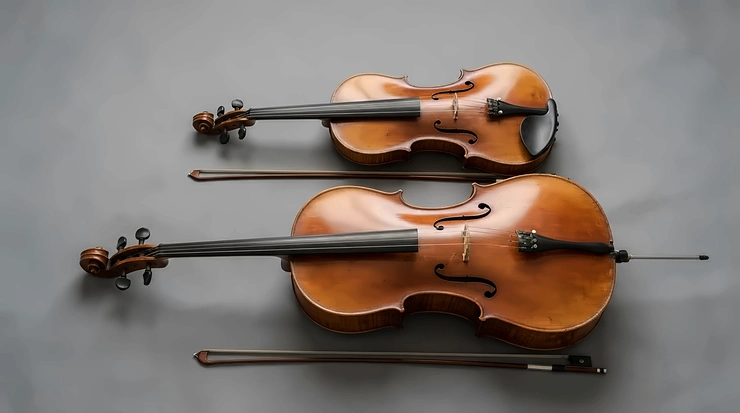
A short-scale bass guitar has a vibrating string length of roughly 30 inches, up to about 31, while a full-scale bass uses the 34-inch standard. The shorter neck packs frets closer together and lowers string tension, producing a looser feel and rounder, mid-focused sound. Full-scale basses feel tauter and sound more defined.
Guitar World defines short-scale as anything 31 inches or under, averaging around 30, and that neatly frames the bass guitar scale length comparison below.
| Category | Typical length | Feel | Examples in this guide | Best For |
|---|---|---|---|---|
| Short-scale | ~30–31″ | Loose, compact, easy stretches | Squier Sonic Bronco Bass, Fender Player II Mustang Bass PJ, Höfner Ignition SE Violin Bass, Gretsch G2220 | Small hands, vintage tones, guitarists |
| Medium-scale | ~32″ | In-between tension | None featured | Players wanting a compromise |
| Standard full-scale | 34″ | Tight, defined | Squier Affinity Series Precision Bass PJ, Sire Marcus Miller V1, Yamaha TRBX304 | Most players, most genres |
| Extra-long | ~35″ | Very tight, common on five-strings | None featured | Low-B and extended-range use |
The key insight is that four inches sounds tiny yet spans the entire range of feel. Medium-scale basses exist for players who want a middle path, but the practical choice for most buyers is still 30 versus 34. If you can’t decide, try both in a shop, because your hand tells you more than any chart.
String Tension: Why Four Inches Changes How a Bass Feels
String tension is the invisible variable behind almost every difference between these two camps. For the same string tuned to the same note, tension rises with the square of the scale length. Stretch a string from 30 to 34 inches and it would need roughly 28% more tension to reach the same pitch. Manufacturers wind short-scale sets slightly heavier to compensate, so real gaps are smaller. One published breakdown of D’Addario nickel-round charts puts a .105 low E at about 40 lb on a 34-inch scale versus about 34 lb on 30 inches. Exact numbers vary by brand.
What does that mean for your fingers? Andertons’ guide to scale length notes that longer scales bring tighter tension, a snappier response and stronger low-end clarity, while shorter scales feel looser and warmer. On a bass, lower string tension means easier fretting, softer attack and a higher chance of fret buzz if the action is too low. It can also make the lowest strings feel slightly floppy.
Practical fixes are simple. Going up a gauge, choosing tapewound or flatwound strings, or nudging the action up can all restore firmness. The Haze Guitars scale-length article makes a related point: heavier strings on a shorter scale partly cancel out the reduced tension. Treat string tension as a dial you can tune, not a fixed verdict on either camp.
Short-Scale Bass Tone Difference and Tonal Warmth Explained
Now for the fun bit: the short-scale bass tone difference. Sources agree on the direction of the effect, though not every detail. Retailer and buyer guides describe short-scale basses as delivering a warm, thumpy sound with a mid-range punch that cuts through a mix. Haze Guitars explains that on shorter scales, overtones crowd together, thickening the tone and creating what we hear as tonal warmth, at the cost of some bass tightness.
Sources disagree on low-end. guitarguitar points out that short-scales, often strung with flatwounds, don’t carry as much deep low-end as full-scale models. Others claim a stronger low end. The likeliest reconciliation is that shorter scales give a rounder, softer-attack fundamental with less overtone clarity, while a longer scale delivers more definition. That’s a different flavour, not simply more or less bass.
Pickups and strings shape the result just as much. The Gretsch G2220‘s mini-humbuckers and the Squier Sonic Bronco Bass‘s single-coil sound very different despite near-identical scale lengths. A hollow Höfner with flatwounds gives a woody warmth that a solid-body Fender Player II Mustang Bass PJ doesn’t. In a band, that mid-forward character helps a short-scale bass sit clearly under busy guitars. If you crave a sparkling, tightly defined attack, a 34-inch neck usually gets you there faster.
Full-Scale Bass Guitar Benefits: What Standard 34″ Still Does Best
Let’s give the standard length its due. The main full-scale bass guitar benefits fall into four buckets.
Definition and response. Higher string tension gives a firmer, more focused note with good low-end clarity, as Andertons’ scale-length guide describes. That’s why the Yamaha TRBX304 and Sire Marcus Miller V1 feel crisp under a fast fingerstyle attack.
Setup headroom. StewMac notes that higher tension lets you run lower action before buzz appears, ideal for fast, low-action playing.
Ecosystem. Home Studio Guys points out that most affordable basses use 34 inches, so strings, cases, spare parts and tutorials all assume it. That familiarity makes upgrades and resale easier.
Range. Five-string and drop-tuned playing benefits from longer scales because tension has to be maintained on the lowest strings. Dropping a .105 string from E to D noticeably loosens it, according to the D’Addario-based breakdown mentioned earlier.
The trade-off is physical. Longer reach, wider fret spacing and heavier tension demand more from small or tired hands. If you’re comfortable with the stretch, full-scale bass guitar benefits are hard to argue with, especially for players planning to grow into different genres.
How to Choose Between Short-Scale Bass Guitar vs Full-Scale: 6 Steps
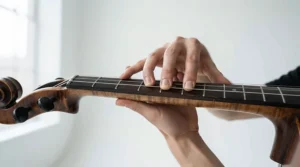
- Test your reach. If stretching to the fourth fret feels strained, 30 inches will feel like relief. Comfort beats spec sheets.
- Define your target sound. Want a woody, mid-forward thump? Lean short-scale. Want tight clarity and sparkle? Lean 34 inches.
- Think about tuning and strings. Five-strings and drop tunings work best on longer scales, where tension stays manageable.
- Check weight and balance. Reports of neck dive on some Höfner and Gretsch examples show that lighter isn’t always better balanced. Try a strap first.
- Budget for setup. Add a little for strings and a professional setup, particularly on entry-level instruments where reviewers mention variable out-of-box quality.
- Check returns. Look at the seller’s returns policy so you can swap a bass that doesn’t feel right.
Common Mistakes When Buying: Short-Scale Bass Guitar vs Full-Scale
Guitar World’s short-scale buying guide is blunt that these instruments aren’t merely beginner tools, and that Gibson, Spector, Fender and others build professional-grade models. Here are the pitfalls worth dodging.
- Assuming short means beginner. Legendary records prove otherwise, so don’t let the stigma steer you.
- Fitting the wrong strings. Mismatched sets create tuning and intonation headaches.
- Expecting more bass. Short-scale offers rounder, mid-focused warmth, not automatically deeper lows.
- Ignoring balance. A light body that dives is tiring, so test with a strap.
- Skipping setup. Lower tension exaggerates poor action and intonation, whether you choose a Squier Sonic Bronco Bass or a Fender Player II Mustang Bass PJ.
Short-Scale Bass Guitar vs Full-Scale for Specific Audiences
Young players and smaller hands. Shorter necks reduce stretches, which is why guides recommend them for children. Some even shorter 28.6-inch models exist, but a 30-inch neck such as the Squier Sonic Bronco Bass leaves more room to grow.
Guitarists crossing over. The closer fret spacing feels familiar, and a 30-inch bass such as the Fender Player II Mustang Bass PJ keeps the transition gentle.
Players prioritising comfort. Some buying guides cite conditions like carpal tunnel as reasons to choose shorter scales. If you have a medical concern, speak to a health professional rather than relying on gear alone. The Sire Marcus Miller V1‘s slim nut and rolled edges also help on a full-scale neck.
Gigging and recording players. Short-scale bass works well as a second voice for recording, giving a rounder alternative to a 34-inch main bass. For live versatility, the Yamaha TRBX304‘s active EQ is hard to beat.
Long-Term Cost & Maintenance
Sticker price isn’t the whole story. Strings, setups and small upgrades add up, and the right choice keeps them minimal.
| Bass | Price range | Likely extras | Value verdict | Best For |
|---|---|---|---|---|
| Squier Sonic Bronco Bass | £200–£260 | Setup, optional pickup upgrade | Excellent entry value | New players, modders |
| Gretsch G2220 | £300–£400 | Flatwounds, bridge tweaks | Strong for character | Rock players |
| Fender Player II Mustang Bass PJ | £600–£750 | Strings only | Premium but versatile | Single-bass owners |
| Höfner Ignition SE Violin Bass | £350–£450 | Flatwounds, setup | Great for vintage tone | Retro fans |
| Squier Affinity Series Precision Bass PJ | £250–£330 | Setup | Sensible default | First full-scale |
| Sire Marcus Miller V1 | £250–£350 | Strings only | Strong feel per pound | Comfort seekers |
| Yamaha TRBX304 | £300–£400 | 9V batteries | Flexible and consistent | Tone-shapers |
The cheapest instruments aren’t always the cheapest over time. A Höfner that needs flatwounds and a setup narrows its price gap over a Yamaha TRBX304 or Sire Marcus Miller V1. Meanwhile the Fender Player II Mustang Bass PJ demands little beyond strings. Factor in these extras before deciding, and remember that ranges are indicative only.

FAQ
❓ Can I fit standard long-scale strings to a short-scale bass?
❓ Is a short-scale bass a good second bass?
❓ Are short-scale basses cheaper than full-scale?
❓ Should I put flatwound strings on a short-scale bass?
❓ Can a short-scale bass handle gigs and recording?
Conclusion: Choosing Between Short-Scale Bass Guitar vs Full-Scale
The short-scale bass guitar vs full-scale choice comes down to three things: your hands, your ears and your plans. Short-scale basses bring lower string tension, an easier reach and a rounder tonal warmth with a mid-focused thump. Full-scale basses answer with tighter response, greater definition, wider gear compatibility and more headroom for five-string playing.
If you want the friendliest entry, the Squier Sonic Bronco Bass is hard to beat. For rock grit, the Gretsch G2220 delivers, and for vintage flavour the Höfner Ignition SE Violin Bass is the obvious pick. If you want one polished short-scale for everything, the Fender Player II Mustang Bass PJ justifies its premium. On the 34-inch side, the Squier Affinity Series Precision Bass PJ is the sensible starter, the Sire Marcus Miller V1 rewards neck-feel fans, and the Yamaha TRBX304 suits anyone who loves shaping tone.
Whichever camp you choose, budget for a good setup, match your strings to your scale, and remember that prices shift, so check current listings. Four inches will change how your bass feels, but it won’t change whether you can play great music on it.
✨ Ready to Find Your Perfect Bass?
🎸 Click any highlighted product name above to check current pricing and availability, then pick the neck that makes you want to play all night. Your next great bass line is waiting!
Recommended for You
- Short-Scale Bass Guitar for Small Hands: 7 Best Picks (2026)
- 5 String Bass Guitar For Metal: 7 Savage Picks (2026)
- 5-String Bass Guitar: 7 Brilliant Picks for Every Budget (2026)
Disclaimer: This article contains affiliate links. As an Amazon Associate, I earn from qualifying purchases. If you purchase products through these links, we may earn a small commission at no additional cost to you.
✨ Found this helpful? Share it with your friends! 💬🤗
