
In This Article
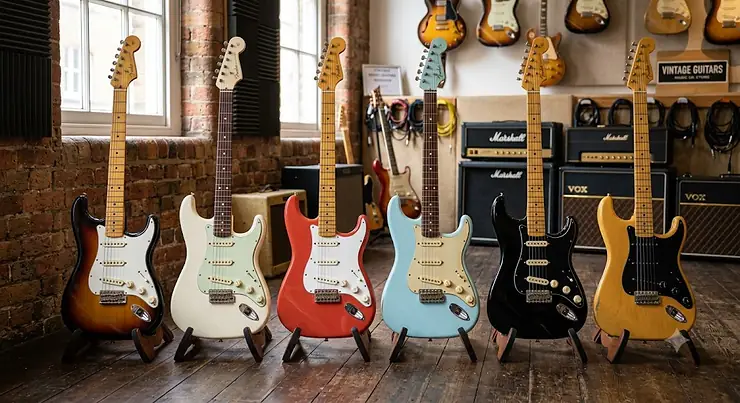
Ask ten guitarists which electric guitar they’d grab if the house was on fire, and at least six will say a Stratocaster. There’s a reason that double-cutaway silhouette has outlived disco, grunge, and three separate decades of “is the guitar dead?” think-pieces: it just works. The best Fender Stratocaster for you, though, depends enormously on what you’re actually trying to do with it, and that’s where most buying guides quietly fall apart, offering a single “winner” as if a bedroom hobbyist and a working session player have identical needs.
A Stratocaster is a solid-body electric guitar built around three single-coil pickups, a bolt-on maple neck, and a spring-loaded vibrato bridge, originally designed between 1952 and 1954 by Leo Fender, Bill Carson, George Fullerton and Freddie Tavares. That basic recipe hasn’t changed much in seventy years, and yet the range of guitars wearing that shape today runs from sub-£220 beginner instruments to £2,000-plus flagships, with a whole ecosystem of non-Fender “Strat-style” alternatives sitting in between. Working out where your money actually goes on a Strat, and where it stops mattering, is the whole point of this guide.
We’ve spent time pulling apart the specs, cross-referencing aggregated review sentiment, and comparing seven real, currently available guitars, spanning Squier’s budget line right through to Fender’s American-made flagship, plus one seriously credible non-Fender contender. Whether you’re chasing that glassy Hendrix-in-’67 vintage sound, wondering if a Stratocaster under £500 can genuinely hold its own on stage, or trying to decide between a real Fender and a Strat-style alternative like the PRS SE Silver Sky, you’ll find a straight answer below, backed by real specs and real player feedback rather than marketing copy.
Quick Comparison Table
| Guitar | Body/Neck | Pickups | Price Range | Best For |
|---|---|---|---|---|
| Squier Affinity Stratocaster | Poplar body, maple neck | SSS ceramic single-coil | under £220 | absolute beginners |
| Squier Classic Vibe ’60s Stratocaster | Alder body, maple/gloss neck | SSS alnico single-coil | £380-£430 range | Stratocaster under £500 hunters |
| Fender Player II Stratocaster | Alder body, “C”-profile neck | Player Series alnico V SSS | £650-£750 range | first “real” Fender |
| PRS SE Silver Sky | Poplar body, 635JM neck | 635JM “S” single-coil | £850-£950 range | best Strat style guitar shoppers |
| Fender Vintera II ’60s Stratocaster | Alder body, 7.25″ radius | Vintage-Style ’60s single-coil | around £999 | best Strat for vintage sound |
| Fender American Professional II Stratocaster | Alder/roasted pine, Deep “C” neck | V-Mod II single-coil | £1,500-£1,650 range | gigging professionals |
| Fender American Ultra II Stratocaster | Alder body, Modern D neck | Ultra II Noiseless single-coil | around £2,300 | studio and touring flagships |
Looking at the spread here, the jump from the Squier Affinity Stratocaster to the Squier Classic Vibe ’60s Stratocaster roughly doubles the price but buys you alnico pickups and considerably better fit and finish, arguably the single best value jump in this whole list. Once you’re past £1,000, the differences stop being about whether the guitar works and start being about how refined the neck carve, pickups and hardware feel under sustained gigging pressure. The PRS SE Silver Sky is the outlier worth noting early: it isn’t a Fender at all, but it directly rivals the Fender Player II Stratocaster on price while chasing a broadly similar tonal target from a different angle.
💬 Found a favourite already? Tap through to check today’s price before it changes!😊
Top 7 Stratocasters: Expert Analysis
1. Squier Affinity Stratocaster — cheapest genuinely playable entry point
The Squier Affinity Stratocaster is Fender’s answer to “can I try this instrument without risking real money,” and it stands out for being a complete, gig-shaped guitar rather than a toy. The poplar body and maple “C”-shaped neck keep things light, while the 9.5-inch fingerboard radius and 21 medium frets make basic chord shapes and simple bends comfortable almost immediately, which matters enormously when someone is deciding whether guitar is even for them.
Under the hood, three ceramic single-coil pickups and a 2-point synchronised tremolo deliver a reasonably bright, if slightly thin, take on the classic Strat voice; the tremolo isn’t especially stable under heavy use, and that’s a fair trade at this price. Based on the spec comparison with pricier Squiers, the Affinity is squarely built for someone who needs to learn the instrument first and worry about tone-chasing later, not for someone who already gigs regularly.
Reviewers consistently report that fret finishing and factory setup are the weak points out of the box, with several noting a rough neck feel that a £30-£40 professional set-up largely resolves. Beginners and parents buying a first instrument for a child are the clearest audience here; gigging musicians should look further down this list.
Pros:
- ✅ Genuinely low price for a licensed Fender-family Stratocaster
- ✅ Lightweight body suits smaller players and children
- ✅ Wide colour range and HSS/HH variants available
Cons:
- ❌ Ceramic pickups sound thinner than alnico alternatives
- ❌ Factory setup often needs a professional once-over
Street prices for the Squier Affinity Stratocaster sit consistently under £220, occasionally dipping further during sales, and at that price it remains the sensible default first electric guitar rather than a guitar you’ll want to keep for a decade.
2. Squier Classic Vibe ’60s Stratocaster — best Stratocaster under £500 by a distance
If you’re specifically hunting for a Stratocaster under £500, the Squier Classic Vibe ’60s is the guitar this entire category gets measured against. It swaps the Affinity’s poplar body for alder, adds a genuinely nice vintage-tint gloss neck finish, and, crucially, fits proper Fender-designed alnico pickups rather than the cheaper ceramic units found further down the range.
That alnico single-coil trio is the whole story here: it delivers a clear, articulate voice with real Strat “quack” in positions two and four, the sort of tonal complexity you don’t expect until several hundred pounds further up the price ladder. The rosewood-style laurel fingerboard and 9.5-inch radius keep chords and bends comfortable, and the 6-saddle vintage-style tremolo, while not as smooth as a locking system, is stable enough for everyday use.
Reviewers consistently note that build quality and tone punch well above the price point, with several comparing it favourably against entry-level Mexican-made Fenders. What most buyers overlook about this model is that Squier’s Classic Vibe range has quietly narrowed the gap to Fender’s own Player Series to the point where the decision genuinely comes down to badge preference and available finishes, not quality.
Pros:
- ✅ Alnico single-coils sound noticeably richer than budget ceramics
- ✅ Vintage-tint gloss neck finish feels far pricier than it costs
- ✅ Genuinely gig-ready straight out of the box
Cons:
- ❌ Tremolo isn’t locking, so heavy whammy use needs re-tuning
- ❌ Limited to a handful of vintage-inspired finishes
Expect to pay in the £380-£430 range for the standard SSS version, making this the strongest all-round pick if your budget genuinely caps out under £500.
3. Fender Player II Stratocaster — best first “real” Fender
The Fender Player II Stratocaster is where Fender itself draws the line between “Squier” and “Fender,” and it’s built to justify that jump. Made in Fender’s Ensenada, Mexico facility, it pairs a contoured alder body with a Modern “C”-profile neck, a 9.5-inch radius rosewood or maple fingerboard, and smooth rolled fingerboard edges that genuinely change how the neck feels under a moving hand.
The Player Series alnico V single-coils bring a bright top end, present mids and a controlled low end, a modern reworking of the classic Strat voice with slightly more output and bite than a vintage-spec pickup, which suits players who run into pedals or amp gain regularly. Based on the spec comparison, the two-point synchronised tremolo with bent steel saddles and 18:1 ClassicGear tuners is a tangible upgrade over anything in the Squier range for tuning stability during expressive vibrato work.
One independent reviewer who directly compared the Player II Stratocaster to a Yamaha Pacifica Standard Plus said it exceeded expectations after a run of disappointing new Fenders, concluding it plays and sounds close to a USA-made Fender at well under half the price. That’s the profile this guitar suits: a gigging or recording player who wants unmistakably Fender tone and feel without USA pricing.
Pros:
- ✅ Alnico V pickups genuinely sound like a “real” Strat
- ✅ Rolled fingerboard edges noticeably improve playing comfort
- ✅ Available in chambered ash/mahogany variants with unusual finishes
Cons:
- ❌ Mexican-made quality control can vary between individual units
- ❌ No locking tuners at this price point
Current UK pricing for the Fender Player II Stratocaster typically sits in the £650-£750 range depending on finish and fingerboard wood, positioning it as direct competition for the PRS SE Silver Sky below.
4. PRS SE Silver Sky — best Strat style guitar for the money
The PRS SE Silver Sky isn’t a Fender at all, which is precisely why it belongs on a “best Strat style guitar” shortlist rather than a straight Fender-only list. Designed with John Mayer and manufactured by Cor-Tek in Indonesia under PRS’s supervision, it borrows the 25.5-inch scale length, bolt-on maple neck and three single-coil layout that define the Stratocaster format, while quietly changing the recipe: a poplar body instead of alder, an 8.5-inch fingerboard radius that splits the difference between vintage-curved and modern-flat, and PRS’s own 635JM “S” single-coil pickups.
Those pickups are the headline feature. Reviewers consistently describe them as fuller and beefier through the mids than a typical vintage-voiced Strat pickup, sounding bolder and more articulate with fatter lows when tested head-to-head against an older Strat fitted with well-known aftermarket pickups. Here’s what to weigh: PRS’s fit and finish, fret dressing and factory setup consistency are widely reported as more polished out of the box than an equivalently priced Fender, which matters if you’d rather not budget for a set-up.
The trade-off is character. The Silver Sky’s flatter radius and fuller voicing feel and sound distinctly different from vintage-spec Strat pickups, so purists chasing an exact 1960s tone should look at the Vintera II instead. For players who want Strat-adjacent comfort and consistency without the vintage baggage, this is the pick.
Pros:
- ✅ Exceptionally consistent factory setup and fretwork for the price
- ✅ Fuller, beefier pickup voicing than typical vintage Strat pickups
- ✅ 8.5-inch radius suits both chords and modern bending styles
Cons:
- ❌ No locking tuners despite the premium positioning
- ❌ Tone is deliberately different from a “classic” vintage Strat
Reverb and PRS’s own UK pricing puts the SE Silver Sky in the £850-£950 range, directly overlapping with the Fender Player II Stratocaster and making the choice between them genuinely a matter of taste rather than value.
5. Fender Vintera II ’60s Stratocaster — best Strat for vintage sound
If chasing an authentic period-correct tone is the entire point of the exercise, the Fender Vintera II ’60s Stratocaster is built specifically for you. It pairs an alder body with a maple neck and rosewood fingerboard for classic, punchy Fender tone, built around a slim “C” shape neck based on a genuine ’60s profile. The 7.25-inch fingerboard radius, considerably more curved than the 9.5-inch standard on Player-series guitars, is the detail that actually delivers the vintage feel under your fretting hand.
The trio of vintage-style ’60s pickups aim for that sweet, sparkling, woody tone associated with Fender’s golden era, and unlike modern noiseless designs, these are unashamedly single-coil in character, hum included. What most buyers overlook about this model is that the shorter, more curved fretboard radius actually limits how low you can set the action before notes choke out on aggressive bends, a genuine trade-off for vintage authenticity rather than a flaw.
A friend-tested consensus among owners on player forums is overwhelmingly positive, with one reviewer describing the build quality and finish as excellent, the guitar as very comfortable to play, and having nothing negative to report after trying an Olympic White example in-store. This is the Strat for blues, classic rock and surf players who want the tone before the technology.
Pros:
- ✅ 7.25-inch radius and vintage pickups genuinely nail ’60s character
- ✅ Period-correct cosmetics down to the pickguard and headstock decal
- ✅ Comes with a gig bag included as standard
Cons:
- ❌ Curved radius limits very low action for aggressive bending
- ❌ Vintage-voiced pickups hum more than noiseless alternatives
Current pricing sits around £999, making the Vintera II ’60s Stratocaster roughly £350 more than the Player II Stratocaster for a meaningfully different, more historically faithful tonal target.
6. Fender American Professional II Stratocaster — best all-rounder for gigging players
The Fender American Professional II Stratocaster is built in Fender’s Corona, California factory and represents the point where “Made in USA” stops being a marketing line and starts genuinely changing the spec sheet. The Deep “C” neck now carries smooth rolled fingerboard edges, a satin “Super-Natural” finish and a newly sculpted neck heel, together delivering a genuinely comfortable feel and much easier access to the upper register, addressing one of the classic Strat’s oldest ergonomic complaints.
The new V-Mod II single-coil pickups are more articulate than the outgoing generation while keeping that bell-like chime and warmth, and Fender paired them with an upgraded 2-point tremolo using a cold-rolled steel block for extra sustain, clarity and high-end sparkle. Reviewers consistently describe the factory setup as tour-ready straight from the case, with one outlet noting the rolled fretboard edges add a genuine touch of luxury over the previous generation, and that factory setups on the models it tested were essentially spot-on.
Based on the spec comparison against the Player II and Vintera II, the American Professional II’s real advantage is consistency and refinement rather than any single dramatic feature; the push-push tone control that adds the neck pickup in any switch position is a genuinely useful bit of tonal flexibility a gigging player will actually use, not just a spec-sheet bullet point.
Pros:
- ✅ Sculpted neck heel meaningfully improves upper-fret access
- ✅ Push-push tone control adds genuinely useful tonal flexibility
- ✅ Corona-built consistency and setup quality
Cons:
- ❌ Significant price jump over the Mexican-made Player and Vintera lines
- ❌ Roasted pine body option (select finishes) divides opinion tonally
UK pricing runs £1,500-£1,650 depending on body wood and pickup configuration, making this the natural upgrade path for a working musician who has outgrown a Player or Vintera Strat.
7. Fender American Ultra II Stratocaster — flagship pick for technical players
At the top of this list sits the Fender American Ultra II Stratocaster, Fender’s most technically ambitious take on the design. The select alder body carries sculpted body contours, the quartersawn maple neck uses a Modern D profile with a smooth Ultra Satin finish, and the ebony or quartersawn maple 10-14 inch compound radius fingerboard adds rolled edges, medium-jumbo frets and glow-in-the-dark side dots for dark-stage visibility. That compound radius is the headline spec: curved near the nut for comfortable chording, flattening out toward the body for shred-friendly bending without fretting out.
The Ultra II Noiseless Vintage Strat pickups aim to cover everything from sweet, crystalline cleans to searing leads without any of the traditional single-coil hum, addressing the one genuine technical weakness of the format. Fender’s patented S-1 switch unlocks additional pickup wiring configurations at the push of the volume knob, and locking tuners plus a precision two-point tremolo with a pop-in arm keep everything rock-solid under heavy whammy abuse.
One independent reviewer praised the feel of the neck, particularly at the rear, and found the noiseless pickups delivered authentic single-coil tones with full access to the highest frets, while noting the two available S-1 switching options felt slightly stingy for the asking price. This is the Stratocaster for players who genuinely push technical limits and need hum-free tone with modern playability, not a guitar bought purely for the badge.
Pros:
- ✅ Compound radius neck suits both chords and extreme bending
- ✅ Noiseless pickups eliminate the classic Strat hum entirely
- ✅ Sculpted contours and neck heel maximise upper-fret access
Cons:
- ❌ Premium pricing puts it well beyond hobbyist budgets
- ❌ Heavier than most other Strats in this list at over 8lbs
Expect to pay around £2,300 for the American Ultra II Stratocaster, positioning it as a serious investment reserved for players who genuinely exploit its technical ceiling.
Top 7 Stratocasters at a Glance
| Guitar | Body Material | Fingerboard Radius | Price Range | Rating Basis |
|---|---|---|---|---|
| Squier Affinity Stratocaster | Poplar | 9.5″ | under £220 | strong beginner sentiment |
| Squier Classic Vibe ’60s Stratocaster | Alder | 9.5″ | £380-£430 | widely praised value |
| Fender Player II Stratocaster | Alder/ash/mahogany | 9.5″ | £650-£750 | consistently strong reviews |
| PRS SE Silver Sky | Poplar | 8.5″ | £850-£950 | praised for setup consistency |
| Fender Vintera II ’60s Stratocaster | Alder | 7.25″ | around £999 | strong vintage-tone sentiment |
| Fender American Professional II Stratocaster | Alder/roasted pine | 9.5″ | £1,500-£1,650 | strong professional feedback |
| Fender American Ultra II Stratocaster | Alder | 10″-14″ compound | around £2,300 | praised for playability, mixed on price |
The clearest pattern in this table is the fingerboard radius: it tightens from the vintage-correct 7.25 inches on the Vintera II up to the compound 10-14 inch design on the Ultra II, and that single number tells you more about how a Strat will feel under your hand than almost any other spec. If you bend strings aggressively or play a lot of legato, prioritise the flatter end of that scale; if you’re chasing chunky rhythm work and vintage chime, the curved end suits you better.
💬 Ready to compare live prices side by side? One tap gets you there.😊
Setting Up and Maintaining Your Stratocaster
A brand-new Stratocaster, whatever its price, rarely arrives perfectly set up for your playing style, climate or string gauge preference, and treating the factory setup as gospel is the single most common first-30-days mistake. Within the first week, check the guitar has settled to room temperature and humidity for at least 24 hours before adjusting anything, since wood movement during shipping genuinely affects neck relief.
Basic maintenance on a bolt-neck Stratocaster is refreshingly simple compared with set-neck instruments: truss rod adjustments are accessible either at the headstock or heel depending on model, and a light coat of fretboard oil every few months keeps rosewood or laurel boards from drying out, particularly relevant given the UK’s variable indoor heating through winter. String changes are best done one at a time on a Strat’s synchronised tremolo to avoid throwing the spring tension wildly out of balance, which otherwise means re-intonating from scratch.
The most common beginner mistake is over-tightening the tremolo springs or claw screws to “fix” tuning instability, when the actual culprit is usually a poorly cut nut or old strings binding in the nut slots. A drop of nut lubricant and a fresh set of strings resolves more perceived tremolo problems than any hardware adjustment, and it costs under a fiver.
Real-World Scenarios: Which Stratocaster Suits You
Picture a university student living in shared halls, budget capped hard at £250, wanting to learn covers on YouTube between lectures: the Squier Affinity Stratocaster is the obvious answer here, since spending more on a first guitar before you know if you’ll stick with it rarely makes financial sense. If that same student is playing three or four times a week within six months, upgrading to a Squier Classic Vibe becomes the natural next step rather than a wasted purchase.
Now picture a covers-band guitarist gigging twice a month in pubs and small venues, who needs tuning stability under stage volume and a tone that cuts through a mix without extra pedals: the Fender Player II Stratocaster or PRS SE Silver Sky both fit well here, with the choice largely coming down to whether you want traditional vintage-leaning bite (Fender) or a fuller, more contemporary voicing (PRS).
Finally, consider a session musician tracking multiple genres in a home studio who needs absolute silence between takes and rock-solid intonation across a full working day: the American Ultra II Stratocaster’s noiseless pickups and locking hardware earn their premium price precisely because studio time is expensive and re-takes caused by hum or drifting tuning cost real money.
Problem → Solution: Common Stratocaster Frustrations
Buzzing or fretting out on bends. This is almost always action set too low relative to the fingerboard’s radius, particularly common on vintage-radius models like the Vintera II. Raise the saddles fractionally at the affected strings rather than the whole bridge, and recheck neck relief before assuming a fret level is needed.
Tuning drifts after using the tremolo arm. A worn or unlubricated nut is the usual cause, not a faulty bridge. Graphite pencil lead or a proper nut lubricant in the slots resolves this on the vast majority of affected guitars, Vintera II and Player II models included.
Single-coil hum near computer monitors or dimmer switches. This is physics, not a fault: traditional single-coils pick up electromagnetic interference. If it’s a dealbreaker, the American Ultra II or American Professional II’s more modern pickup designs reduce it significantly, or a humbucker-loaded HSS variant sidesteps the issue entirely.
Neck feels uncomfortable after long sessions. Before assuming the neck shape is wrong for your hand, check the guitar has been correctly set up for your preferred action and string gauge, since even a well-shaped “C” neck feels wrong paired with overly high action.
Buyer’s Decision Framework
If your budget is under £500 and this is your first electric guitar, choose the Squier Affinity or Classic Vibe range, because spending more before you’ve developed playing habits and preferences rarely pays off. If you want unmistakably classic Fender tone with modern playability and a budget around £700, choose the Fender Player II Stratocaster. If setup consistency and a fuller, more modern single-coil voice matter more to you than the Fender badge, choose the PRS SE Silver Sky.
If historically accurate vintage tone is the entire point of the purchase, choose the Fender Vintera II ’60s Stratocaster over anything else on this list, full stop. If you gig regularly and need Corona-built reliability without flagship pricing, the American Professional II is the sensible middle ground. And if you’re a technical player who genuinely needs hum-free tone and extreme playability for demanding studio or touring work, the American Ultra II justifies its price tag specifically for you, and for very few other buyers.
Stratocaster Tones Explained
What is a Stratocaster’s tone, in a single sentence? It’s built from three single-coil pickups selected via a 5-way switch, producing a spectrum from warm and round (neck pickup) through the famously “quacky” in-between positions to bright and cutting (bridge pickup).
Position 1, the neck pickup alone, is the warmest and roundest setting, favoured for jazz-inflected clean tones and smooth blues leads. Position 5, the bridge pickup alone, is the brightest and thinnest-sounding position, the one most associated with funk rhythm and searing, cutting leads. Positions 2 and 4 combine two pickups out of phase with each other, producing that distinctive hollow, “quacky” tone heard on countless funk and pop records, a sound genuinely unique to this pickup layout and very difficult to replicate on a humbucker-loaded guitar.
Reviewers consistently note that pickup material changes this picture significantly: alnico magnets, found on the Classic Vibe, Player II and Vintera II, produce a smoother, more vintage-leaning output, while ceramic magnets, used on the entry-level Affinity, sound brighter and slightly harsher at high gain. Noiseless designs like those on the American Ultra II trade a small amount of that raw single-coil character for silence, a fair trade for studio work but a genuine consideration for players chasing vintage authenticity.
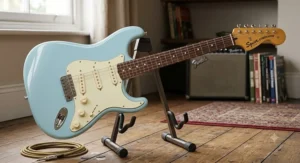
Three Single Coil vs HSS: Choosing Your Pickup Configuration
A three single coil guitar, the SSS configuration that defines the traditional Stratocaster, remains the right choice for the widest range of musical styles: blues, funk, indie, country, pop and classic rock all lean on those in-between quack tones in ways an HSS (humbucker-single-single) configuration simply can’t replicate. Every product in this guide’s core range, bar the HSS variants some models offer, sticks to this traditional three single coil guitar layout for exactly that reason.
Where HSS models earn their keep is higher-gain playing: a bridge humbucker, as found on optional HSS versions of the Player II and American Professional II, delivers a thicker, more compressed tone that handles rock and metal rhythm playing with considerably less noise and more sustain than a bridge single-coil pushed through heavy distortion. The trade-off is that you lose the traditional Strat bridge-pickup snap in exchange for that extra output and quietness.
What most buyers overlook when weighing this decision is that you don’t have to choose exclusively; several Player and American Professional II models offer push-push or S-1 switching that blends humbucker and single-coil characteristics from the same guitar, effectively hedging the decision without needing two separate instruments.
Best Strat Style Guitar: Fender vs PRS and Other Alternatives
The phrase “Strat style guitar” exists precisely because Fender’s double-cutaway design has been echoed, reinterpreted and outright cloned by dozens of manufacturers since the 1980s, and this has recently become a genuinely live legal issue worth understanding before you buy. In March 2026, Fender secured a default judgment in a Düsseldorf regional court in Germany that treats the Stratocaster body shape as a copyrighted work of applied art rather than a simple trademark, and it has since sent cease-and-desist letters to several manufacturers of Strat-style guitars, including PRS over the Silver Sky, as Guitar.com’s ongoing coverage of the dispute explains in detail.
PRS has confirmed it disagrees with Fender’s assessment and intends to defend the Silver Sky, pointing to genuine differences in body contours, proportions, the neck joint and the cutaway scoop compared with a true Stratocaster. For UK buyers, it’s worth noting this dispute currently centres on manufacturing and distribution in the EU market rather than affecting guitars already in owners’ hands, and nothing here should discourage buying a Silver Sky today, but it’s a useful bit of context if you’re weighing “genuine Fender” against “Strat-inspired alternative” as a long-term investment.
Setting the legal drama aside, the practical difference between a genuine Stratocaster and an alternative like the Silver Sky comes down to voicing philosophy: Fender chases seven decades of established tonal DNA, while PRS reinterprets the format through its own pickup winding and neck carve preferences. Neither is objectively “more correct”; it’s a genuine style choice.
Stratocaster Under £500: What You Actually Get
Under £500, you’re realistically choosing between the Squier Affinity Stratocaster and the Squier Classic Vibe ’60s Stratocaster, and the difference between them is far larger than the roughly £200 price gap suggests. The Affinity uses ceramic pickups, a poplar body and simpler hardware throughout, genuinely fine for learning the instrument but audibly thinner than anything further up this list. The Classic Vibe, by contrast, uses proper alnico pickups and an alder body, closing much of the tonal gap to guitars costing two or three times as much.
What a Stratocaster under £500 won’t give you, regardless of which Squier you pick, is locking tuners, noiseless pickups, or the ergonomic refinements like sculpted neck heels found on Fender’s American-built range. For a beginner or a backup stage guitar, none of that matters much. For a primary gigging instrument played several nights a week, those refinements start to earn their keep, which is precisely why this guide doesn’t recommend stretching a genuinely tight budget past the Classic Vibe tier purely to chase a Fender logo on the headstock.
Best Strat for Vintage Sound: Chasing ’50s and ’60s Tone
If vintage tone is your entire motivation, ranking every guitar on this list by how convincingly it recreates period-correct sound puts the Fender Vintera II ’60s Stratocaster clearly on top, followed by the Classic Vibe ’60s Stratocaster as a genuinely credible budget alternative. Both rely on alnico pickups voiced to emulate original-era output and a curved, vintage-spec fingerboard radius that shapes how notes feel under sustained bends.
The American Professional II and American Ultra II deliberately move away from vintage voicing in favour of modern clarity and noiseless output, which makes them the wrong choice specifically for vintage tone-chasers, however excellent they are for other purposes. On paper this means the Vintera II sits in a genuine sweet spot: meaningfully closer to a 1960s original than anything Fender sells under it, without stepping into Custom Shop pricing that starts around £3,000-£4,000 for genuinely hand-relic’d instruments.
How to Choose a Fender Stratocaster
- Set a realistic budget first. Decide whether you’re spending under £500, around £700-£1,000, or £1,500-plus, since this single decision eliminates most of the guesswork immediately.
- Decide how much vintage authenticity matters to you. If period-correct tone is the goal, prioritise a curved 7.25-inch radius and alnico or vintage-voiced pickups.
- Consider your genre. Traditional SSS configurations suit blues, funk, indie and classic rock; HSS variants suit heavier, higher-gain styles.
- Try before you buy where possible. Neck profile preference is genuinely subjective, and a “C” shape that suits one player’s hand feels wrong to another.
- Factor in setup costs. Budget an extra £30-£50 for a professional set-up on anything under the Player II tier, since factory setups vary.
- Check hardware quality against your playing style. Heavy tremolo users benefit from locking tuners and stable bridges found from the American Professional II upward.
- Read aggregated review sentiment, not just star ratings. A 4.5-star average tells you little; specific recurring complaints about tuning stability or fret finish tell you far more, and UK specialist retailers such as guitarguitar’s Player Series buying advice are a genuinely useful second opinion alongside this guide.
Common Mistakes When Buying a Stratocaster
The single most common mistake is buying based on artist association alone, assuming that because a favourite guitarist plays a Stratocaster, any Stratocaster will get you closer to their sound; amplifier, technique and years of practice matter enormously more than the guitar itself. A close second is under-budgeting for a proper setup and fresh strings, then judging a guitar’s playability on a factory setup that was never adjusted for the buyer’s hands or climate.
Buyers also frequently overlook fingerboard radius entirely, focusing purely on pickup type and finish colour, then finding a curved vintage radius uncomfortable for their preferred low-action, aggressive bending style. Finally, treating “Made in USA” as an automatic quality signal over “Made in Mexico” ignores just how consistently strong the Player II and Vintera II ranges have become; the price premium buys refinement and hardware upgrades, not a guarantee of a better-sounding individual guitar.
Long-Term Cost & Maintenance
Total cost of ownership on any Stratocaster extends well beyond the sticker price. Budget roughly £40-£70 annually for fresh strings if you play regularly, £30-£60 for an annual professional set-up to account for seasonal humidity changes, and occasional hardware wear items like tremolo springs or pickup switches, particularly on well-used budget models.
Where the value calculation genuinely shifts is resale: a well-maintained Fender American Professional II or American Ultra II retains a meaningfully higher proportion of its original price on the used market than an entry-level Squier, because demand for USA-made Fenders stays consistently strong. If you’re thinking of a Stratocaster as a multi-decade instrument rather than a disposable purchase, spending toward the Player II tier or above often works out cheaper per year of ownership than repeatedly replacing budget guitars as your playing improves.
Safety, Regulations & the Stratocaster Shape Dispute
From a straightforward consumer safety standpoint, electric guitars carry minimal direct risk, though it’s worth noting that any amplified instrument played at high volume for extended periods contributes to cumulative hearing damage, so ear protection during loud rehearsals or gigging is genuinely worth the minor inconvenience. Buying a Stratocaster through Amazon UK or another established retailer also brings standard consumer protections into play: under the Consumer Contracts Regulations, online shoppers generally have the right to cancel an order and request a refund without giving a reason, with a 14-day cancellation window from receiving the item plus a further 14 days to send it back, a useful safety net if a guitar’s neck profile or weight turns out to feel wrong once it’s actually in your hands.
On the manufacturing side, the ongoing Fender-versus-Strat-style-builders copyright dispute discussed earlier is worth monitoring if you’re considering a non-Fender alternative as a long-term purchase, though as it stands it affects manufacturing and EU distribution decisions rather than guitars already owned by UK consumers. It’s a genuinely unusual moment in the guitar industry, and one that may reshape how many “Strat style” alternatives remain available in coming years.

Frequently Asked Questions
❓ What is the difference between a Stratocaster and a Telecaster?
❓ Is a Stratocaster good for beginners?
❓ How much does a decent Stratocaster cost in the UK?
❓ Can you get a Stratocaster with humbucker pickups?
❓ Is the PRS SE Silver Sky better than a Fender Stratocaster?
Recommended for You
- Gigging Electric Guitar 2026: 7 Stage-Ready Picks That Won’t Let You Down
- 7 Best Electric Guitar for Recording Picks (2026)
- Professional Electric Guitar 2026: 7 Superb Picks Worth The Splurge
Disclaimer: This article contains affiliate links. As an Amazon Associate, I earn from qualifying purchases. If you purchase products through these links, we may earn a small commission at no additional cost to you.
✨ Found this helpful? Share it with your friends! 💬🤗
