
In This Article
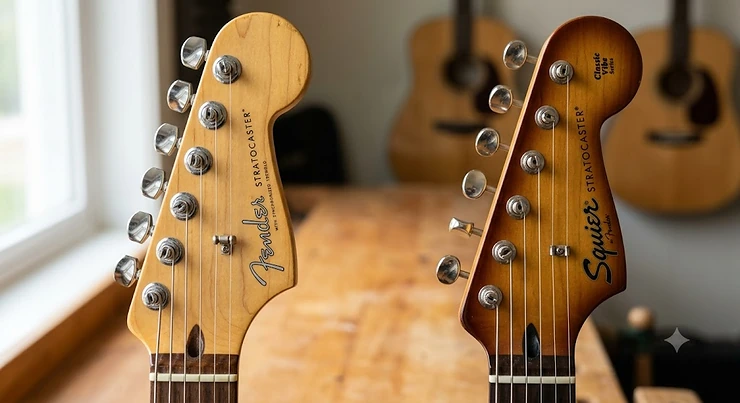
Somewhere in a guitar shop right now, someone is standing between two identical-looking guitars, squinting at the headstock logo like it’s going to whisper the answer. Fender vs Squier Stratocaster is one of those debates that sounds simple until you actually try to answer it — because “which is better” depends entirely on who’s asking and what they’re planning to do with the thing once they’ve bought it.
Here’s the short version, because you deserve one before the long version: a Stratocaster is a solid-body electric guitar, originally designed by Leo Fender in 1954, defined by its three single-coil pickups, contoured double-cutaway body and spring-loaded tremolo bridge. Buddy Holly’s 1957 appearance on The Ed Sullivan Show introduced the Stratocaster to a mass audience, and its three pickups plus tremolo arm helped cement its appeal. Squier is Fender’s own budget subsidiary, building guitars to the same silhouette using cheaper woods, simplified hardware and overseas manufacturing to hit a fraction of the price. Neither is “the real one” and the other “the fake one” — they’re two ends of the same family tree.
What follows is a proper look at seven real Stratocaster models, from an entry-level Squier that costs less than a decent pair of trainers to a USA-made Fender that costs about the same as a second-hand car’s MOT bill (a cheap one). We’ll dig into specs, aggregated review sentiment, and — crucially — what any of it actually means once the guitar is plugged into an amp in your bedroom, not on a spec sheet.
Quick Comparison Table: Fender vs Squier Stratocaster at a Glance
| Model | Brand | Build Origin | Pickups | Price Range | Best For |
|---|---|---|---|---|---|
| Squier Sonic Stratocaster HT | Squier | Indonesia/China | SSS | under £180 | Absolute first-timers |
| Squier Affinity Stratocaster | Squier | Indonesia | SSS/HSS | £200-£260 | Budget-conscious beginners |
| Squier Classic Vibe ’50s Stratocaster | Squier | Indonesia | SSS | £380-£430 | Vintage tone on a budget |
| Squier Contemporary Stratocaster HH | Squier | Indonesia/China | HH | £380-£450 | Rock and metal players |
| Fender Player II Stratocaster | Fender | Mexico | SSS/HSS | £700-£800 | First “real” Fender |
| Fender American Professional II Stratocaster | Fender | USA | SSS/HSS | £1,600-£1,900 | Gigging pros and serious hobbyists |
Look at that spread for a second. There’s roughly a tenfold price difference between the cheapest and most expensive guitar on this list, yet they all share the same body outline and the same basic wiring concept. What separates them isn’t magic — it’s wood quality, tolerances, pickup wind consistency and the sheer number of human hours spent fine-tuning each instrument before it leaves the factory. Budget models are built to acceptable tolerances at speed; premium ones are built to tight tolerances with more manual quality control, and you pay for that attention rather than for some mythical “better sound” that budget guitars categorically lack.
💬 Found a favourite already? Scroll down to see it reviewed in full detail below!
Top 7 Fender and Squier Stratocasters: Expert Analysis
1. Squier Sonic Stratocaster HT — lightest, simplest first guitar going
The hardtail bridge on the Squier Sonic Stratocaster HT is the headline feature here, and it’s a smart one for a first guitar. Ditching the tremolo system means fewer moving parts to knock out of tune, which matters enormously when you’re still learning how to hold a pick properly, let alone use a whammy bar.
Specced with a poplar body, C-shaped maple neck and three single-coil pickups, the Sonic Stratocaster HT trades tonal complexity for stability — the hardtail bridge transfers string vibration directly into the body without a spring cavity soaking up sustain, so notes actually ring out a touch longer than you’d expect from something this cheap.
This is the guitar for someone who genuinely doesn’t know yet whether they’ll stick with lessons past month three. Reviewers consistently note that the Sonic Stratocaster HT holds tuning well for its price bracket, though the stock strings and set-up from the factory are usually mediocre and benefit from a proper professional set-up on arrival. It’s not trying to be a “serious” instrument, and it doesn’t need to be — its job is to get out of the way of learning.
Pros:
- ✅ Hardtail bridge means excellent tuning stability for beginners
- ✅ Lightweight poplar body is comfortable for smaller frames
- ✅ Genuinely low barrier to entry price-wise
Cons:
- ❌ No tremolo arm if you later want vibrato effects
- ❌ Factory set-up and stock electronics are basic
Priced under £180, the Squier Sonic Stratocaster HT is a sound bet if you want the absolute cheapest legitimate way into Stratocaster ownership without gambling on an unbranded guitar-shaped object online.
2. Squier Affinity Stratocaster — best step-up for committed beginners
Where the Squier Affinity Stratocaster pulls ahead is the return of a proper tremolo bridge, giving new players room to experiment with pitch-bending and vibrato without needing to upgrade guitars entirely.
Built around a poplar body and slim C-shaped maple neck, the Affinity Stratocaster carries medium jumbo frets that make bends and vibrato noticeably easier under the fingers than the thinner frets found on some rival budget guitars. The satin neck finish is a small but genuinely useful detail — it doesn’t stick to sweaty palms during a long practice session, which sounds trivial until you’ve fought a gloss neck in a warm room.
Based on the spec comparison with the Sonic model above, this is squarely aimed at someone who’s decided guitar is a proper hobby, not just a Christmas-present experiment. Reviewers frequently describe the Affinity Stratocaster‘s tone as bright and jangly, well suited to indie, pop and classic rock, though the single-coils can sound a little thin once you start adding heavier distortion. Pros and cons based on real spec sheets and aggregated user feedback:
Pros:
- ✅ Tremolo bridge adds genuine tonal versatility
- ✅ Comfortable satin neck finish for long practice sessions
- ✅ Wide colour range with an HSS option for heavier tones
Cons:
- ❌ Single-coil pickups sound thin under heavy distortion
- ❌ Stock tuners can need replacing after heavy gigging use
Sitting in the £200-£260 range, the Squier Affinity Stratocaster is arguably the best value-to-performance ratio in Squier’s entire catalogue — you’re paying for genuine upgrades, not just a higher number on the price tag.
3. Squier Classic Vibe ’50s Stratocaster — vintage specification without the vintage price
The pine body on the Squier Classic Vibe ’50s Stratocaster is the detail that separates it instantly from every other Squier on this list — it’s an unusual tonewood choice by modern standards, but it’s the same wood Leo Fender used on the earliest 1950s originals.
Paired with a maple neck carrying a “C” profile and 9.5-inch fretboard radius, the Classic Vibe ’50s Stratocaster uses Fender-designed alnico single-coil pickups that lean into a brighter, twangier voice reminiscent of early rock and roll and surf tones. What most buyers overlook about this model is that it isn’t just cosmetically vintage — the nickel hardware, period-correct headstock decal and vintage-style tremolo genuinely change how the guitar responds under your hands, not just how it looks in photos.
Reviewers repeatedly single this model out as punching well above its price bracket, with several long-form comparison videos noting that in blind tone tests, listeners have struggled to reliably tell a Classic Vibe apart from guitars costing two or three times as much. That’s not a fluke; it reflects Squier deliberately investing its budget in tone-critical parts — pickups and wood — over cosmetic finishing.
Pros:
- ✅ Genuinely vintage-correct pine body and pickup voicing
- ✅ Frequently outperforms its price bracket in blind tone tests
- ✅ Comfortable rolled-feel neck for extended playing sessions
Cons:
- ❌ Pine bodies can be more prone to dings than alder or ash
- ❌ Not available in as wide a colour range as Affinity models
At around £380-£430, the Squier Classic Vibe ’50s Stratocaster is the model most experienced players recommend to beginners who can stretch their budget slightly — it’s a guitar you genuinely won’t outgrow in the first two or three years of playing.
4. Squier Contemporary Stratocaster HH — built for riffs, not fingerpicking
Two humbuckers instead of three single-coils is the defining feature of the Squier Contemporary Stratocaster HH, and it signals immediately who this guitar is for: players chasing distortion, not clean chime.
The Contemporary Stratocaster HH pairs its humbucker configuration with a slimmer, faster neck profile and a flatter fretboard radius than the vintage-styled Squiers above, which makes rapid lead runs and heavy string bending noticeably easier — this is a spec sheet built around rock and metal playing, not blues or country. Here’s what to weigh: the trade-off for that heavier, more focused tone is losing some of the classic Strat “quack” that defines positions two and four on a traditional single-coil setup.
Aggregated review sentiment on this model tends to praise its playability for heavier styles while noting the finish and hardware feel closer to Squier’s mid-tier positioning than to a boutique metal guitar — a fair trade at this price point, but worth knowing before you buy expecting Gibson-level construction.
Pros:
- ✅ Humbuckers deliver genuine output for rock and metal
- ✅ Fast, flat neck profile suits shredding and lead playing
- ✅ Modern hardware upgrades over entry-level Squier models
Cons:
- ❌ Loses classic single-coil quack in positions two and four
- ❌ Less suited to clean, vintage-style tones than Classic Vibe models
Priced similarly to the Classic Vibe range at roughly £380-£450, the Squier Contemporary Stratocaster HH is the pick if your Spotify Wrapped is dominated by distorted guitar and you have zero interest in surf rock.
5. Fender Player II Stratocaster — the first “proper” Fender for most players
The jump to Mexican manufacturing and Fender’s own quality control lines is the biggest single change with the Fender Player II Stratocaster, and it’s the guitar most players mean when they say they’ve “finally bought a real Fender.”
Specced with a choice of alder, chambered ash or chambered mahogany bodies, a Modern “C” neck with rolled fingerboard edges, and Player Series Alnico V pickups, the Player II Stratocaster aims for a genuinely versatile tone across genres — crystalline highs, musical mids and tight lows that Fender pitches as suiting any genre. On paper this means less tonal compromise than any Squier on this list; in practice, reviewers and long-term owners describe the difference from a Classic Vibe Squier as real but incremental rather than transformative — you’re paying substantially more for meaningfully better hardware, resale value and brand cachet, not a night-and-day tonal leap.
What the spec sheet won’t tell you, but reviewers note, is that the rolled fingerboard edges genuinely change the feel under your fretting hand during long sessions — it’s a small, comfort-focused upgrade that’s easy to dismiss until you’ve played one back to back with an unrolled fingerboard.
Pros:
- ✅ Genuine Fender build quality and Mexican-made consistency
- ✅ Versatile alnico pickups suit multiple genres well
- ✅ Comfortable rolled fingerboard edges reduce fretting-hand fatigue
Cons:
- ❌ Significant price jump over Squier Classic Vibe for incremental tone gains
- ❌ No hard case included as standard
Sitting around £700-£800, the Fender Player II Stratocaster makes most sense for a player who has already decided guitar is a long-term commitment and wants the brand name, resale value and build consistency that comes with it.
6. Fender American Professional II Stratocaster — USA build for serious players
Made-in-USA construction is the headline for the Fender American Professional II Stratocaster, backed up by V-Mod II single-coil pickups and, on HSS variants, coil-tapping alongside a neck pickup blend on the SSS version.
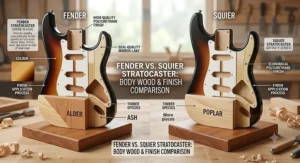
Specced with a solid alder body, deep “C” maple neck and narrow-tall frets, the American Professional II Stratocaster targets players with larger hands or a preference for a more substantial neck profile than the Player series offers. Its neck carries a 1.685-inch bone nut, compared with the Player series’ 1.65-inch synthetic bone nut, and includes a sculpted neck heel plus rolled fingerboard edges that Fender positions as feeling notably more premium. Based on the spec comparison with the Player II above, the jump here isn’t just cosmetic — a pop-in tremolo system, upgraded pickups and tighter US-based quality control all combine to justify the considerably higher price for players who’ll notice the difference.
Reviewers consistently describe this model as warmer and slightly more mid-forward than the brighter, thinner-voiced Player series, though most agree the difference is subtle rather than dramatic when played through the same amp.
Pros:
- ✅ USA-made construction with tighter manufacturing tolerances
- ✅ Upgraded V-Mod II pickups and versatile switching options
- ✅ Premium nut, neck heel and fingerboard refinements
Cons:
- ❌ Substantial price premium over Player II for incremental gains
- ❌ Overkill for beginners still developing basic technique
At roughly £1,600-£1,900, the Fender American Professional II Stratocaster is aimed squarely at gigging musicians, session players and serious hobbyists who’ll genuinely exploit the extra refinement rather than leave it in a case most of the year.
7. Squier Classic Vibe ’60s Stratocaster — the all-rounder tone chameleon
Staggered pole pieces and a slightly warmer voicing set the Squier Classic Vibe ’60s Stratocaster apart from its ’50s sibling, aiming for a more balanced, rounded tone across all five pickup positions.
Built around an alder or basswood body depending on finish, with a maple neck and choice of maple or laurel fingerboard, the Classic Vibe ’60s Stratocaster swaps the ’50s model’s twangier alnico voicing for something closer to the classic Hendrix-era Strat tone — slightly less biting, slightly more musical in the middle positions. What most buyers overlook is that this era-specific tuning of the pickups genuinely changes which genres the guitar suits best; the ’60s model tends to sit better for funk, blues and classic rock rhythm work than the brighter ’50s version.
Reviewers frequently note this as the most tonally versatile Squier in the current lineup, capable of covering everything from clean funk to moderately overdriven blues-rock convincingly, even if a dry fretboard straight out of the box is a recurring minor complaint that a quick application of fretboard oil easily resolves.
Pros:
- ✅ Warmer, more balanced tone across all pickup positions
- ✅ Period-correct tortoiseshell pickguard and colour options
- ✅ Genuinely gig-capable build quality for the price
Cons:
- ❌ Fretboard sometimes ships dry and needs conditioning
- ❌ Basswood variants feel less premium than pine ’50s models
At a similar £380-£430 to its ’50s sibling, the Squier Classic Vibe ’60s Stratocaster is the pick for players who want maximum tonal flexibility from a single budget-friendly instrument.
Top 7 Stratocasters: Specs & Value Comparison
| Model | Body Wood | Pickups | Neck Profile | Price Range | Best For |
|---|---|---|---|---|---|
| Squier Sonic Stratocaster HT | Poplar | SSS | C-shape | under £180 | First-time buyers |
| Squier Affinity Stratocaster | Poplar | SSS/HSS | Slim C | £200-£260 | Budget beginners |
| Squier Classic Vibe ’50s Stratocaster | Pine | SSS | C-shape | £380-£430 | Vintage tone chasers |
| Squier Classic Vibe ’60s Stratocaster | Alder/Basswood | SSS | C-shape | £380-£430 | Tonal all-rounders |
| Squier Contemporary Stratocaster HH | Poplar/Alder | HH | Modern slim | £380-£450 | Rock and metal |
| Fender Player II Stratocaster | Alder/Ash/Mahogany | SSS/HSS | Modern C | £700-£800 | First genuine Fender |
| Fender American Professional II Stratocaster | Alder | SSS/HSS | Deep C | £1,600-£1,900 | Gigging professionals |
Looking at the table above, the jump from Squier Contemporary Stratocaster HH to Fender Player II Stratocaster is the single biggest price cliff in the entire lineup, roughly doubling the cost for a change in country of manufacture rather than a fundamentally different guitar. Meanwhile, the two Classic Vibe models arguably offer the best pound-for-pound value on this whole list, delivering tone quality that competes with guitars costing considerably more. Budget-conscious buyers should note that the real decision point isn’t Fender versus Squier as brands — it’s whether you value the incremental refinement of US manufacturing enough to pay three or four times the price of a Classic Vibe model.
💬 Just one click — help others make better buying decisions too!😊
Setting Up Your New Stratocaster: A Practical Usage Guide
Buying the guitar is genuinely the easy part. What separates a Stratocaster that gets played every day from one gathering dust in a corner usually comes down to the first thirty days of ownership.
Start with a proper professional set-up, even on a brand-new guitar — factory set-ups, especially on budget Squier models, are done quickly and rarely account for your specific playing style or local climate. A local guitar tech adjusting the truss rod, action height and intonation typically costs less than a set of premium strings across a year’s worth of playing, and the difference in playability is enormous. Change the stock strings early too; most factory strings are cheap and dull-sounding within weeks, and a fresh set of nickel-wound 9s or 10s (depending on your preferred feel) makes any Stratocaster, budget or premium, sound noticeably livelier.
Common first-30-days mistakes include over-tightening the tremolo springs (which throws tuning stability off badly), storing the guitar somewhere with big temperature swings like a garage or near a radiator, and skipping a case or gig bag entirely because “it’s just staying at home.” Humidity swings warp necks over time, and even a soft gig bag protects against the accidental knocks that inevitably happen during a house move or a lift down the stairs. Finally, learn to intonate and tune by ear early on — a clip-on tuner is fine for quick checks, but understanding how the twelfth-fret harmonic compares to the fretted note teaches you far more about your instrument’s health than any app ever will.
Real-World Scenarios: Which Stratocaster Matches Your Situation?
The complete beginner on a tight budget: if you’re not yet sure guitar will stick, and you’re mostly practising alone in a bedroom for twenty minutes a day, the Squier Sonic Stratocaster HT or Squier Affinity Stratocaster make the most sense. Neither guitar will hold you back at the skill level you’re at in month one, and neither represents a painful loss if you decide six months from now that guitar isn’t for you after all.
The committed hobbyist ready to gig locally: someone playing open mic nights or jamming with friends weekly needs a guitar that stays in tune under stage lights and sounds convincing through a PA. This is squarely Classic Vibe territory — either the Squier Classic Vibe ’50s Stratocaster or Squier Classic Vibe ’60s Stratocaster depending on whether you lean twangier or warmer tonally, both genuinely capable of holding their own on a small stage.
The working musician or serious collector: if guitar is part of your income, or you’re building a long-term collection you’ll own for decades, the calculation changes. A Fender Player II Stratocaster covers most working musicians’ needs without breaking the bank, while the Fender American Professional II Stratocaster suits session players and touring musicians who need the tightest tolerances and best resale value the range offers.
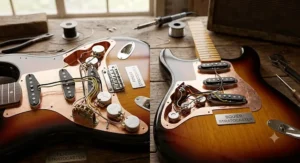
How to Choose Between Fender and Squier Stratocaster
- Set your realistic budget first, not your aspirational one. Decide what you can genuinely afford without stretching, since an instrument that causes buyer’s remorse gets played less, not more.
- Consider your genre before your budget. Humbucker-loaded models like the Squier Contemporary Stratocaster HH suit heavier styles far better than any single-coil Strat, regardless of price.
- Factor in resale value if you might upgrade later. Fender models hold value noticeably better on the second-hand market than Squier models, which matters if you expect to trade up within a few years.
- Try before you buy wherever possible. Neck profile and weight are deeply personal; a guitar that measures perfectly on paper can still feel wrong in your hands.
- Don’t ignore hardware quality for the sake of pickups alone. Tuning stability, bridge quality and fret finishing affect daily playability as much as tone does.
- Budget separately for a proper set-up. Whatever guitar you choose, factor in the cost of a professional set-up on top of the sticker price.
- Remember that most tonal differences are more subtle live than in isolated demo videos. A lot of YouTube comparison videos exaggerate differences that vanish once you’re playing through a band mix.
Common Mistakes When Buying a Squier or Fender Stratocaster
The single most common mistake is buying based on brand prestige alone, assuming “Fender” automatically means better regardless of model, and ending up with an entry-level Squier’s playing experience anyway because the specific Fender chosen was a stripped-down variant. Another frequent misstep is ignoring neck profile entirely in favour of pickup configuration — plenty of players fixate on single-coil versus humbucker debates while overlooking that a neck simply feels wrong in their hand, which matters more day-to-day than most tonal nuances.
Buying online without checking return policies is a costly mistake too, particularly with set-up-sensitive instruments like Stratocasters, where a guitar that arrives with high action or a warped neck needs to go straight back rather than be lived with. Finally, skipping a case entirely to save money is a false economy — a knocked headstock or cracked finish from a house move costs far more to repair than a basic gig bag would have cost upfront.
What to Expect: Real-World Stratocaster Performance
Specs on paper rarely translate directly into how a guitar feels in a rehearsal room, so here’s the honest, practical picture. Budget Squier models like the Squier Sonic Stratocaster HT and Squier Affinity Stratocaster feel genuinely playable out of the box, if a little rough around the fret ends and in need of a set-up — nothing that stops you learning, but noticeably less refined than the models above them.
Move up to the Classic Vibe range and the difference in day-to-day feel is immediately obvious: the Squier Classic Vibe ’50s Stratocaster and Squier Classic Vibe ’60s Stratocaster feel like genuinely finished instruments rather than budget compromises, with tone that holds up in a full-band mix far better than their price suggests. The Fender Player II Stratocaster feels like a natural continuation of that quality curve rather than a dramatic leap, while the Fender American Professional II Stratocaster introduces a tightness and consistency — in fret levelling, electronics shielding and hardware tolerances — that becomes most apparent under close scrutiny in a recording studio rather than on a noisy stage.
Fender and Squier Stratocasters for Different Players
Beginners genuinely benefit most from the Squier end of this lineup — the Squier Sonic Stratocaster HT and Squier Affinity Stratocaster remove financial pressure while teaching fundamentals on a guitar that plays acceptably well. Intermediate players chasing their “forever” first serious guitar tend to land on the Squier Classic Vibe ’50s Stratocaster or Squier Classic Vibe ’60s Stratocaster, both genuinely capable of lasting years without feeling like a compromise. Metal and hard rock players are usually best served by the Squier Contemporary Stratocaster HH, regardless of experience level, simply because the pickup configuration matches the genre far better than any single-coil option.
Working professionals and dedicated collectors are the group who most benefit from stepping up to Fender proper — the Fender Player II Stratocaster for those wanting genuine Fender quality without the premium price tag, and the Fender American Professional II Stratocaster for those who’ll notice, and benefit from, the tightest tolerances Fender currently offers below Custom Shop level.
Long-Term Cost & Maintenance: The True Cost of Ownership
The sticker price is only the opening bid in what a Stratocaster actually costs over several years of ownership. Strings need replacing every one to three months depending on how often you play, and a set-up is generally recommended once or twice a year as the seasons change and wood naturally shifts.
Where the real cost divergence appears is hardware longevity. Budget tuners on models like the Squier Sonic Stratocaster HT and Squier Affinity Stratocaster can wear out or slip after a few years of regular gigging, requiring a modest hardware upgrade if you’re using the guitar heavily. Higher-tier models like the Fender American Professional II Stratocaster are built with hardware designed to last considerably longer under gigging conditions, effectively front-loading the cost rather than spreading small repair bills over time. Resale value also plays into total cost of ownership — Fender models depreciate more slowly and hold demand better on the second-hand market, meaning the effective cost of “renting” one for a few years before trading up is often lower than the sticker price gap versus Squier would suggest.
Features That Actually Matter (And Those That Don’t)
Neck profile, fret quality and tuning stability matter enormously and directly affect how much you enjoy practising daily — these are the features worth prioritising regardless of budget. Pickup configuration matters too, but mainly in terms of matching your genre rather than any objective “better or worse” hierarchy between single-coils and humbuckers.
What matters considerably less than marketing suggests: exotic finish options, matching headstocks, and minor cosmetic flourishes like flamed maple veneers on budget models. These add visual appeal but contribute nothing to how the guitar sounds or plays. Similarly, country of manufacture alone isn’t a reliable quality signal in isolation — a well set-up Squier from Indonesia can outplay a poorly set-up guitar from any country, which is exactly why a professional set-up matters more than brand mythology.
Benefits vs Traditional Alternatives: Stratocaster vs Other Guitar Styles
| Comparison Point | Stratocaster (Squier/Fender) | Gibson-Style Les Paul | Budget Alternatives (e.g. Harley Benton, Yamaha Pacifica) |
|---|---|---|---|
| Weight | Lighter, more comfortable for long sessions | Heavier, denser tonewoods | Varies, often lightweight |
| Tone versatility | Very high — five pickup positions | Warmer, less bright versatility | Model-dependent |
| Tremolo/vibrato | Standard on most models | Rare, usually fixed bridge | Occasionally included |
| Beginner friendliness | Slim necks, forgiving action | Wider necks can suit larger hands | Often excellent value |
| Resale value | Strong, especially Fender | Strong for Gibson/Epiphone | Weaker resale market |
The table above highlights why Stratocaster-style guitars remain the default recommendation for most new players: the tonal versatility across five pickup positions and generally lighter weight make them comfortable for extended practice sessions in a way that heavier, denser alternatives sometimes aren’t. That said, budget alternatives from brands like Yamaha genuinely compete on value in the sub-£300 bracket, and shouldn’t be dismissed purely because they’re not wearing a Fender or Squier logo.
✨ Ready to find your perfect match? Compare current listings and check availability today!
Safety, Standards and Buying Guitars Online in the UK
Electric guitars sold in the UK, like any consumer product, fall under standard consumer protection rules covering faulty goods, misleading descriptions and your right to a repair, replacement or refund within a reasonable window after purchase — worth knowing given how often instruments are bought online sight unseen. You can read the full detail on your statutory rights directly on the UK government’s consumer protection guidance, which applies whether you buy from a high-street shop or an online retailer.
On the tonewood side, if you want to go deeper into how different bodies and necks affect tone beyond what’s covered here, Andertons’ guide to electric guitar tonewoods is a genuinely useful, UK-based resource worth bookmarking. It’s also worth checking a retailer’s specific returns and warranty policy before buying, since coverage periods and conditions vary meaningfully between sellers.
Frequently Asked Questions
❓ Is Squier as good as Fender?
❓ Should I buy Fender or Squier as a beginner?
❓ What is the difference between Squier and Fender Stratocaster?
❓ Is Squier worth buying in 2026?
❓ Fender Player vs Squier Classic Vibe, which should I choose?
Conclusion
There’s no single correct answer to Fender vs Squier Stratocaster — there’s only the correct answer for your budget, your genre and how long you expect to keep the guitar. Beginners and budget-conscious players get genuinely excellent value from the Squier Sonic Stratocaster HT through to the Squier Classic Vibe ’60s Stratocaster, while working musicians and dedicated collectors will find the jump to the Fender Player II Stratocaster or Fender American Professional II Stratocaster justified by tighter tolerances, better hardware and stronger resale value over time.
What matters most is buying the guitar that gets picked up and played every day, not the one that photographs best on a wall mount. A well set-up Squier played daily will always beat a premium Fender left in its case out of fear of scratching it. Whichever model from this list you land on, budget a little extra for a proper professional set-up and a decent set of strings — that combination does more for how a guitar feels than almost any spec on this page.
Recommended for You
- Best Squier Stratocaster 2026: 7 Top Models Reviewed
- Best Fender Stratocaster 2026: 7 Strats Worth Your Money
- Gigging Electric Guitar 2026: 7 Stage-Ready Picks That Won’t Let You Down
Disclaimer: This article contains affiliate links. As an Amazon Associate, I earn from qualifying purchases. If you purchase products through these links, we may earn a small commission at no additional cost to you.
✨ Found this helpful? Share it with your friends! 💬🤗
