
In This Article
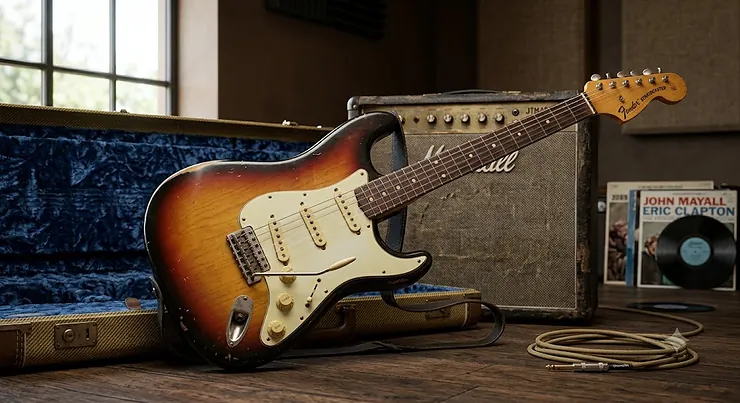
There’s a reason nearly every blues guitarist worth their salt has owned a Stratocaster at some point in their playing life. That in-between quack, the way a single coil breaks up just so when you dig in, the way the whole guitar seems built for bending strings and telling stories — it’s no accident. A stratocaster for blues isn’t just a purchase, it’s a decision about the kind of voice you want on stage and in the mix.

So, what is a Stratocaster for blues, exactly? In short: it’s any Fender or Fender-style solidbody electric guitar with three single-coil pickups, a synchronised tremolo, and a tonal character bright enough to cut through a mix while retaining warmth under overdrive — the combination that’s defined blues-rock tone since the Stratocaster’s 1954 introduction. The genre’s greatest ambassadors, from early rock and roll players through to modern blues-rock guitarists, have leaned on that exact formula.
This guide digs into seven real, currently available Stratocasters and Strat-style guitars spanning budget, mid-range and premium price points, all viewed specifically through a blues lens. We’ll look at what the specs actually mean for your playing, how the models stack up against one another, and where your money is genuinely well spent versus where it’s just paying for a badge. Whether you’re after the best guitar for blues electric on a student budget or you’re finally ready to invest in a Strat for blues players who gig every weekend, there’s a model here that fits. We’ll also cover practical tone-shaping advice, real buyer scenarios, and the mistakes that trip up first-time Strat buyers — because a great blues tone starts with the right guitar in your hands, not just the right amp settings.
As an Amazon Associate, this article contains affiliate links, and we may earn a small commission on qualifying purchases at no extra cost to you.
Quick Comparison Table
| Model | Price Range | Pickup Config | Best For |
|---|---|---|---|
| Squier Affinity Stratocaster | Under £250 | SSS | Absolute beginners |
| Harley Benton ST-62 | Around £150 | SSS | Best hidden-gem value |
| Squier Classic Vibe ’60s Stratocaster | £330-£380 range | SSS | Best budget blues tone |
| Fender Player Stratocaster | £550-£620 range | SSS | Best all-round gigging Strat |
| Fender Vintera II ’70s Stratocaster | £1,000-£1,100 range | SSS | Vintage-voiced blues rock |
| Fender American Professional II Stratocaster | £1,550-£1,650 range | SSS | USA-made workhorse |
| Fender Eric Clapton Stratocaster | £2,000-£2,400 range | SSS + mid-boost | Chasing the Slowhand tone |
Looking at the spread above, there’s a genuinely usable Stratocaster for blues at almost every price rung, and the jump in quality from the Squier Affinity Stratocaster to the Squier Classic Vibe ’60s Stratocaster is much larger than the price difference suggests. Once you’re past the Fender Player Stratocaster, though, the gains become more about refinement and finish than raw tone — the pickups and neck feel improve, but you’re no longer buying “more blues” so much as “more consistency and resale value.” Budget-conscious players should note that the biggest single jump in playability per pound happens right around the £350-£600 range.
💬 Found a Strat you like already? Scroll down for the full breakdown before you decide.
Top 7 Stratocasters for Blues: Expert Analysis
1. Squier Affinity Stratocaster — best true beginner blues Strat
The Squier Affinity Stratocaster is the entry point most new blues players start from, and it earns that spot honestly. Its alder body and bolt-on maple neck follow the same blueprint as guitars costing four times as much, just built to tighter cost constraints. The ceramic single coils here are hotter and less nuanced than the Alnico magnets found further up this list, which in practice means less sparkle on clean tones but a surprisingly usable growl once you push an amp or pedal into light overdrive — a very blues-friendly trait for a guitar this affordable.
Who should buy it: complete beginners and anyone testing whether blues guitar is a genre they want to commit to before spending serious money. Reviewers consistently report that, once properly set up by a tech, the Affinity plays far better than its price tag implies, though several note the stock hardware and tuners can feel a little loose after a year of regular gigging.
Pros:
- ✅ Genuinely playable neck straight out of the box
- ✅ Cheapest realistic entry into Strat-style blues tone
- ✅ Wide availability of spare parts for future upgrades
Cons:
- ❌ Ceramic pickups lack the nuance of Alnico alternatives
- ❌ Hardware wears faster under regular gigging use
At under £250, the Squier Affinity Stratocaster is best understood as a low-risk way in rather than a long-term blues instrument — excellent value if you treat it as step one.
2. Harley Benton ST-62 — best hidden-gem alternative
Thomann’s house brand doesn’t get anywhere near the recognition of Fender or Squier on the UK high street, but the Harley Benton ST-62 has built a cult following among gigging musicians precisely because it punches so far above its price. The vintage-tinted maple neck and Alnico-5 single coils here are genuinely closer in spirit to a Classic Vibe than to a bargain-bin Strat clone, and that matters enormously for blues tone, where pickup character does most of the heavy lifting.
Based on the spec comparison, the ST-62’s Alnico-5 pickups give it a warmer, rounder top end than the ceramic-loaded Affinity, which is exactly the character blues tone benefits from when you’re rolling back the tone knob for a woman-tone lead sound. Aggregated review sentiment on Thomann’s own site is unusually positive for a guitar at this price, with players repeatedly commenting on fit, finish and tuning stability beating expectations; a recurring theme is surprise that a sub-£200 instrument needs so little setup work.
Pros:
- ✅ Alnico-5 pickups punch above their price bracket
- ✅ Comfortable, chunky vintage-style neck profile
- ✅ Strong aggregated customer sentiment on build quality
Cons:
- ❌ Limited UK stockists outside Thomann’s own store
- ❌ Resale value is weaker than established brand names
At around £150, the Harley Benton ST-62 is arguably the single best value proposition on this list for players who don’t need a household-name badge on the headstock.
3. Squier Classic Vibe ’60s Stratocaster — best budget blues tone
The Squier Classic Vibe ’60s Stratocaster is the guitar that changed what people expect from the Squier name. Its Fender-designed Alnico single coils are voiced to recreate the bright, bell-like chime of a vintage ’60s Strat, and that authenticity is precisely what makes it stand out on this list for blues players specifically — the vintage-tint gloss neck and period-correct hardware aren’t just cosmetic, they contribute to a genuinely more resonant, sustain-friendly instrument than the price suggests.
What most buyers overlook about this model is that the 9.5-inch fretboard radius is actually a modern compromise, flatter than the true vintage 7.25-inch radius, which makes string bending noticeably easier — a genuinely useful trait for blues phrasing without sacrificing the vintage look. Reviewers consistently note that the pickups sound “far better than the price would suggest,” with several long-term owners saying they preferred the Classic Vibe’s stock electronics to aftermarket pickups they’d installed in pricier guitars.
Pros:
- ✅ Authentic vintage-voiced Alnico single coils
- ✅ Comfortable 9.5-inch radius neck for easier bends
- ✅ Consistently outperforms its price point in reviews
Cons:
- ❌ Basic tuners benefit from an aftermarket upgrade
- ❌ Fewer finish options than the Fender-branded ranges
In the £330-£380 range, the Squier Classic Vibe ’60s Stratocaster is the guitar most experienced blues players would recommend if a genuine Fender badge isn’t a priority.
4. Fender Player Stratocaster — best all-round gigging Strat
The Fender Player Stratocaster sits at the heart of Fender’s own line-up for good reason: it’s the guitar most working musicians actually gig with. Its Player Series Alnico 5 pickups are a meaningful step up from the entry-level Squier ranges, voiced for clarity and harmonic complexity rather than the compressed, over-wound sound cheaper single coils sometimes lean on. In practice, that means a neck pickup with a full, warm “woman tone” character that’s tailor-made for blues leads, and a bridge pickup that stays articulate even when you push an amp into light breakup.
Here’s what to weigh: the Modern C neck profile and rolled fretboard edges make the Player series comfortable for extended playing, and the two-point tremolo offers smoother, more stable pitch bends than older three-spring designs once one spring is blocked. Reviewers repeatedly single out position 2 and position 4 (the classic “in-between” quack) as genuinely special on this model, describing it as glassy and articulate rather than thin — exactly the character Texas blues and classic rock tones are built on.
Pros:
- ✅ Alnico 5 pickups suited to genuine blues phrasing
- ✅ Comfortable Modern C neck with rolled fret edges
- ✅ Smooth, stable two-point tremolo system
Cons:
- ❌ Can sound thin under high-gain settings
- ❌ Mexican-made finish isn’t as refined as USA models
Sitting in the £550-£620 range, the Fender Player Stratocaster is the guitar most gigging blues players should treat as their realistic ceiling before diminishing returns set in.
5. Fender Vintera II ’70s Stratocaster — best vintage-voiced blues rock tone
The Fender Vintera II ’70s Stratocaster revives the bigger headstock, “U”-shaped neck and vintage-style ’70s pickups that defined an era when blues-rock crossover was at its peak. The 7.25-inch fretboard radius is genuinely vintage-spec rather than a modern compromise, giving the neck a rounder, more traditional feel under the hand — a trait some blues players actively seek out because it changes how string bends and vibrato feel beneath the fingers.
Based on the spec comparison against the Player series, the ’70s pickups here are voiced with more low-mid push and a slightly hollower character in the neck position, which translates into a rounder, punchier tone that many reviewers describe as excelling at “full country/blues twang” once you dig into the bridge pickup. What most buyers overlook is that the vintage-style synchronised tremolo and bent steel saddles genuinely affect sustain and tuning stability, not just aesthetics — this is a guitar built to be dive-bombed and pulled back into tune reliably.
Pros:
- ✅ Authentic vintage 7.25-inch radius neck feel
- ✅ Rounder, punchier tone suited to blues-rock twang
- ✅ Excellent sustain from the vintage-style tremolo block
Cons:
- ❌ Flatter radius can feel unfamiliar to modern players
- ❌ Noticeably heavier price step up from the Player series
Priced in the £1,000-£1,100 range, the Fender Vintera II ’70s Stratocaster rewards players who already know they prefer a vintage-spec neck and want genuine period-correct tone rather than a modern reinterpretation.
6. Fender American Professional II Stratocaster — best USA-made workhorse
Made at Fender’s Corona facility in California, the Fender American Professional II Stratocaster represents the point on this list where build consistency and long-term reliability become the headline story rather than tone alone. Its V-Mod II single-coil pickups are engineered with varying Alnico magnet strengths across the three positions, aiming for a more balanced clarity-to-sustain ratio than the Player series achieves — a subtle but real difference once you’re recording or gigging through a demanding PA.
What most buyers overlook about this model is the contoured heel joint, which genuinely improves upper-fret access during blues solos, something rarely mentioned in spec sheets but immediately obvious once you’re bending notes past the twelfth fret. Reviewers highlight the “Super-Natural” satin neck finish as feeling faster under the hand during long sets, and several note that the bridge pickup in split-mode can approximate an SRV-style bite when pushed with an overdrive pedal — useful versatility for players who move between rhythm and searing lead tones within a single set.
Pros:
- ✅ Excellent upper-fret access via the contoured heel joint
- ✅ V-Mod II pickups balance clarity with genuine sustain
- ✅ Consistent, reliable USA build quality for gigging
Cons:
- ❌ Significant price jump over the Vintera II range
- ❌ Tonal gains are subtle rather than transformative
At around £1,550-£1,650, the Fender American Professional II Stratocaster makes most sense for players who already gig regularly and need the reliability a Mexican-made instrument can’t always guarantee night after night.
7. Fender Eric Clapton Stratocaster — chasing the Slowhand tone
No list of blues Stratocasters is complete without the Fender Eric Clapton Stratocaster, the signature model that’s been in continuous production since 1988 and remains the clearest blueprint for anyone chasing that specific Clapton sound. Its Vintage Noiseless pickups solve the classic single-coil hum problem while retaining the tonal character blues players want, and the onboard active mid-boost circuit — engaged via the TBX control — pushes output dramatically, effectively letting one guitar cover both glassy clean blues tones and a thicker, humbucker-adjacent voice for soloing.
Here’s what to weigh: the soft “V” neck profile is a deliberately vintage, chunkier shape that rewards players with a firm fretting-hand technique, and reviewers consistently note this guitar’s exceptional versatility across genres precisely because of that mid-boost circuit — one long-term owner described using it for everything from rhythm and blues to hard rock within the same set. The satin-finished neck is also repeatedly praised for feeling fast under the hand during extended solos, a detail that matters more than it sounds once you’re two hours into a gig.
Pros:
- ✅ Active mid-boost circuit adds serious tonal range
- ✅ Noiseless pickups solve hum without losing character
- ✅ Purpose-built for genuine blues and blues-rock playing
Cons:
- ❌ Substantial price premium over non-signature Strats
- ❌ Chunky “V” neck won’t suit every hand size
In the £2,000-£2,400 range, the Fender Eric Clapton Stratocaster is a serious, considered investment rather than an impulse buy — but for players specifically chasing that tone, there’s genuinely nothing else quite like it. Eric Clapton’s own career — from the Yardbirds through Cream and beyond — is a useful reference point for understanding why this particular signature model was built the way it was.
What to Expect: Real-World Performance on the Blues Stage
Specs on a page don’t tell you what a Stratocaster for blues actually feels like once the amp’s cranked and the room’s full. In practice, single-coil Strats reward a lighter touch than humbucker-loaded guitars — dig in too hard and you’ll find the top end gets brittle rather than singing, whereas backing off your pick attack slightly opens up that classic vocal-like sustain blues soloing depends on. The volume knob becomes a genuine performance tool here, not just a mute switch; rolling it back a touch while keeping your amp’s gain up is how players like Clapton get that cleaner-but-still-pushed “woman tone” without ever touching a pedal.
Position 2 and position 4 on the pickup selector — the “in-between” quack settings — are where most of the magic happens for blues rhythm playing, thanks to the out-of-phase pickup cancellation unique to three-single-coil designs. It’s genuinely difficult to replicate that specific sound with a humbucker guitar, which is exactly why the Strat remains the reference point for blues players wanting that percussive, funky rhythm tone alongside searing lead runs from the bridge pickup.
✨ Not sure which pickup position suits your playing yet? Check current availability on any of the models above and try them side by side.
Blues Guitar Tone Tips: Dialling In That Classic Sound
Getting a genuinely convincing blues tone out of a Stratocaster is less about gear and more about technique, though the right guitar makes every trick below easier to pull off. Start with your amp: a Stratocaster’s single coils are voiced to interact with a slightly overdriven tube amp rather than a pristine, high-headroom clean channel — pushing a smaller valve amp into natural breakup will almost always sound more authentic than running a big, loud amp completely clean.
Your tone knob is doing more work than most players realise. Rolling it back to around 7 on the neck pickup softens the top end just enough to get that rounded, vocal quality associated with classic blues leads, while keeping the bridge pickup’s tone control near maximum preserves the bite you need for rhythm stabs. Pickup height matters too — sitting the pole pieces slightly further from the strings under the bridge pickup reduces harshness without sacrificing output, a five-minute adjustment that changes the character of a guitar more than most players expect. Finally, string gauge genuinely affects bending feel and sustain; many blues players move to a slightly heavier gauge, such as 10-46, for a fuller tone and more resistance under aggressive bends, though this does require a truss rod check afterwards. If you’re gigging regularly through a loud tube amp, it’s also worth taking hearing protection seriously — the HSE’s guidance on controlling noise at work is a genuinely useful reference for musicians, even outside a formal employment setting.
Pros:
- ✅ Small technique changes cost nothing and work immediately
- ✅ Tone and volume knobs offer real expressive range
- ✅ String gauge changes are cheap, reversible experiments
Cons:
- ❌ Heavier strings may require a professional setup afterwards
- ❌ Amp-driven breakup needs a tube amp to sound authentic
Real-World Scenarios: Which Strat for Blues Players Are You?
Consider a college student who’s just discovered Buddy Guy and wants an affordable way in — for that player, the Squier Affinity Stratocaster or the Harley Benton ST-62 make far more sense than stretching for a premium model, since neither the budget nor the ear for tonal nuance typically justifies the extra spend yet. A weekend function-band player gigging most Saturdays, on the other hand, benefits enormously from the reliability and pickup clarity of the Fender Player Stratocaster, where hardware failures mid-set are simply less likely and the tone holds up through a PA.
Then there’s the dedicated blues obsessive: someone who’s been playing for a decade, has a specific tonal reference in mind (often Clapton, SRV or a specific vintage era), and is finally ready to invest properly. For that player, either the Fender Vintera II ’70s Stratocaster for period-correct vintage voicing, or the Fender Eric Clapton Stratocaster for that specific signature versatility, represents money well spent rather than an indulgence. A home-studio player recording covers and originals sits somewhere in between — the Fender American Professional II Stratocaster offers the consistency and clarity that translates well to a mic’d amp or DI’d interface without the cost of a signature model.
Blues Electric Guitar Under £600: What You Actually Get
Setting a hard ceiling of £600 for a blues electric guitar still leaves you with genuinely excellent options, though it’s worth being honest about the trade-offs. At this budget, the Fender Player Stratocaster represents close to the best available, delivering Alnico 5 pickups and a comfortable Modern C neck without stepping into USA-made pricing. Below that, the Squier Classic Vibe ’60s Stratocaster frequently outperforms guitars costing considerably more thanks to its genuinely well-voiced Alnico pickups, even if the finishing touches — tuner quality, fret dressing — are a notch below Fender’s own ranges.
What you’re not getting under £600 is USA-made consistency, the subtle sustain benefits of a contoured heel joint, or noiseless pickup technology. For most blues players starting out or gigging locally, none of that is a genuine limitation; it becomes relevant mainly once you’re recording professionally or playing large venues where every subtle inconsistency gets amplified. The honest verdict: a well-set-up guitar under £600 will get 90% of players 90% of the way to a convincing blues tone, and the remaining 10% is more about amp, pedals and technique than the guitar itself.
Pros:
- ✅ Genuine Alnico pickup tone available under £600
- ✅ Comfortable necks across every model in this bracket
- ✅ Huge headroom left over for a decent amp or pedal
Cons:
- ❌ No USA-made options exist at this price point
- ❌ Stock tuners and setup often need minor attention
How to Choose the Best Guitar for Blues Electric
- Start with pickup type, not brand. Alnico single coils consistently outperform ceramic ones for blues warmth, regardless of badge on the headstock.
- Prioritise neck feel over spec-sheet numbers. A 9.5-inch radius suits most modern players’ bending technique better than a vintage 7.25-inch radius, though preference varies.
- Set a genuine budget ceiling before shopping. Decide whether you’re buying a first guitar, a gigging workhorse, or a long-term instrument — this single decision narrows the field faster than any spec comparison.
- Try before you commit wherever possible. Neck shape and weight are deeply personal, and no amount of online research replaces five minutes playing a guitar in your own hands.
- Factor in setup costs, not just sticker price. Even the best factory-set guitars benefit from a professional setup, and budgeting an extra £30-£50 for this avoids disappointment.
- Consider resale value if you might upgrade later. Fender and Squier-branded instruments hold value better than lesser-known brands, which matters if you expect to trade up within a few years.
- Match pickup configuration to your playing style. Pure SSS setups suit traditional blues far better than HSS or HH configurations, which lean towards rock and metal tones.
Single Coil Blues Sound: Why Three Pickups Beat One
The three-single-coil layout at the heart of every Stratocaster isn’t an arbitrary design choice — it’s the reason the guitar became a defining instrument of the blues genre in the first place. Single coils, commonly found in Stratocasters, produce a brighter and clearer sound than humbuckers, and that clarity is precisely what lets blues phrasing breathe: every bend, slide and vibrato reads clearly rather than blurring into a wall of midrange. The trade-off is that single coils are inherently noisier, picking up 50Hz mains hum more readily than a humbucker, which is why noiseless designs like those on the Fender Eric Clapton Stratocaster exist at all.
What most buyers overlook is that having three pickups, rather than one or two, is what actually creates the Stratocaster’s signature sound — the out-of-phase combinations at switch positions 2 and 4 can’t be replicated with fewer pickups, and that “quack” has become inseparable from blues and funk rhythm playing. A cheaper single-coil guitar with only a bridge and neck pickup, or a cost-cut two-pickup layout, will never produce those specific in-between tones, regardless of pickup quality — it’s a structural, not just a components, issue.
Stratocaster vs Telecaster and Les Paul for Blues
| Guitar Type | Pickup Character | Blues Strength | Best For |
|---|---|---|---|
| Stratocaster (SSS single coil) | Bright, versatile, in-between tones | Vocal-like leads, funky rhythm | All-round blues playing |
| Telecaster (twin single coil) | Twangy, cutting, punchy | Country-blues, sharp rhythm stabs | Players wanting extra bite |
| Les Paul / humbucker guitar | Thick, warm, high output | Sustained, singing lead tones | Heavier blues-rock, less clean headroom |
A Telecaster’s two-pickup layout genuinely excels at the punchy, cutting tone country-blues and rockabilly-adjacent blues styles want, but it lacks the Strat’s in-between quack entirely, since that effect depends on having a middle pickup to cancel against. A Les Paul or other humbucker-loaded guitar, meanwhile, offers more sustain and output for free, at the cost of the glassy clarity and dynamic range single coils provide — many blues players describe humbuckers as doing more of the work for you, while a Strat rewards (and demands) more expressive picking-hand technique. Neither alternative is objectively worse; they simply suit different blues subgenres, from the crunchier Chicago sound to the cleaner Texas shuffle style the Strat defines.
✨ Don’t Miss These Exclusive Deals!
🔍 Take your blues tone to the next level with these carefully selected Stratocasters. Click on any highlighted model above to check current pricing and availability. These guitars will help you create the authentic blues sound you’ve been chasing.
Eric Clapton Stratocaster Style: Chasing the Slowhand Tone
Players specifically hunting for an Eric Clapton Stratocaster style tone are usually chasing something quite particular: a cleaner-than-expected blues lead sound with unusual harmonic richness, achieved via noiseless pickups and that active mid-boost circuit rather than sheer volume or gain. Clapton’s own guitar journey, from his early Bluesbreakers-era Les Paul work through to his decades-long association with the Stratocaster, reflects a broader pattern among blues guitarists: tone preference often shifts as technique matures, favouring clarity and touch-sensitivity over raw output.
For players wanting this specific style without the signature-model price tag, the Fender Vintera II ’70s Stratocaster or Fender American Professional II Stratocaster paired with a compressor or clean boost pedal can approximate a similar clean-but-pushed character, though neither replicates the mid-boost circuit exactly. What most buyers overlook is that the soft “V” neck on the actual Fender Eric Clapton Stratocaster is as much a part of “the sound” as the electronics — the chunkier neck changes vibrato technique subtly, encouraging a slower, wider hand motion that suits Clapton-style phrasing particularly well.
Common Mistakes When Buying a Stratocaster for Blues
The single most common mistake is buying on looks or brand prestige alone without considering pickup type — an HSS-loaded Strat might look identical to an SSS model but delivers a fundamentally different, more rock-oriented tone once the humbucker kicks in. A close second is ignoring neck profile entirely; players used to a slim modern C shape sometimes buy a vintage-spec “U” or chunky “V” neck expecting it to feel similar, then find their whole technique needs adjusting.
Skipping a professional setup after purchase is another frequent error — even excellent guitars like the Squier Classic Vibe ’60s Stratocaster ship with generic factory setups that rarely suit an individual player’s action and string gauge preferences perfectly. Finally, many first-time buyers underestimate how much amp and pedal choice affects perceived guitar quality; blaming a guitar for a thin, harsh tone when the real issue is a poorly matched amp is an extremely common and entirely avoidable mistake.
Long-Term Cost & Maintenance: Total Cost of Owning a Blues Strat
| Cost Factor | Budget Strat | Mid-Range Strat | Premium Strat |
|---|---|---|---|
| Initial price | Under £250 | £550-£620 range | £1,550+ range |
| Setup/servicing (annual) | £30-£50 | £30-£50 | £30-£50 |
| String changes | Every 4-6 weeks | Every 4-6 weeks | Every 4-6 weeks |
| Resale value retention | Lower | Moderate-high | High |
| Best For | Casual players | Regular gigging | Long-term investment |
The ongoing running costs of any Stratocaster for blues are remarkably similar regardless of price point — strings, setups and the occasional fret dress cost roughly the same whether you own a Squier Affinity Stratocaster or a Fender American Professional II Stratocaster. Where the total cost of ownership genuinely diverges is resale value: a Fender Player Stratocaster or above will typically retain a meaningfully higher proportion of its purchase price on the used market than a budget or lesser-known brand instrument, which matters if you expect to upgrade within a few years. For players committed to blues long-term, spending more upfront on a model with strong resale value can, counterintuitively, work out cheaper over a five-year ownership period than repeatedly buying and reselling budget instruments.

Blues Guitar Frequently Asked Questions
❓ What's the best Stratocaster for blues on a budget?
❓ Do you need an American-made Strat for good blues tone?
❓ What pickup position is best for blues rhythm playing?
❓ Is a Stratocaster better than a Telecaster for blues?
❓ How much should I budget for a decent blues electric guitar?
Conclusion
Choosing a Stratocaster for blues ultimately comes down to matching the guitar to where you actually are in your playing journey, not chasing the model your favourite player happens to use. The Squier Affinity Stratocaster and Harley Benton ST-62 offer a genuinely low-risk way in; the Squier Classic Vibe ’60s Stratocaster remains the smartest value pick for players serious about tone on a budget; and the Fender Player Stratocaster is where most gigging musicians should reasonably stop unless a specific reason pulls them further. For those chasing vintage character or a very specific signature tone, the Fender Vintera II ’70s Stratocaster, Fender American Professional II Stratocaster and Fender Eric Clapton Stratocaster each deliver on their own particular promise.
What all seven guitars share is the underlying formula that’s made the Stratocaster the reference point for blues guitar for seven decades: three single coils, a comfortable neck, and a tremolo system built for expressive playing. Whichever model fits your budget and hands best, the tone-shaping habits covered above — amp interaction, tone knob use, pickup height, string gauge — will get you further towards an authentic blues sound than any single spec ever could.
✨ Ready to find your Strat? Check current pricing and availability on the model that matches your budget above! 💬🤗
Recommended for You
- Fender vs Squier Stratocaster: 7 Models Compared for 2026
- Best Squier Stratocaster 2026: 7 Top Models Reviewed
- Best Fender Stratocaster 2026: 7 Strats Worth Your Money
Disclaimer: This article contains affiliate links. As an Amazon Associate, I earn from qualifying purchases. If you purchase products through these links, we may earn a small commission at no additional cost to you.
✨ Found this helpful? Share it with your friends! 💬🤗
