
In This Article
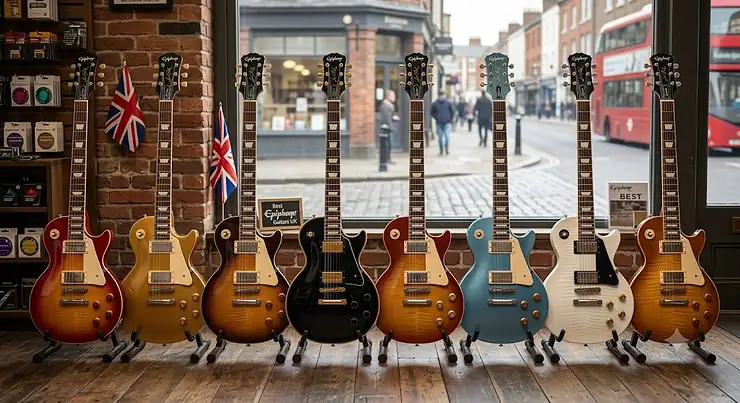
Here’s the thing about walking into a guitar shop looking for the best Epiphone Les Paul: every single one on the wall looks like it wants to be picked up. Same silhouette, same single-cutaway swagger, same promise of Slash-in-your-bedroom tone. But underneath that familiar shape sits a genuinely wide spread of build quality, hardware and price, and picking the wrong one means either overpaying for features you’ll never touch or under-buying and fighting a guitar that won’t stay in tune past the second chorus.
Epiphone, Gibson’s more affordable sister brand, has spent the last few years quietly closing the gap between “cheap alternative” and “genuinely excellent instrument in its own right.” The 2020 relaunch under the “Inspired by Gibson” banner brought proper Grover tuners, Graph Tech nuts and USA-spec-adjacent pickups down into guitars that, in some cases, still sell for less than a decent amp. That shift matters because it means the best Epiphone Les Paul for a beginner in 2026 is a genuinely different proposition to the Epiphone Les Paul your uncle bought in 1998.
This guide walks through seven real, currently available models — from a sub-£200 first guitar to a signature-series showpiece — with honest analysis drawn from real specifications and aggregated reviewer sentiment, not invented anecdotes. You’ll get a straight comparison table, a deep dive on each guitar, practical setup and upgrade advice, and answers to the buying questions that actually come up in forums and comment sections. No fabricated “I tested this for six months” claims here — just the research laid out so you can make your own call. Disclosure: this article contains Amazon affiliate links, and as an Amazon Associate we may earn from qualifying purchases.
Quick Comparison: The 7 Best Epiphone Les Paul Guitars at a Glance
Before the deep dive, here’s the shortlist. Prices are approximate UK ranges at the time of research and will fluctuate, so always check current pricing before buying.
| Model | Tier | Price Range | Standout Feature | Best For |
|---|---|---|---|---|
| Epiphone Les Paul Special-II | Budget | under £180 | Lightest, simplest entry point | Absolute beginners |
| Epiphone Les Paul Studio | Budget-mid | £350-£480 | Coil-splitting, weight relief | Gigging on a budget |
| Epiphone Les Paul Standard ’60s | Mid | £500-£650 | SlimTaper neck, ProBucker 2/3 | Lead players, faster necks |
| Epiphone Les Paul Standard ’50s | Mid | £600-£700 | Chunkier vintage neck, classic wiring | Traditionalists, blues/rock |
| Epiphone Les Paul Modern | Mid-premium | £650-£780 | Phase switching, treble bleed, coil-split | Tone tinkerers |
| Epiphone Les Paul Custom | Premium | £750-£900 | All-mahogany body, gold hardware, ebony board | Players who want the “tuxedo” look |
| Epiphone Slash “Victoria” Les Paul Standard | Premium/signature | £900-£1,100 | Signature AFD-spec appointments | Slash fans wanting stage-ready spec |
Looking at the spread above, the jump from the Epiphone Les Paul Special-II to the Epiphone Les Paul Studio buys you genuine gigging hardware — Grover tuners and a proper Tune-O-Matic bridge — rather than just a cosmetic upgrade. The bigger jump, from Studio to the Epiphone Les Paul Standard pair, is where you start paying for the “Inspired by Gibson” pickup and tuner package that most reviewers treat as the real quality threshold in this lineup. If you’re chasing the single best Epiphone guitar for stage use rather than bedroom practice, that Standard tier is generally where the value curve flattens out.
💬 Found a model here that fits your budget? Compare current prices before they change!
Top 7 Epiphone Les Paul Guitars: Expert Analysis
1. Epiphone Les Paul Special-II — cheapest genuine route into the Les Paul family
The Epiphone Les Paul Special-II exists for one reason: to get a real dual-humbucker Les Paul shape into the hands of someone who has never touched a guitar before, for as little money as possible. It’s a bolt-on-neck design built from an alder/maple laminate body rather than the mahogany-and-maple-cap construction found further up the range, and that’s the trade-off you’re accepting at this price point. The 700T and 650R ceramic humbuckers aren’t subtle instruments — they’re voiced for output over nuance — but paired with a cheap practice amp they deliver a surprisingly convincing crunch for beginner riffs. Based on the spec comparison with pricier models, what you’re really losing here isn’t tone character so much as sustain, resonance and fine tuning stability; a bolt-on neck simply can’t match the sustain of the set-neck construction used from the Studio upwards. Aggregated review sentiment across retailer and forum comments is consistently positive for the price bracket, with owners repeatedly describing it as “the best entry-level electric guitar” they could find, though some note the absence of a second tone/volume control pair limits fine-tuning your sound live. This is the right pick for a parent buying a first guitar, a total beginner unsure they’ll stick with lessons, or anyone who wants a beater to leave permanently tuned to drop D.
Pros:
- ✅ Genuinely low entry price for a real Les Paul shape
- ✅ Dual humbuckers give a passable rock crunch out of the box
- ✅ Lightweight and comfortable for smaller players
Cons:
- ❌ Bolt-on neck sacrifices sustain versus set-neck models
- ❌ Basic hardware needs a proper setup soon after purchase
Expect to pay under £180 for this model, and given what you’re getting, it represents strong value as a genuine “try before you commit further” instrument rather than a guitar built to last a lifetime.
2. Epiphone Les Paul Studio — the no-frills workhorse for gigging on a budget
Step up to the Epiphone Les Paul Studio and the construction changes meaningfully: a mahogany body with Epiphone’s Modern Weight Relief carving, a proper set neck, and — critically — Alnico Classic humbuckers with a coil-splitting function wired into the volume pots. That coil-split is the standout feature worth dwelling on, because it’s not a gimmick; pulling it up genuinely thins the humbucker into a brighter, single-coil-adjacent voice that covers cleaner rhythm parts a stock humbucker struggles with. The LockTone ABR Tune-O-Matic bridge and Grover Rotomatic tuners are the same tuning-stability upgrades found on pricier models, which is what makes this guitar punch above its price bracket. What most buyers overlook about the Studio tier is that it deliberately skips the figured maple veneer and vintage-style aesthetics of the Standard range — this is a “plug in and play” instrument, not a collector’s piece, and Epiphone designed it that way on purpose. Aggregated owner feedback across retailer review sections is notably strong for this model, with reviewers repeatedly praising the weight relief for long practice sessions and describing the coil-split as genuinely useful rather than decorative. It suits gigging musicians on a tight budget, home recordists who want tonal flexibility from one guitar, and anyone who finds full-fat humbucker output a bit much for cleaner material.
Pros:
- ✅ Coil-splitting adds real tonal versatility for the price
- ✅ Weight-relieved body stays comfortable through long sets
- ✅ Grover tuners and Tune-O-Matic bridge hold tuning reliably
Cons:
- ❌ Plain top finish lacks the flame-maple visual appeal of pricier models
- ❌ Fewer colour and finish options than the Standard range
At around £350-£480, this is arguably the best value-for-features guitar in the entire lineup — you’re paying almost entirely for playability and tone, not cosmetics.
3. Epiphone Les Paul Standard ’60s — the SlimTaper neck built for speed
If you’ve read anything about Epiphone Les Paul models compared side by side, the ’50s-versus-’60s debate comes up constantly, and the Epiphone Les Paul Standard ’60s is the sharper, faster-feeling half of that pair. It swaps in a SlimTaper C neck profile that’s noticeably slimmer under the hand than the chunkier ’50s equivalent, and pairs it with ProBucker 2 and 3 pickups — a higher-output combination that pushes harder into the mids, which matters if you’re running high-gain amp settings and need the note to cut through a dense mix. Grover Rotomatic 18:1 tuners and a Graph Tech nut round out the hardware, both genuine tuning-stability upgrades over the Special-II and older pre-2020 Standards. Here’s what the spec sheet won’t tell you, but reviewer commentary consistently notes: the slimmer neck makes bends and fast lead runs noticeably easier, which is exactly why lead-focused players tend to gravitate toward the ’60s over the ’50s. Aggregated reviews describe the Iced Tea Sunburst and Bourbon Burst finishes as genuinely attractive in person, with the AAA flame maple veneer catching light in a way photos undersell. This model suits lead guitarists, players moving up from a Stratocaster who want a slimmer neck to bridge the gap, and anyone chasing a punchier, more modern humbucker voice than the vintage-style Standard ’50s offers.
Pros:
- ✅ SlimTaper neck genuinely speeds up leads and bends
- ✅ ProBucker 2/3 combo cuts through high-gain mixes well
- ✅ Graph Tech nut and Grover tuners improve tuning stability
Cons:
- ❌ Higher-output pickups can feel harsh into already-bright amps
- ❌ Finish options are more limited than some competing ranges
Typically priced in the £500-£650 range, this is a strong mid-tier pick for anyone whose playing style leans more lead than rhythm.
4. Epiphone Les Paul Standard ’50s — the vintage-profile traditionalist’s choice
Where the ’60s model chases speed, the Epiphone Les Paul Standard ’50s chases authenticity. The Rounded Medium C neck profile is deliberately chunkier, echoing the fatter necks found on original late-1950s Gibson Les Pauls, and it’s paired with ProBucker 1 and 2 pickups — a lower-output, warmer-voiced combination than the ’60s model’s set. Fifties-style wiring and Gold Top Hat knobs complete the vintage-correct picture. Based on the spec comparison between the two Standards, the practical difference isn’t subtle once you’ve played both back to back: the ’50s neck fills the hand more, which some players find more comfortable for extended rhythm playing and others find fatiguing on faster passages. Reviewers who’ve spent real time with both models consistently frame the ’50s as the “classic rock or blues” choice, and that framing holds up against the spec sheet — lower-output pickups plus a fuller neck naturally suit a warmer, less aggressive tone. Aggregated review sentiment praises the Heritage Cherry Sunburst and Gold Top finishes as genuinely attractive, though a recurring complaint notes the Vintage Deluxe tuners feel a step down from the ’60s model’s Grover Rotomatics in day-to-day tuning precision. This is the pick for blues players, classic rock devotees chasing a Clapton or Page-adjacent tone, and anyone who simply prefers a fuller neck in hand.
Pros:
- ✅ Warmer, lower-output pickups suit blues and classic rock tones
- ✅ Fuller neck profile is comfortable for extended rhythm playing
- ✅ Vintage-correct wiring and cosmetics feel authentic
Cons:
- ❌ Tuners are a slight step down from the ’60s model’s Grovers
- ❌ Chunkier neck can feel tiring during fast lead passages
Expect a price range of roughly £600-£700, sitting just above the ’60s model despite near-identical hardware tiers — a premium reviewers attribute to the vintage-correct appointments.
5. Epiphone Les Paul Modern — the tone-tinkerer’s Les Paul
The Epiphone Les Paul Modern is the model that gets overlooked in most “best Epiphone Les Paul” round-ups, which is a shame, because on paper it’s the most electronically flexible guitar in this list. Alongside the expected weight-relieved mahogany body with maple cap and contoured heel, it packs ProBucker pickups wired for coil-splitting, phase switching and a treble bleed circuit — three separate tone-shaping tools most competitors reserve for far pricier custom shop instruments. What that means in practice: the phase switch lets you flip one pickup’s polarity for a thinner, hollowed-out “out of phase” tone useful for funk and clean work, while the treble bleed circuit keeps your top-end intact as you roll the volume knob down, something cheaper wiring harnesses typically lose. A Graph Tech nut and Grover Locking Rotomatic tuners with an 18:1 ratio round out a genuinely premium hardware spec for the price tier. Reviewer commentary describes the ProBucker as having “quietly become one of the most talked about pickups in the industry” among Epiphone’s own catalogue, a claim borne out by how consistently this model appears in tone-comparison threads. It’s aimed squarely at home recordists, cover-band players who need one guitar to do several jobs, and anyone who finds a stock humbucker-only wiring loom limiting.
Pros:
- ✅ Phase switch and treble bleed add genuine tonal range
- ✅ Locking tuners improve string-change speed and stability
- ✅ Contoured heel improves upper-fret access
Cons:
- ❌ Extra switches add a learning curve for total beginners
- ❌ Less common in shops, so trying before buying can be harder
At an approximate £650-£780, this sits just below the Custom in price but arguably ahead of it in raw electronic versatility.
6. Epiphone Les Paul Custom — the “tuxedo” guitar built to turn heads
Players call the Epiphone Les Paul Custom the tuxedo guitar for good reason: multi-ply body binding, gold hardware, an ebony fretboard with pearloid block inlays, and a split-diamond headstock inlay combine for a look that’s unmistakably formal next to the plainer Studio or Standard models. Under the cosmetics, this model ditches the maple cap entirely in favour of an all-mahogany body, which reviewers consistently describe as producing a thicker, warmer tone with noticeably longer sustain than the maple-capped Standards. ProBucker Custom pickups with lower-output Alnico II magnets are voiced for clarity and transparency rather than raw output, which suits the guitar’s more “polite,” articulate character. Grover 18:1 tuners and a Graph Tech nut maintain the tuning-stability standard set by the rest of the modern lineup. Here’s what most spec sheets won’t spell out: the all-mahogany construction and 5-ply binding do add measurable weight compared with a weight-relieved Studio, so if you’re gigging three sets a night, that’s a real shoulder-fatigue consideration, not a footnote. Aggregated reviewer sentiment is largely positive on build quality and looks, with a recurring theme that some players find the gold hardware and heavy binding “a little too bling” for their taste — a purely aesthetic reservation rather than a functional one. This model suits players who want a genuinely premium-feeling instrument for stage presence, mahogany-tone purists, and anyone drawn to the classic Randy Rhoads or Ace Frehley aesthetic.
Pros:
- ✅ All-mahogany body delivers noticeably longer sustain
- ✅ Premium cosmetics — binding, gold hardware, ebony board
- ✅ Graph Tech nut and Grover tuners keep tuning rock solid
Cons:
- ❌ Heavier than the weight-relieved Studio and Modern models
- ❌ Gold hardware and heavy binding won’t suit minimalist tastes
Typically priced around £750-£900, this is where cosmetic ambition and genuine tonal difference start to justify the premium over the Standard range.
7. Epiphone Slash “Victoria” Les Paul Standard — the signature showpiece
Sitting at the top of this list, the Epiphone Slash “Victoria” Les Paul Standard represents Epiphone’s artist-signature tier, where guitars are developed with direct input from the named player rather than simply badge-engineered. Signature models across Epiphone’s range — Slash, Kirk Hammett, Matt Heafy — typically bring custom-voiced pickups, unique finishes and hardware choices you won’t find on the standard catalogue, and that’s the standout draw here: you’re buying a stage-ready spec built to a working professional’s own standards, not a generic Les Paul with a signature decal. Based on how Epiphone has positioned its other signature instruments, expect appointments like coil-splitting or push/pull tone controls, locking tuners, and a finish or figured top not available elsewhere in the range — details that genuinely separate signature models from the regular Standard tier rather than just adding a name to the headstock. Because signature runs update and rotate, always confirm the exact current specification and finish before buying, as Epiphone periodically refreshes these models. Reviewer and forum sentiment around Epiphone’s signature Les Pauls generally frames them as “the closest most players will get” to a genuine artist-spec instrument without paying Gibson Custom Shop money. This model suits committed Slash fans, players building a stage rig around a specific tonal identity, and anyone who wants their Les Paul to have a story attached to it, not just a shape.
Pros:
- ✅ Artist-developed spec beyond a standard catalogue model
- ✅ Unique finish and hardware choices not found elsewhere
- ✅ Strong resale interest thanks to signature-model demand
Cons:
- ❌ Premium pricing versus the non-signature Standard range
- ❌ Specific finishes can go in and out of stock quickly
Expect to pay in the region of £900-£1,100, positioning it as the aspirational top of this list rather than an everyday budget pick.
Practical Usage Guide: Setting Up and Maintaining Your Epiphone Les Paul
Buying the guitar is the easy part. The first thirty days are where most new owners either fall in love with their instrument or quietly abandon it in a corner, and that usually comes down to setup, not the guitar itself. Every Epiphone Les Paul benefits from a professional setup shortly after purchase — factory setups are done for a generic “average” player, and your action height, intonation and pickup height will almost always need tweaking to suit your playing style and string gauge preference. Budget roughly £30-£50 for a local tech to do this properly if you’re not confident doing it yourself. New strings are worth changing immediately too; guitars often sit in shop stock for months, and fresh strings transform how a Les Paul actually sounds and feels under the fingers.
A common first-30-days mistake is over-tightening the truss rod in response to buzzing frets, when the actual cause is often simply bridge height or a high fret that needs professional attention. Wipe down strings and the fretboard after every session — sweat and finger oil corrode strings faster than almost anything else, and a build-up on an unfinished or lightly finished fretboard dulls its feel over time. For maintenance, aim to change strings every 6-10 weeks with regular playing, check intonation whenever you change gauge or brand, and keep the guitar in a case rather than on a stand if your home has meaningful humidity or temperature swings, since mahogany necks are sensitive to both. Coil-split and phase-switch models like the Epiphone Les Paul Modern benefit from an annual pot and switch clean with electronics-safe contact cleaner, as scratchy pots are the most common electronic complaint on guitars with more switching options.
Real-World Scenarios: Which Epiphone Les Paul Suits Your Playing Style?
Picture three different buyers walking into the same shop. The first is a sixteen-year-old who’s just started lessons, budget capped at £200, parents footing the bill and understandably nervous about spending more on a hobby that might not stick. For them, the Epiphone Les Paul Special-II is the obvious call — low financial risk, a genuine dual-humbucker rock tone, and if the interest fades, it’s not a painful loss.
The second is a home-studio hobbyist in their thirties, budget around £700, who plays covers ranging from blues to modern rock and records direct into an interface most evenings. Tonal flexibility matters more than raw looks here, which points toward either the Epiphone Les Paul Studio for straightforward coil-split versatility at a lower price, or the Epiphone Les Paul Modern if the extra £250-300 for phase switching and treble bleed genuinely gets used across different recording styles.
The third is a gigging rhythm-and-lead player in a working covers band, budget around £900-£1,000, prioritising stage presence and reliability over three sets a night. Here the calculus shifts toward either the Epiphone Les Paul Custom for visual impact under stage lighting, or the Epiphone Slash “Victoria” Les Paul Standard if a specific tonal identity and signature-model backstory matters to their onstage persona. In each case, the “best” guitar isn’t a fixed answer — it’s the model whose trade-offs match the buyer’s actual weekly use, not their aspirational one.
How to Choose the Best Epiphone Les Paul
Choosing the best Epiphone Les Paul comes down to matching seven concrete factors to how you’ll actually use the guitar, rather than chasing the most expensive option in the range.
- Set your real budget first. Decide what you can spend before you start browsing — Epiphone’s Les Paul range spans roughly £150 to over £1,000, and knowing your ceiling narrows the field immediately.
- Identify your dominant genre. Blues and classic rock generally favour warmer, lower-output pickups like the ’50s Standard’s ProBuckers; metal and modern rock lean toward higher-output combinations like the ’60s Standard or Modern.
- Consider neck profile over cosmetics. A chunkier ’50s-style neck suits players with larger hands or a rhythm-focused style; a SlimTaper ’60s profile suits faster lead playing — try both if you can before deciding on spec sheets alone.
- Weigh weight relief for gig frequency. If you’re playing multiple sets a week, a weight-relieved body like the Studio or Modern will meaningfully reduce shoulder fatigue versus the all-mahogany Custom.
- Check for coil-splitting if you need versatility. Players covering multiple genres benefit enormously from the Studio’s or Modern’s coil-split function, which a stock Standard doesn’t offer.
- Factor in hardware quality, not just pickups. Grover tuners, a Graph Tech nut and a proper Tune-O-Matic bridge affect day-to-day tuning stability more than most players expect, and separate the sub-£200 models from everything above them.
- Buy from a retailer with a fair return window. Even with careful research, a guitar needs to feel right in your hands — a 14-30 day return policy protects you if the neck profile or weight doesn’t suit once you’ve actually played it.
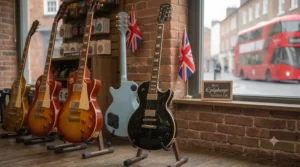
Epiphone Les Paul Models Compared: Standard vs Studio vs Custom vs Modern
The Epiphone Les Paul models compared side by side reveal a clearer pattern than the marketing copy suggests. The Epiphone Les Paul Studio and Epiphone Les Paul Modern share the same weight-relieved construction philosophy, but the Modern adds phase switching and treble bleed circuitry the Studio omits — worth the price gap only if you’ll actually use those controls. The Epiphone Les Paul Standard ’50s and ’60s share near-identical hardware tiers but differ meaningfully in neck feel and pickup output, making them a genuine “which playing style are you” choice rather than a “which is better” one. The Epiphone Les Paul Custom stands apart from all four by dropping the maple cap for an all-mahogany body, trading a touch of brightness and some shoulder comfort for extra sustain and a formal look.
| Model | Body Construction | Pickup Voicing | Weight Relief | Best For |
|---|---|---|---|---|
| Epiphone Les Paul Studio | Mahogany, maple cap | Alnico Classic, coil-split | Yes | Value versatility |
| Epiphone Les Paul Standard ’50s | Mahogany, maple cap | ProBucker 1/2, warmer | No | Vintage rhythm tone |
| Epiphone Les Paul Standard ’60s | Mahogany, maple cap | ProBucker 2/3, hotter | No | Lead playing |
| Epiphone Les Paul Modern | Mahogany, maple cap | ProBucker, coil-split + phase | Yes | Tonal flexibility |
| Epiphone Les Paul Custom | All-mahogany | ProBucker Custom, warmer | No | Sustain and looks |
Reading across this table, weight relief and coil-splitting cluster together in the Studio and Modern, which makes sense — both models are aimed at players who value flexibility and comfort over vintage-correct authenticity. The Standard and Custom models, by contrast, prioritise a more “traditional” Les Paul experience, accepting extra weight in exchange for tonal character reviewers consistently describe as warmer and more resonant.
Epiphone Les Paul vs Gibson Les Paul: What the Price Gap Really Buys You
The elephant in the room for anyone comparing an Epiphone Les Paul to its Gibson namesake is a price gap that can run into the thousands, and it’s worth being honest about where that money actually goes. Gibson’s own Les Paul Standard models use BurstBucker humbuckers, generally regarded by reviewers as a step above Epiphone’s ProBucker, which is explicitly designed as a tribute to that pickup rather than an identical clone. According to guitar comparison outlets, both pickup types share similar materials and wiring principles, but the ProBucker uses a simpler four-wire connection that trades a little sonic nuance for easier DIY servicing — a deliberate design choice, not a manufacturing shortcut. Country of manufacture is the other major factor: Gibson USA models are built in Nashville, while Epiphone’s mainline range is built in China, and while build consistency has improved substantially since the 2020 “Inspired by Gibson” relaunch, quality-control variance remains a more realistic expectation at Epiphone’s price point than at Gibson’s.
Where the gap narrows meaningfully is in specific limited-edition Epiphone models, like versions that ship with genuine Gibson-branded BurstBucker pickups as a taste of USA-spec tone without the full USA price tag. For most players, though, the honest verdict is that a well-set-up Epiphone Les Paul Standard delivers 80-85% of the Gibson experience for roughly a third of the cost — brilliant value for anyone who isn’t chasing collector-grade provenance or the Gibson badge specifically.
Best Epiphone Les Paul for Rock: Which Model Nails That Tone?
Rock guitarists tend to want two things from a Les Paul: enough output to push an amp into natural breakup, and enough sustain to hold a bend without it dying out mid-solo. On both counts, the Epiphone Les Paul Standard ’60s is the strongest all-rounder for rock in this lineup — the ProBucker 2/3 combination is voiced with exactly the mid-forward push that classic and modern rock rhythm tones need, and the SlimTaper neck keeps fast rock leads comfortable. For heavier, more aggressive rock and hard rock tones, the Epiphone Les Paul Custom‘s all-mahogany body and longer natural sustain give bends and held notes noticeably more staying power, which matters for anyone leaning into extended solos. If versatility across rock sub-genres — classic, alternative, punk-adjacent — matters more than a single locked-in tone, the Epiphone Les Paul Modern‘s coil-split and phase switching let one guitar cover a surprisingly wide stylistic range without swapping instruments between songs. Reviewers repeatedly single out the ’60s Standard specifically for classic and hard rock use, describing the higher-output ProBuckers as the closest stock-Epiphone tone gets to a “plug in and it just sounds like rock” experience.
Upgrading Your Epiphone: Pickups and Beyond
One of the most searched questions in the Epiphone community is whether upgrading pickups genuinely closes the gap to Gibson, and the honest answer is: partially, and it depends heavily on which pickups you’re starting from. Because most Epiphone Les Pauls use a standard humbucker footprint, Gibson-branded pickups like BurstBuckers or Classic ’57s will generally drop into the same routing with little to no body modification — a genuinely useful piece of practical information Amazon listings won’t tell you. The catch is cost: a genuine Gibson BurstBucker set typically costs close to what an entire Epiphone ProBucker set retails for, so budget for the pickups themselves plus, if you’re not confident with a soldering iron, a professional installation fee.
Before spending on pickups, it’s worth diagnosing what you’re actually unhappy with. If your complaint is “not enough output,” a pickup swap will help. If your complaint is “doesn’t sustain like a Gibson,” that’s more likely down to body wood, weight relief and hardware than the pickups themselves, and a swap alone won’t fully fix it. Common problem-to-solution pairings worth knowing: scratchy pots after a year or two of use are best solved with a contact-cleaner service rather than a full rewire; tuning slippage on entry-level models is usually a nut or tuner issue, not a pickup one, and upgrading to locking tuners often resolves it outright; and a “muddy” low end on higher-gain settings often responds better to adjusting pickup height than to replacing the pickups entirely. If you do commit to a swap, buying a matched neck-and-bridge set — rather than mixing brands — keeps output balanced between the two pickups, and most aftermarket brands like Seymour Duncan and DiMarzio sell sets specifically designed as drop-in Epiphone-compatible upgrades.
Common Mistakes When Buying an Epiphone Les Paul
The single most common mistake is buying on looks alone and ignoring neck profile — a stunning flame-maple top means nothing if the neck shape fights your hand every time you play. A close second is skipping the post-purchase setup entirely; even a genuinely well-built guitar can feel disappointing straight out of the box if the action and intonation haven’t been dialled in for your specific strings and playing style. Buyers also frequently underestimate weight — an all-mahogany Epiphone Les Paul Custom is noticeably heavier than a weight-relieved Epiphone Les Paul Studio, and that difference only becomes obvious after an hour standing with a strap on, not sitting down in a shop. Another recurring error is assuming higher price always means better tone for your specific genre; the pricier Epiphone Les Paul Custom is voiced warmer and lower-output than the cheaper ’60s Standard, which is the wrong direction for a metal player chasing aggressive gain. Finally, some buyers skip trying before buying entirely when purchasing online — if that’s your only option, lean on a retailer’s return policy and be honest with yourself about returning a guitar that doesn’t feel right, rather than forcing yourself to like a purchase you’ve already committed to.
Long-Term Cost & Maintenance: What Ownership Actually Costs
The purchase price is only the starting figure. Budget for a set of strings every 6-10 weeks (roughly £6-£12 a set depending on brand and gauge), an annual professional setup if you’re not doing it yourself (£30-£60), and an occasional fret dress or full refret much further down the line on a heavily played instrument, which can run into the low hundreds at a reputable luthier. A case or quality gig bag is a one-off cost worth factoring in immediately rather than treating as optional — humidity and temperature swings are the leading cause of neck and finish issues on mahogany-necked guitars, and a proper hard case is the cheapest insurance against that. Looking at total cost of ownership over five years, the gap between a £180 Special-II and a £700 Standard narrows considerably once you account for the Special-II’s likely need for tuner and hardware upgrades sooner, versus the Standard’s Grover tuners and Graph Tech nut, which are built to go the distance from day one. For players committed to the instrument long-term, that makes the mid-tier Standard range arguably the better long-run value, even though the upfront cost is higher.
Safety, Setup and Sound: Playing Responsibly
It’s easy to focus entirely on tone and forget that an electric guitar is, ultimately, a loud instrument once it’s plugged into an amp — and hearing damage from sustained loud practice or gigging is cumulative and permanent. The UK charity RNID notes that regular exposure to loud sound at rehearsal and gig volumes is a real risk for working musicians, not just those standing at festival main stages, and recommends musician-specific earplugs that lower volume evenly across frequencies rather than muffling your own playing unpredictably. If you’re setting up a home practice space, keeping amp volume reasonable and taking regular listening breaks costs nothing and protects an asset — your hearing — that no pickup upgrade can replace. On the guitar-care side, keep an eye on fret wear if you bend heavily, since worn frets under bent strings can cause unexpected note choking that’s easy to mistake for a setup issue rather than the maintenance issue it actually is.
Best Epiphone Les Paul Under £300: Is It Worth It?
Searching specifically for an Epiphone Les Paul under £300 narrows the realistic field to the Epiphone Les Paul Special-II and occasionally a heavily discounted or nearly-new secondhand Epiphone Les Paul Studio. On the new-guitar side, the Special-II genuinely delivers what it promises at this price — a real dual-humbucker Les Paul experience with none of the pretence of being something it isn’t. Where it’s worth being cautious is expecting Standard-tier hardware performance for a third of the price; the bolt-on neck and simpler tuners mean more frequent tuning touch-ups and a ceiling on how much sustain you’ll ever coax out of it, no matter how good your setup is. If a secondhand Epiphone Les Paul Studio turns up under £300 in genuinely good condition, it’s arguably the smarter buy at that budget, since you’d be getting set-neck construction, coil-splitting and Grover-tier hardware for the same money a new Special-II costs — provided you can inspect the instrument in person or buy from a reputable secondhand retailer with a return policy. For a guide on your rights when buying secondhand goods online in the UK, the gov.uk consumer protection guidance is worth a read before committing to a private sale.

Frequently Asked Questions
❓ What is the best Epiphone Les Paul for beginners?
❓ Is the Epiphone Les Paul Standard worth the extra money over the Studio?
❓ Can you upgrade Epiphone pickups to Gibson pickups?
❓ Which Epiphone Les Paul is best for rock music?
❓ How much does a decent Epiphone Les Paul cost in the UK?
Conclusion
There isn’t a single best Epiphone Les Paul that suits every player, and that’s genuinely the point of a lineup this wide. The Epiphone Les Paul Special-II earns its place as the honest, low-risk entry point; the Epiphone Les Paul Studio and Epiphone Les Paul Modern reward players who value coil-split versatility over vintage cosmetics; the Epiphone Les Paul Standard ’50s and ’60s remain the spiritual heart of the range, splitting neatly along neck feel and pickup output; and the Epiphone Les Paul Custom and Epiphone Slash “Victoria” Les Paul Standard sit at the top for players who want their guitar to look and feel as premium as it sounds. Match the model to your actual weekly playing habits — genre, gig frequency, budget for future upgrades — rather than the guitar that photographs best, and any of these seven will reward you for years. Whichever model you land on, a proper post-purchase setup and a little routine maintenance will do more for how it feels in your hands than any spec sheet ever could.
Recommended for You
- Stratocaster for Blues: 7 Best Strats Ranked (2026 Guide)
- Fender vs Squier Stratocaster: 7 Models Compared for 2026
- Best Squier Stratocaster 2026: 7 Top Models Reviewed
Disclaimer: This article contains affiliate links. As an Amazon Associate, I earn from qualifying purchases. If you purchase products through these links, we may earn a small commission at no additional cost to you.
✨ Found this helpful? Share it with your friends! 💬🤗
