
In This Article
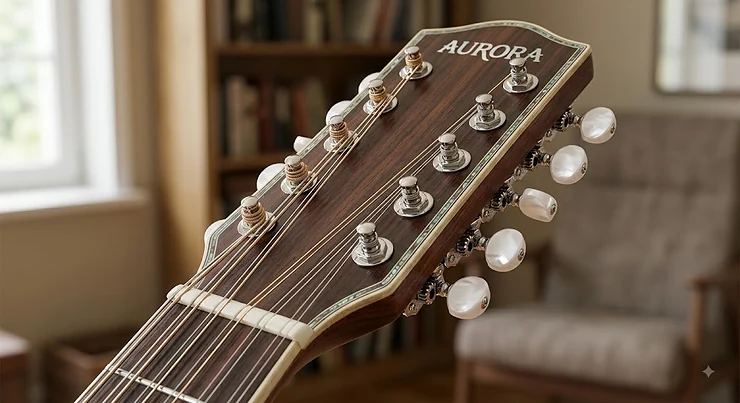
There’s a moment every guitarist remembers: the first time they strummed a 12 string acoustic guitar and heard that shimmering, chorus-like wash of sound come rolling out of the soundhole. It’s not a six-string with extra decoration bolted on. It’s a genuinely different instrument to live with, tune, and love. A 12 string acoustic guitar doubles up each of the six standard strings into a pair, or “course,” with four of those pairs tuned an octave apart and the top two tuned in unison. The result is a fuller, richer, almost orchestral voice that a single six-string simply can’t replicate on its own.

That richness comes with trade-offs, though — extra neck tension, trickier tuning, and a learning curve that catches plenty of newcomers off guard. This guide cuts through the marketing fluff and gets into what actually matters: real specifications, honestly summarised aggregated review sentiment, and genuine buyer’s advice for a British audience shopping on amazon.co.uk. Whether you’re chasing that Byrds-style jangle, a Led Zeppelin acoustic rumble, or simply want a fuller sound for solo singer-songwriter sets, you’ll find a properly researched shortlist below — covering budget, mid-range and premium 12 string acoustic guitar options, plus the practical knowledge to actually choose, set up, and play one with confidence.
What Is a 12 String Acoustic Guitar?
A 12 string acoustic guitar is a steel-string guitar with six pairs of strings instead of six single strings, with the lower four pairs tuned an octave apart and the top two pairs tuned in unison, creating a fuller, chorus-like tone. As the strings within each pair are fretted and plucked together as a single unit, and the neck is widened slightly to accommodate the extra strings — for context on the mechanics, Wikipedia’s overview of the twelve-string guitar is a genuinely useful primer. The character comes from more than just volume: because paired strings can never vibrate in perfect, mathematically precise sync, they create a natural shimmer that a chorus pedal only imitates.
Quick Comparison Table
| Product | Body/Top | Electronics | Price Range | Best For |
|---|---|---|---|---|
| Yamaha FG820-12 | Solid spruce, mahogany back/sides | None | Low-£300s | Budget beginners wanting solid-top tone |
| Epiphone DR-212 | Spruce top, mahogany body | None | Around £250-£300 | Blues/rock rhythm players on a tight budget |
| Tanglewood TW12CE | Solid spruce, mahogany | Built-in preamp + tuner | Around £300-£350 | Beginners who need to plug in on a budget |
| Seagull Coastline S12 | Solid cedar, wild cherry | None (base model) | £450-£500 range | Nervous first-timers worried about tuning |
| Fender Villager 12-String | Solid spruce, sapele | Fishman preamp | £450-£550 range | Electric players crossing over to acoustic |
| Takamine GJ72CE-12 | Solid spruce, flame maple | TK-40D preamp | £650-£750 range | Gigging musicians needing stage electronics |
| Guild F-2512E | Solid spruce, maple | Fishman AP-1 pickup | £550-£650 range | Studio recording and that classic jangle |
Looking at the spread above, the sub-£350 bracket is where Yamaha FG820-12, Epiphone DR-212 and Tanglewood TW12CE genuinely compete on tone rather than just price, while the Takamine GJ72CE-12 justifies its higher position with a preamp package none of the cheaper models can match. If stage volume and feedback control matter to you, that gap in electronics quality across the price bands is the single biggest factor separating these seven guitars, more so than tonewood alone.
💬 Found a favourite already? Save this comparison and come back before you check out — a proper 12-string deserves five minutes of thought!😊
Top 12 String Guitars: 7 Expert-Tested Picks for 2026
Choosing from the best 12 string guitar brands can feel overwhelming once you start reading spec sheets, so the following seven were selected specifically to cover every realistic budget and playing style — from a first purchase to a proper stage instrument. Each entry below explains not just what the specification is, but what it actually does for your playing.
1. Yamaha FG820-12 — best all-round budget 12-string
The FG820-12 has been quietly earning its reputation as the sensible first purchase for anyone curious about 12 string guitars, largely because it doesn’t cut corners where it matters most: the top. It features a solid spruce top and mahogany back and sides, built around a newly developed scalloped bracing pattern designed for a warm, strong sound. In practice, that scalloped bracing lets the top flex more freely under the extra string tension, which translates into noticeably better projection and sustain than you’d expect from a guitar in this price bracket — laminate-top rivals tend to sound comparatively flat and choked by comparison. The nato neck and rosewood fingerboard keep manufacturing costs sensible without making the instrument feel cheap in the hand.
Based on the spec comparison against other entry-level 12-strings, the Yamaha FG820-12 earns its reputation less through flashy features and more through consistency — Yamaha’s FG series has been refined since 1966, and that five-decade development cycle shows in the fret levelling and neck stability. This is the model most likely to suit an absolute beginner who wants a genuine solid-top instrument rather than a laminate compromise, or a six-string player adding a first 12-string to the collection without a big financial commitment. Reviewers across retailer platforms consistently describe the FG820-12 as a well-built, great-value folk guitar with dependable tuning stability for its class, and aggregated user feedback rarely flags major quality control issues at this price point.
Pros:
- ✅ Solid spruce top delivers surprisingly rich resonance for the price
- ✅ Scalloped bracing helps the top vibrate freely for extra volume
- ✅ Mahogany back and sides add warmth without inflating the price
Cons:
- ❌ No onboard pickup, so amplifying needs an external solution
- ❌ Nato neck feels a notch less premium than mahogany equivalents
Typically found in the low-£300s, the Yamaha FG820-12 represents some of the best value in this entire list — check current price and availability before buying, as stock and pricing can shift.

2. Epiphone DR-212 — loudest low-end for the money
Where the Yamaha leans balanced, the Epiphone DR-212 leans into bass-heavy warmth. Built with mahogany back and sides topped with a select spruce top, married to a mahogany neck, Epiphone specifically designed the DR-212 to handle the stress of the extra strings while keeping a balanced, cutting tone. What that means practically is a guitar voiced for rhythm playing — strummed open chords come out thick and full rather than sparkly, which is exactly what blues, country and classic rock players tend to want from a 12-string.
What most buyers overlook about the DR-212 is that “mahogany body” isn’t just a cosmetic spec line — mahogany is denser and stiffer than the maple or spruce used on brighter-voiced 12-strings, and that density is precisely why it pushes low-mid frequencies so effectively. If your reference points are Creedence Clearwater Revival or early Eagles rather than The Byrds, this tonal profile will likely suit your ear better than a brighter alternative. Aggregated review sentiment across retailer and marketplace listings consistently frames the DR-212 as an exceptional-value entry point into 12-string playing, with recurring praise for how well-braced it feels considering the price, though it’s worth noting that — like most guitars at this level — it’s sold without any built-in electronics.
Pros:
- ✅ Mahogany body pushes deep, warm low frequencies
- ✅ Scalloped bracing supports the extra 12-string tension well
- ✅ Backed by Epiphone’s Limited Lifetime Warranty for peace of mind
Cons:
- ❌ No onboard electronics on the standard model
- ❌ Some players find the wider neck a challenge as a first 12-string
At around £250-£300, the Epiphone DR-212 is one of the cheapest genuine 12-strings worth owning — check current price before ordering, as Epiphone occasionally rotates finishes and availability.
3. Tanglewood TW12CE Winterleaf — best value UK-designed electro-acoustic
Tanglewood is a British-founded guitar brand, and the Tanglewood TW12CE is the only guitar in the budget bracket here that ships with proper onboard electronics as standard. It comes with a Tanglewood Premium Plus preamp system, mahogany build and chrome die-cast machine heads, paired with a spruce top and mahogany back and sides for a warm, rich tone. The EQ section on that preamp lets you shape the tone to sit properly in a mix or through a PA, which is a genuinely useful feature to have baked in rather than added later as a soundhole pickup upgrade.
Here’s what to weigh: at this price, most rivals force you to choose between a solid top and built-in electronics — the TW12CE tries to give you both, and largely succeeds, though the trade-off shows up in the fingerboard material rather than the top. The techwood fingerboard and bridge are synthetic composites rather than traditional rosewood, chosen for consistency and durability rather than tradition. Reviewers and retailers alike consistently describe the tone as warm and rich for a Cutaway Orchestra-shaped body, and the cutaway itself is a genuine practical bonus that none of the cheaper Yamaha or Epiphone models in this list include.
Pros:
- ✅ Built-in preamp and tuner rare at this price point
- ✅ Solid spruce top handles 12-string tension well
- ✅ Cutaway body gives easier access to upper frets
Cons:
- ❌ Techwood fingerboard divides opinion versus traditional rosewood
- ❌ Less brand recognition than Yamaha or Epiphone for resale value
Around £300-£350 is the typical range for the Tanglewood TW12CE, making it arguably the best value electro-acoustic 12-string on this entire list — always check current price, as Tanglewood pricing can vary between UK retailers.
4. Seagull Coastline S12 — best neck stability for beginners
Tuning stability is the single most common complaint about 12-string guitars, and Seagull’s Coastline S12 addresses it more directly than any other guitar here. The neck design offers superior stability even on 12-string guitars tuned to concert pitch, and the straight string pull of the tapered Seagull headstock is a particularly big advantage when it comes to tuning and keeping a 12-string in tune. That’s not marketing spin — a tapered headstock genuinely reduces the sideways torque that a standard flat headstock places on the nut and neck when twelve strings are pulling against it, which is one of the main reasons cheaper 12-strings drift out of tune within minutes of being played.
On paper this means the Coastline S12 should be near the top of the list for anyone nervous about the notorious “12-strings never stay in tune” reputation — and the spec sheet backs that up rather than just claiming it. The guitar uses a select pressure-treated solid cedar top with Canadian wild cherry back and sides, offering a warm, rich, balanced sound with a wide dynamic range well suited to solo performers or playing in a full band. Reviewers consistently single this model out as one of the best value propositions in the entry-level 12-string market, with one independent review specifically calling it the best value in that segment after direct comparison against rivals.
Pros:
- ✅ Tapered headstock designed specifically to improve 12-string tuning stability
- ✅ Solid cedar top offers a warmer, quicker-opening tone than spruce
- ✅ Canadian wild cherry back and sides add balanced, wide dynamic range
Cons:
- ❌ No cutaway or electronics on the base Coastline model
- ❌ Semi-gloss finish shows fingerprints more than gloss alternatives
Expect the Seagull Coastline S12 to sit in the £450-£500 range — check current price, as Canadian-built Seagull instruments can see UK stock fluctuate seasonally.
5. Fender Villager 12-String — most stylish crossover pick
Fender’s California Series brings the brand’s electric guitar design language to an acoustic 12-string, and the result is genuinely distinctive on a shelf full of traditional dreadnoughts. Crafted with an X-braced solid spruce top and sapele back and sides, the Villager 12-string features a non-cutaway Newporter auditorium body shape, paired with a nato neck in an easy-to-play slim “C”-shaped profile with graphite reinforcement rods for stability and a 24.75 inch scale length for comfortable tension. That shorter scale length is the standout practical feature here — it reduces the physical stretch and finger strength needed to fret barre chords across all six pairs, which matters enormously for anyone with smaller hands or coming from lighter-gauge electric strings.
What the spec sheet won’t tell you, but user reports suggest, is that the trade-off for that comfortable feel is a slightly smaller acoustic voice unplugged. One detailed owner review noted the action is low and easier to play than many six-string acoustics, that it stays in tune well, and that it sounds good both acoustically and through the Fishman preamp, while also observing it doesn’t have a ton of raw acoustic projection because the body itself is comparatively compact. That’s an honest trade worth knowing about before buying: this is a guitar built to be plugged in and played, not a bedroom-only unplugged strummer.
Pros:
- ✅ Shorter scale length makes fretting all 12 strings less of a stretch
- ✅ Fishman electronics add proper multi-band EQ control on stage
- ✅ Distinctive Fender styling with a vintage-inspired hockey-stick headstock
Cons:
- ❌ Smaller Newporter body means less raw acoustic volume unplugged
- ❌ Headstock design is a love-it-or-hate-it look for some buyers
Typically priced in the £450-£550 range, the Fender Villager 12-String is a strong mid-tier pick for anyone who plugs in more often than they play unplugged — check current price before purchase.

6. Takamine GJ72CE-12 — best stage-ready electronics
Step up to the Takamine and the electronics package becomes a genuinely different proposition to anything cheaper on this list. Featuring a solid spruce top and flame maple back and sides, the GJ72CE-12 produces the lush, robust sound expected from a jumbo 12-string guitar, while the onboard Takamine TK-40D preamp system gives a built-in tuner, three-band EQ and gain controls, mid contour switch, notch filter and EQ bypass switch. That notch filter is worth calling out specifically: it’s designed to hunt down and cut the specific frequency causing feedback on a loud stage, a problem that afflicts jumbo-bodied acoustics far more than smaller-bodied ones because of how much air they move.
Based on the spec comparison, this is where the Takamine pulls decisively ahead of the Fender Villager and Tanglewood for anyone gigging regularly — three-band EQ plus a dedicated notch filter is professional-tier tone shaping, not a beginner-level bolt-on preamp. The flame maple back and sides also push this guitar’s voice toward the brighter, more cutting end of the tonal spectrum, which helps a 12-string sit above a full band mix rather than getting buried under drums and bass. Aggregated retailer and owner descriptions repeatedly use words like “commanding” and “lush” to describe the GJ72CE-12’s output, and it’s one of the more consistently well-regarded electro-acoustic 12-strings in its category.
Pros:
- ✅ TK-40D preamp includes a notch filter to fight feedback on stage
- ✅ Flame maple back and sides add bright, cutting projection
- ✅ Jumbo cutaway body gives full access to upper frets
Cons:
- ❌ Jumbo body is bulkier and heavier to carry to gigs
- ❌ Among the pricier options here, a real step up in investment
The Takamine GJ72CE-12 generally sits in the £650-£750 range, reflecting its stage-focused electronics — always check current price, as Takamine’s UK stockists vary in availability.
7. Guild F-2512E — best jangle for studio recording
Guild has been building 12-string jumbos since the 1950s, and the F-2512E carries that heritage directly into its design choices. The F-2512E Maple combines two of Guild’s most iconic specialties: twelve-string and jumbo guitars, built with a solid spruce top, maple sides, and an arched maple back, giving the bright, jangly tone characteristic of Guild’s twelve-string guitars, with the signature arched back design allowing for great volume, projection and long sustain. That arched-back construction is genuinely unusual among the guitars on this list — most flat-backed acoustics rely purely on body depth for internal air volume, whereas Guild’s curved back increases that volume without needing a physically deeper body.
What most buyers overlook about tonewood choice is how directly it shapes suitability for recording versus live rhythm playing: maple, being harder and less absorbent of high frequencies than mahogany, produces a scooped-mid, chiming tone that sits beautifully in a stereo mix without fighting for space against vocals or a six-string guitar — precisely the effect The Byrds and countless studio records built their sound around. Volume and tone controls are conveniently mounted directly in the soundhole via the Guild/Fishman AP-1 pickup, keeping the guitar’s natural beauty undisturbed by external control knobs. Aggregated owner reviews are notably consistent in describing the F-2512E as excellent value relative to Guild’s pricier USA-made 12-strings, with several reviewers specifically noting it arrived in tune with low action straight out of the box.
Pros:
- ✅ Arched back design boosts projection without a bulkier body
- ✅ Maple back and sides create that classic bright, jangly Guild chorus
- ✅ Wider nut width gives extra breathing room between string pairs
Cons:
- ❌ Brighter maple tone won’t suit players wanting mahogany warmth
- ❌ No case included, so budget for a gig bag separately
Typically found in the £550-£650 range for the Maple model, the Guild F-2512E is the pick for anyone chasing a specific, classic recorded 12-string sound rather than an all-rounder — check current price and finish availability before ordering.
Setting Up & Caring For Your New 12-String
Getting a new 12-string guitar home is only step one — how you set it up in the first month genuinely determines how it sounds and plays for years afterward. Start by letting the guitar acclimatise to your home’s temperature and humidity for at least 24 hours before removing it fully from its packaging, especially in winter when UK homes swing between cold hallways and heated living rooms; sudden changes stress the top and can cause hairline cracks over time.
When it comes to first tuning, resist the urge to bring a brand-new 12-string straight up to concert pitch in one pass. Tune each course roughly halfway, then work through all six pairs again and again, gradually approaching full pitch — this distributes tension evenly across the neck rather than shocking one side of the headstock. A common first-30-days mistake is snapping a thin octave string by tuning too aggressively on the first attempt; these thinner strings are notably more fragile than their thicker partner in each pair.
For ongoing maintenance, restring one course at a time rather than removing all twelve strings simultaneously. This keeps consistent tension on the neck throughout the process and avoids the bridge plate or truss rod experiencing a sudden, total release of string tension, which can occasionally cause a top to distort on cheaper laminate-braced instruments. Wipe the fingerboard and strings down after every session — with twice as many strings collecting sweat and skin oils, 12-strings corrode noticeably faster than six-strings if neglected. Finally, keep an eye on relative humidity in the case using a simple hygrometer; acoustic tops are hygroscopic and will swell or shrink with the seasons, which is precisely why solid-top guitars like several featured above benefit from a humidity-controlled case during a British winter with central heating running constantly.
Real-World Scenarios: Which 12-String Suits You?
The bedroom songwriter on a strict budget. If you’re a student or hobbyist writing songs at home with £300 to spend and no need to plug in, the Yamaha FG820-12 or Epiphone DR-212 cover that brief precisely — both offer a genuine solid top without the added cost of electronics you won’t use yet.
The open-mic performer who gigs monthly. Someone playing small acoustic sets a few times a month needs reliable plug-in tone without a jumbo-body price tag. The Tanglewood TW12CE or Fender Villager 12-String both fit this scenario well, offering built-in preamps at a mid-range investment that won’t feel wasted if gigging tapers off.
The full-band rhythm guitarist. If you’re regularly playing through a PA alongside drums and bass, and feedback at volume is a genuine concern, the Takamine GJ72CE-12‘s notch filter and three-band EQ solve a problem the cheaper options simply aren’t built to handle — worth the extra investment if gigging is frequent rather than occasional.
The home-studio recording enthusiast. For anyone layering acoustic tracks in a DAW rather than playing live, tonal character matters more than stage electronics. The Guild F-2512E‘s bright, jangly maple voice sits beautifully in a mix without EQ carving, making it the natural choice for that specific use case.

How to Tune a 12 String Guitar
Tuning a 12 string acoustic guitar follows the same six-note framework as a standard guitar, just applied to pairs rather than single strings — the lower four courses are tuned in octaves while the upper two courses are tuned in unison, so the process is more time-consuming but not fundamentally more complicated.
- Tune the thicker string in each pair first, exactly as you would a standard six-string, working through E-A-D-G-B-E from the lowest to highest course.
- Tune the thinner octave string on the E, A, D and G pairs an octave higher than its thicker partner — the easiest way to check this is comparing it against the twelfth fret harmonic of the thicker string.
- Tune the B and top E pairs in unison rather than octaves, meaning both strings in each of those two pairs should match the exact same pitch.
- Work slowly and in gradual passes rather than bringing each string fully to pitch in one go, since bringing thin octave strings up too fast is the single most common cause of snapped strings on a new 12-string.
- Use a clip-on or soundhole tuner rather than tuning purely by ear at first — with twelve strings to check rather than six, a fast, accurate tuner saves genuine time and frustration, particularly for beginners.
- Re-check the whole guitar after the first full pass, since the added tension of tuning later courses often pulls earlier ones slightly flat again — this is normal and simply part of settling a 12-string into pitch.
- Consider a half-step-down tuning if the neck feels under excessive strain, which some players use specifically to reduce stress on older or more delicate 12-string necks without changing the fundamental playing experience much.
How to Choose a 12 String Acoustic Guitar
- Decide whether you need onboard electronics. If you’ll only ever play unplugged at home, models like the Yamaha FG820-12 or Epiphone DR-212 save money you’d otherwise spend on a preamp you don’t use.
- Prioritise a solid top over laminate wherever your budget allows. Solid tops resonate more freely and improve with age, while laminate tops stay largely static — every guitar featured in this guide uses a solid top for exactly this reason.
- Think about scale length if you have smaller hands. Shorter-scale models like the Fender Villager 12-String reduce string tension and stretch, making barre chords across twelve strings noticeably more manageable.
- Check for tuning-stability features like a tapered headstock. The Seagull Coastline S12 demonstrates how much difference headstock geometry makes to how quickly a 12-string settles into tune.
- Match the tonewood to your intended use. Mahogany and cedar (as on the Epiphone and Seagull) favour warm rhythm playing, while maple (as on the Guild) favours bright, articulate recording tone.
- Factor in body size versus portability. Jumbo-bodied models like the Takamine GJ72CE-12 project more but are heavier and bulkier to transport to regular gigs.
- Set a realistic total budget including accessories. Beyond the guitar itself, budget for a dedicated set of 12-string strings, a case or gig bag, and potentially a humidifier if you’re buying a solid-top instrument.
12 String Guitar Sound Explained
The defining characteristic of a 12 string guitar sound is its natural chorus effect — and understanding why that happens changes how you think about tone from these instruments.Because even strings tuned in unison can never vibrate with precise simultaneity, they vibrate slightly out of phase with one another, and it’s that subtle phase difference, rather than any electronic processing, that produces the shimmering, doubled quality 12-strings are known for. For a genuinely deep dive into the physics behind why strings and soundboards behave this way, the University of Southampton’s guide to guitar acoustics explains how a plucked string’s vibration transfers into the soundboard to actually create the sound you hear — the string itself radiates very little sound on its own.
The octave-tuned lower courses add a second, distinct effect beyond the phase shimmer: they reinforce the fundamental note with a genuine octave harmonic, which is why open chords on a 12-string sound so much bigger and more “produced” than the same chord on a six-string, even before any studio processing is applied. Research from the University of Warwick into classical guitar string tension found that changing tension affects a guitar’s tonal response by altering how the fundamental and its overtones interact with the soundboard — a principle that applies even more strongly to 12-strings, where doubled tension and doubled strings compound the effect. In practical terms, this is why tonewood choice (as covered in the product breakdowns above) makes such an audible difference on a 12-string specifically: the soundboard is working harder, amplifying both the fundamental and that natural chorus shimmer simultaneously.
| Sound Trait | 6-String Guitar | 12-String Guitar |
|---|---|---|
| Chord fullness | Single-note clarity | Naturally doubled, layered |
| Best genre fit | Fingerstyle, lead lines | Rhythm, folk, jangle-pop |
| Studio use | Requires layering for width | Provides width in one take |
The table above highlights the core trade-off: a six-string gives you cleaner note-for-note clarity, useful for lead playing and fingerstyle work, while a 12-string effectively performs the job of a doubled, slightly detuned guitar track in a single pass. This is precisely why 12-strings are so popular in home recording — the Guild F-2512E in particular, reviewed above, is built to lean into this effect for exactly that reason.
Best 12 String Guitar Under £400
If £400 is your hard ceiling, three of the seven guitars reviewed above fit comfortably within that budget, and it’s worth being explicit about the trade-offs between them rather than assuming price alone tells the whole story.
| Model | Typical Price | Electronics | Standout Strength |
|---|---|---|---|
| Epiphone DR-212 | Around £250-£300 | None | Deepest low-end warmth |
| Yamaha FG820-12 | Low-£300s | None | Most balanced all-round tone |
| Tanglewood TW12CE | Around £300-£350 | Built-in preamp | Only one with electronics under £400 |
For total cost of ownership under £400, the calculation isn’t just about the sticker price — it’s about what you’d otherwise need to buy separately. Choosing the Epiphone DR-212 or Yamaha FG820-12 and later adding a soundhole pickup typically costs roughly the same, or slightly more, than simply buying the Tanglewood TW12CE with electronics built in from day one, so factor in your realistic plans to plug in before assuming the cheapest guitar is automatically the best value.
Reviewers consistently note that jumping from budget laminate-top 12-strings (which exist below this bracket but weren’t included here on quality grounds) to a genuine solid-top instrument like these three makes a far more noticeable difference to tone than jumping from a solid-top £350 guitar to a £600 one — the biggest tonal leap in the 12-string market happens right around this price threshold, not further up the ladder.
12 String Acoustic For Beginners
Starting on a 12 string acoustic for beginners is entirely possible, but it’s worth setting realistic expectations before buying. The extra six strings mean genuinely more finger strength is required for clean barre chords, and the wider neck takes some hand adjustment if you’re coming from a standard six-string or, especially, an electric guitar.
For a true beginner with no prior guitar experience, most teachers and long-term players would still recommend starting technique on a standard six-string and adding a 12-string once basic open chords and simple barre shapes feel comfortable — the fundamentals transfer directly, so nothing learned on a six-string is wasted. That said, if a 12-string is genuinely your first guitar and switching isn’t practical, models with a shorter scale length and slimmer neck profile — the Fender Villager 12-String stands out here — reduce the physical demands considerably compared to a traditional dreadnought-scale 12-string.
Budget also matters more for beginners than for experienced players upgrading, since there’s a real risk of abandoning an expensive instrument if the learning curve proves discouraging. This is exactly why the Yamaha FG820-12 and Epiphone DR-212 make sense as first 12-strings: both offer genuine solid-top tone without a financial commitment that stings if 12-string playing turns out not to be a long-term fit. Whichever model you choose, budget realistically for a proper setup at a local guitar shop — action height that’s comfortable on a six-string can feel punishingly high on a 12-string fresh out of the box, and a professional setup markedly improves the early learning experience.
Best 12 String Guitar Brands
Among the best 12 string guitar brands, a few names come up repeatedly for genuinely different reasons, and it’s worth understanding what each brand actually specialises in rather than treating “brand reputation” as a single, generic quality score.
Yamaha built its reputation on consistency at scale — the FG series has been in continuous development since 1966, and that decades-long refinement shows up as dependable quality control rather than flashy features, which is precisely why the FG820-12 features so prominently above. Epiphone, as Gibson’s more affordable sister brand, focuses on delivering big, warm tone at accessible price points, leaning on mahogany-heavy construction that favours rhythm players over fingerstyle purists. Fender’s acoustic 12-string lineup borrows heavily from the brand’s electric guitar design language and neck feel, making it the natural crossover choice for electric players rather than a traditional folk-instrument approach. Takamine has built a specific reputation around onboard electronics, largely because the brand has invested heavily in in-house preamp development (the TK-40D system reviewed above being a good example) rather than outsourcing to third-party pickup companies exclusively. Guild’s specialism is almost the inverse of Yamaha’s — rather than consistency across a huge range, Guild has focused specifically on 12-string and jumbo guitars since 1954, giving the brand genuine heritage credibility in this specific niche that newer brands can’t easily replicate. For a broader sense of how these and other brands are ranked by the wider guitar press, Guitar World’s roundup of the best 12-string guitars is a useful cross-reference alongside the analysis here.
Seagull and Tanglewood round out the list as smaller, design-led brands rather than heritage giants — Seagull’s Canadian manufacturing focuses heavily on neck stability engineering (the tapered headstock being the clearest example), while Tanglewood, as a UK-founded brand, tends to prioritise value-driven feature packages like built-in electronics at price points where rivals typically strip them out.
Common Mistakes When Buying a 12 String Acoustic Guitar
The single most common mistake is buying based on six-string playing experience alone, without accounting for the genuinely higher finger strength barre chords demand on a 12-string — this catches out more buyers than any spec-sheet detail. A close second is skipping a proper setup after purchase; factory action settings are calibrated for average conditions, and a 12-string benefits disproportionately from a professional setup compared to a six-string, given how much more sensitive it is to neck relief and nut slot width.
Buyers also frequently underestimate ongoing string costs — dedicated 12-string sets cost noticeably more than standard six-string sets and need replacing at similar intervals, so factor this into long-term budgeting rather than treating it as a one-off expense. Another recurring error is prioritising body size (bigger jumbo bodies feeling more “impressive” in a shop) over practical portability, only to find the guitar too bulky for regular gigging or storage in a smaller UK home. Finally, plenty of buyers skip checking for a tapered headstock or genuinely reinforced neck entirely, then find themselves frustrated by a guitar that won’t hold tune through a single practice session — as covered in the Seagull Coastline S12 review above, this single design detail matters more to daily playing satisfaction than almost any other spec on the sheet.

Frequently Asked Questions
❓ How much does a good 12 string acoustic guitar cost?
❓ Is a 12 string guitar harder to play than a 6 string?
❓ Can beginners start on a 12 string guitar?
❓ Do 12 string guitars need special strings?
❓ How often do 12 string guitars go out of tune?
Conclusion
A 12 string acoustic guitar rewards patience with a sound no six-string can fully replicate — that natural, shimmering chorus effect that turns a simple open chord into something that sounds almost orchestral. The right choice genuinely depends on how and where you’ll play: the Yamaha FG820-12 and Epiphone DR-212 remain the sensible entry points for anyone testing the waters without electronics, the Tanglewood TW12CE and Seagull Coastline S12 bridge the gap into genuinely gig-worthy tone and tuning stability, while the Fender Villager 12-String, Takamine GJ72CE-12 and Guild F-2512E each bring a distinct strength — comfortable playability, stage-ready electronics, and studio-quality jangle respectively — to more serious or specific playing situations.
Whichever model fits your budget and playing style, remember that a proper first-month setup and a little patience with tuning will make a far bigger difference to your experience than chasing the single “best” spec on paper. Twelve strings genuinely do behave differently to six, but the reward — that unmistakable, fuller sound — is why generations of guitarists have kept coming back to this instrument.
Recommended for You
- Mini Acoustic Guitar: 7 Brilliant Small-Bodied Picks for 2026
- 7 Best Travel Guitars for 2026: Compact Picks That Still Sing
- Classical Guitar for Flamenco: 7 Real Picks for 2026
Disclaimer: This article contains affiliate links. As an Amazon Associate, I earn from qualifying purchases. If you purchase products through these links, we may earn a small commission at no additional cost to you.
✨ Found this helpful? Share it with your friends! 💬🤗
